Investigative Stories
Trapped in Addiction, Women Face a Difficult Road to Recovery
Responsibility for rescuing and treating women caught in drug addiction is divided across all three tiers of the state. Yet without a strong mechanism and support system, even those who leave rehabilitation centers often slip back into the same risks.

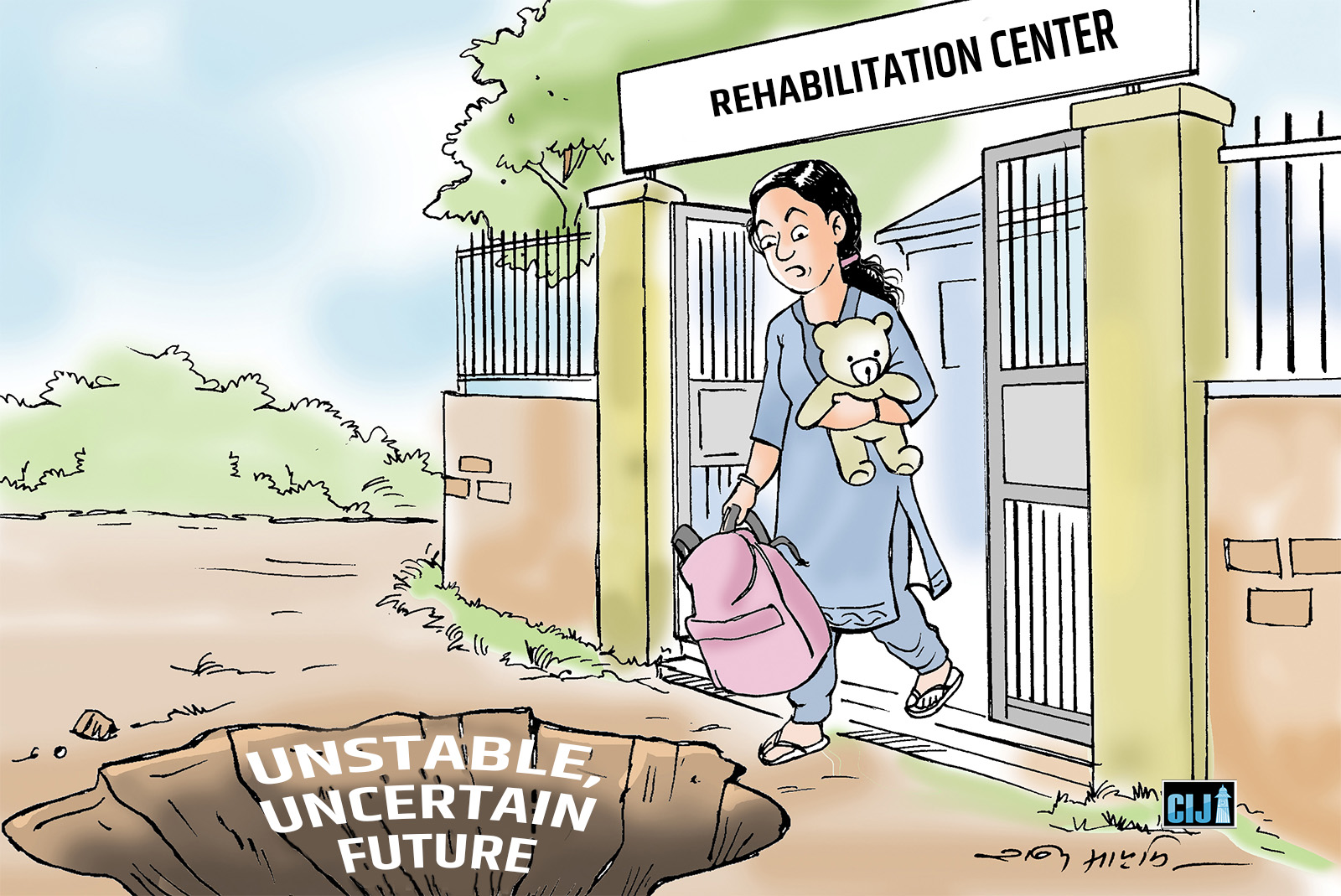
Twenty-year-old Meena was once a bright science student. At an age when she should be excelling in her studies, she is living in a rehabilitation center instead.
After first trying cigarettes and alcohol with friends at 16, family stress, loneliness and emotional pressure pulled her into drug addiction. While living in a rented room in Nepalgunj, she was arrested with narcotics; police handed her over to her family, who admitted her to a rehabilitation center.
"I sank so deep in addiction that it reached a point where I had to do anything just to get a fix," Meena says. "I don't even want to remember what I went through back then."
After two and a half years at the center, Meena has changed. She now counsels newly admitted girls and young women and even assists in rescue efforts. Yet stories like hers rarely end smoothly once residents step outside a rehabilitation center.
Seventeen-year-old Sonia has already been admitted to a rehabilitation center three times. Originally from Rukum, she lived in Kohalpur with her mother and older brother. After her father remarried, family breakdown and financial hardship left her disillusioned. What began with cigarettes and alcohol in eighth grade gradually spiraled into drug addiction.
"While I'm at the center, I resolve to turn my life around," she says. "But the moment I step outside, my old circle of friends pulls me back into addiction."
After she spent 10 months in rehabilitation a second time, her family tried to enroll her in a hostel so she could continue her studies, but she ran away from the hostel.
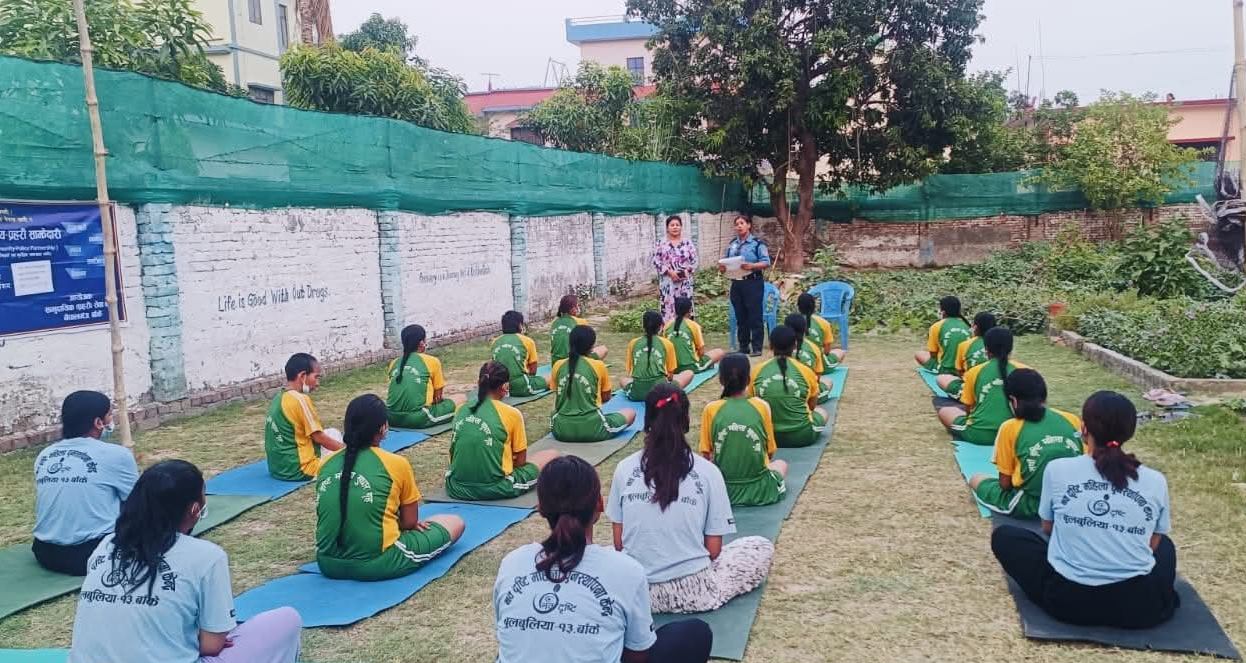
Most recently, police rescued her from a hotel in Nepalgunj and brought her back to the rehabilitation center. Although she is determined to recover fully this time, she no longer has her family's support. Her mother does not even come to visit, and the family has been unable to pay the center's monthly fees.
"I endured so much abuse just to get drugs, worked in hotels, and even did things I should never have done," Sonia says.
A Growing Challenge
According to the Drug Users Survey 2076 BS, Nepal has 130,425 drug users, with an annual growth rate of 5.06 percent.
A 2079 BS report by the Ministry of Home Affairs puts the number of drug users in Lumbini Province alone at 25,930—24,912 men and 1,018 women—who use hard drugs. That accounts for 19.9 percent of all users nationwide, the second largest share after Bagmati Province.
Districts bordering India, particularly Banke, Rupandehi and Kapilvastu, are the hardest hit. Although social stigma and a lack of awareness keep women's share low in official figures, the reality on the ground is alarming, says Rashi Rawat, operator of Naya Drishti Women's Rehabilitation Home.
"The number of women using drugs is rising out of sight," she says. "Official numbers appear small only because women do not come forward openly and remain invisible."
In her experience, women struggling with substance abuse face deeper social, economic and psychological challenges, along with heightened vulnerability to sexual violence.
Drug-related crime cases have also climbed in Lumbini Province in recent years. According to provincial police data, 2,481 drug-related cases were registered between fiscal year 2079/80 BS and the end of Jestha in fiscal year 2082/83 BS, involving 8,176 individuals.
Of those cases, 446 were registered in fiscal year 2079/80 BS, 557 in fiscal year 2080/81 BS, 712 in fiscal year 2081/82 BS, and 766 through the end of Jestha in fiscal year 2082/83 BS.
The cases involve both users and traffickers. In fiscal year 2079/80 BS, 776 individuals were implicated, comprising 310 users and 466 traffickers; among them 17 users and 34 traffickers were female.
In fiscal year 2080/81 BS, 898 individuals were implicated, including 459 users and 439 traffickers, of whom 21 users and 29 traffickers were women.
In fiscal year 2081/82 BS, 1,167 individuals were implicated, comprising 603 users and 564 traffickers, including 38 female users and 43 female traffickers.
Through the end of Jestha in fiscal year 2082/83 BS, 1,247 individuals were implicated, comprising 612 users and 635 traffickers, of whom 20 users and 36 traffickers were women.
The figures show a year-on-year rise in both female users and female traffickers. Yet rights activist Prakash Upadhyay says fear of family backlash, social stigma and ostracism prevent many women from coming forward even for treatment. "The actual numbers could be far higher than this," he says.
Risks of Sexual Violence and Sex Work
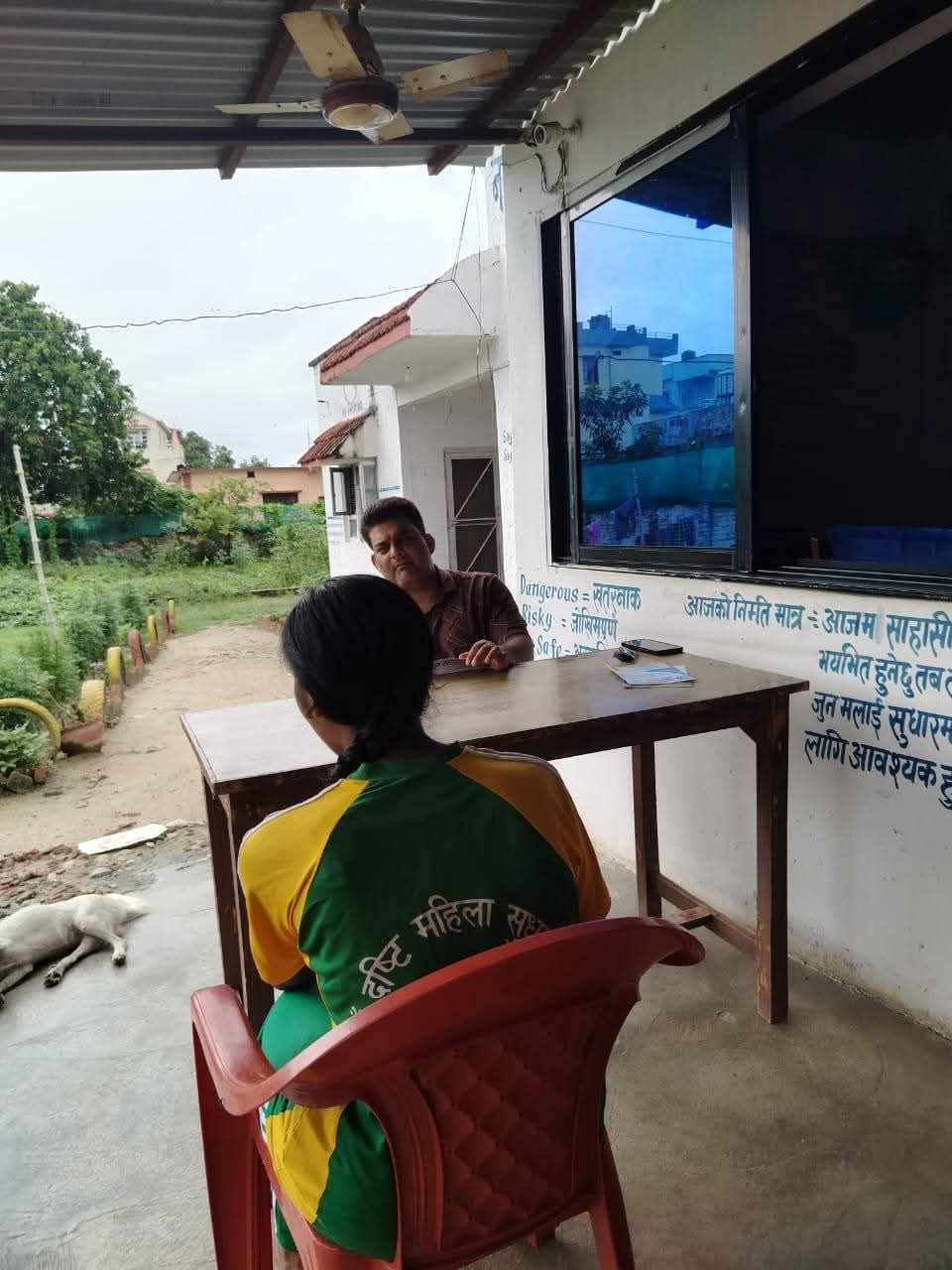
Doctor at a rehabilitation center in Nepalgunj.
For women caught in drug addiction, the crisis extends well beyond treatment and rehabilitation. Stakeholders say financial hardship, rejection by families, social insecurity and the threat of violence push many into sex work.
According to Abhiraj Chhetri, director of Sahara House Rehabilitation Center, a significant proportion of women working in massage parlors, hotels, casinos and dohori sanjh (folk-music evening lounges) are drug users, and most of them are forced into sex work simply to buy drugs.
"Even if only to feed their addiction, they are forced into sex work," Chhetri says. "During police raids on hotels, girls and young women are often found intoxicated. Even when police see them, they have to look the other way and leave. If they rescue them, there is no trace of their families, police stations have no space to house them, and organizations cannot keep them without funding."
According to Rawat of Naya Drishti Women's Rehabilitation Home, whereas male drug users often receive family support, women are ostracized by their families from the outset for allegedly bringing dishonor upon the household. Cast out of their homes, they are pushed back into addiction and ultimately into high-risk paths such as sex work.
Indu Rawal, who works in drug control, likewise notes that financial desperation drives female drug users into sex work. She says women begin using drugs due to peer pressure, recreation, curiosity and stress, with some even falling into addiction in an effort to lose weight and look attractive.
"Most people involved in sex work are drug users," says Banke Police Chief Angur GC. "After rescuing them, we have neither a place to keep them nor a budget. Police have no option other than tracking down relatives and handing them over."
Chhetri observes that while men who use drugs over long periods typically get drawn into drug trafficking, many long-term female users end up in sex work.
Responsibility Reaches Local Governments, But Work Stops at Awareness
Under Nepal's federal structure, drug control policies and laws assign roles to provincial and local governments as well. Both the National Drug Control Policy 2063 BS and the National Drug Control Strategy 2066 BS frame drug control as a multidimensional issue.
The federal government also prepared the Guidelines on Drug Control and Prevention for Local Levels 2076 BS. Yet the situation in Banke shows that while federalism devolved responsibility to local governments, the necessary structures and resources never followed.
Banke has eight local governments, yet none has a dedicated budget, rescue guidelines, rehabilitation services or post-recovery employment programs for female drug users.
According to Asha Kumari Shahi of the Women, Children and Senior Citizens Section at Nepalgunj Sub-Metropolitan City, no programs are currently running beyond general drug awareness campaigns, and the municipality lacks even the basic guidelines required for rescue operations.
"We do not have a procedure for rescues," Shahi said. "Although it is necessary, no decision has been made on this so far."
Rights activist Upadhyay points out that the law assigns local governments responsibility for prevention, facilitating treatment, rehabilitation, reintegration and awareness, yet little is being done beyond awareness drives. "Creative activities, sports and reintegration programs are needed to keep users away from addiction," Upadhyay says.
It is not only local governments; the provincial government also lacks dedicated structures and programs for treating and rehabilitating female drug users.
According to Simran Rajbhandari, central vice-president of Recovering Nepal Women, Lumbini Province has eight women's rehabilitation centers—four in Nepalgunj, three in Butwal and one in Dang—all of them fee-charging facilities run by private or non-governmental organizations, each with a capacity to house at least 25 residents.
She says roughly 800 women are admitted to these centers each year, of whom about 500 return home after treatment while around 300 end up returning to rehabilitation repeatedly.
Compared to men, far fewer women return to their families after rehabilitation, Rajbhandari says, because in most cases families humiliate and neglect them. That neglect sharply raises their risk of relapsing into addiction.
Harikala Saru Magar, under-secretary at Lumbini Province's Ministry of Social Development, says that while the ministry runs youth-targeted programs, it has no separate program for women. "This is a very sensitive issue, but no initiative has yet been taken to establish a women's rehabilitation center," she said.
In fiscal years 2081/82 BS and 2082/83 BS, the provincial budget under the drug control heading included no separate allocation for the treatment and rehabilitation of women.
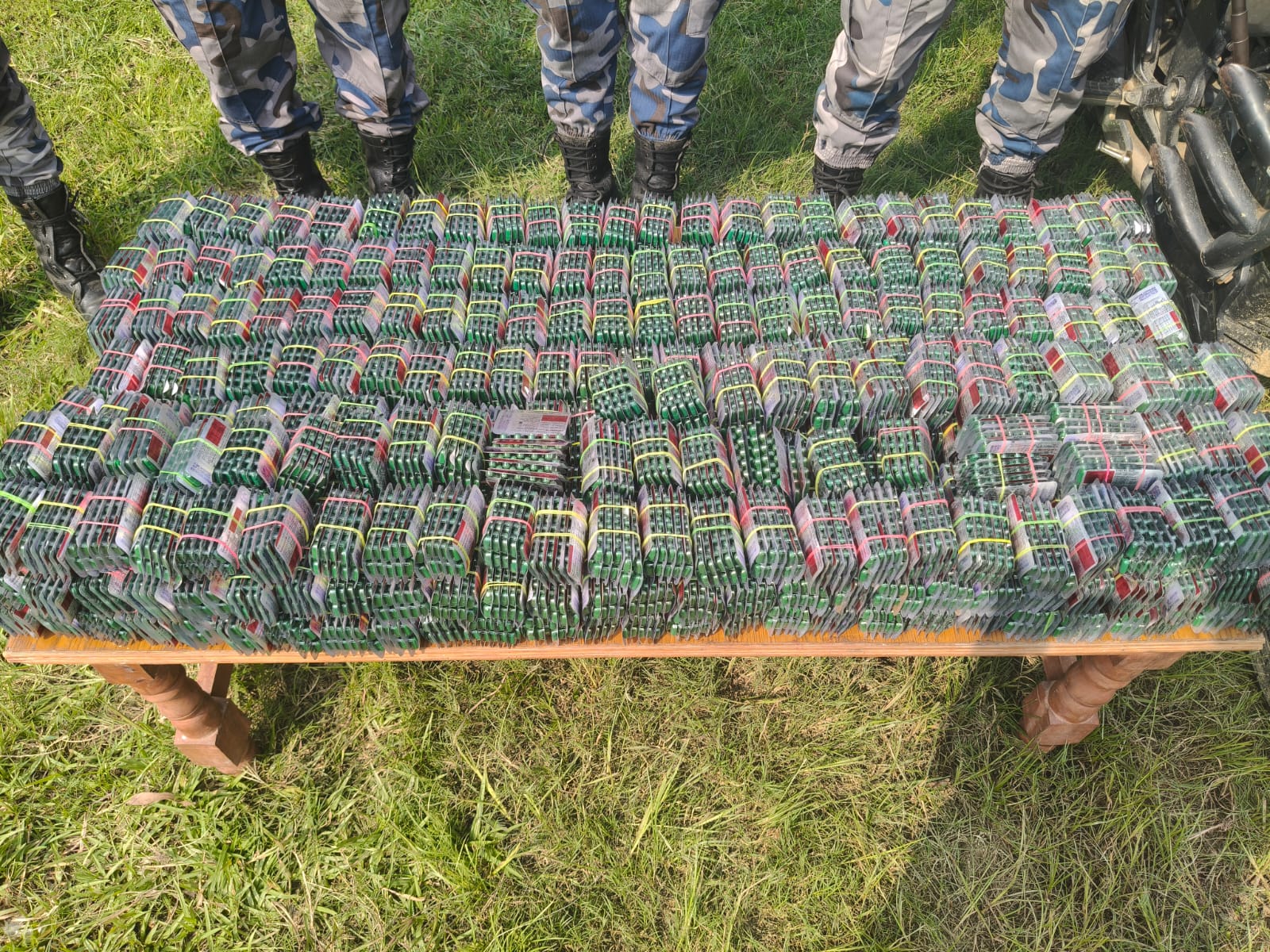
According to Kamala Gyawali, women development inspector at the provincial Ministry of Social Development, various awareness programs have, however, been conducted at the school level.
Because none of the three tiers of government provides adequate infrastructure or funding, private and non-governmental organizations shoulder the bulk of treatment and rehabilitation for female drug users.
Nor is there any effective local or provincial mechanism to follow up on girls and young women after they leave rehabilitation centers.
"Who looks after them once they return from rehabilitation?" asks child rights activist Sahil Ansari. "Local governments don't even know where these residents in their own wards are."
Far from helping recovering users find employment or return to school, he says, local governments do not even assist with treatment—pushing girls and young women straight back into the same dangers after leaving rehab.
According to Rawat of Naya Drishti Women's Rehabilitation Home, although rescued women frequently test positive for health conditions such as HIV and hepatitis C, centers lack the resources to shoulder their medical treatment and long-term care.
In Banke, Damayanti Foundation Nepalgunj has been running a foreign-funded program targeting female drug users to prevent blood-borne and sexually transmitted infections, including HIV/AIDS and hepatitis B and C.
In short, the public system for long-term treatment, rehabilitation and social reintegration remains weak.
Easy Access, Hard Escape
According to Banke Police Chief GC, the open border with India makes narcotics readily accessible, with drugs flowing into Nepalgunj from across the border.
Abhiraj Chhetri of Sahara House Rehabilitation Center says technology has made acquiring and trading drugs even easier. "Those who have money now simply order drugs straight to their homes or hotel rooms," Chhetri said. "Technology has made buying and selling effortless."
While access to drugs has grown easier, the state's system for pulling people out of addiction is anything but.
According to psychiatrist and neurology specialist Dr. Tanveer Ahmad Khan, breaking free from drug addiction overnight is not easy, as prolonged use can alter a person's consciousness, perception and emotions.
"In addiction, it is not the person controlling the drug, but the drug controlling the person," Dr. Khan says. "Once an individual loses the ability to make a rational choice about whether or not to use drugs or intoxicants, they are caught in addiction. Overcoming it requires equal support from the individual, their family and all stakeholders."
The stories of Meena and Sonia show that a rehabilitation center alone is not enough to break free from addiction. Recovery requires continued care, family and community support, and a pathway back to education or vocational skills even after leaving a center.
Unless the state steps up from the moment of rescue through life after rehabilitation, existing efforts risk never rising above routine awareness campaigns.
Meena is preparing for a new life from inside the rehabilitation center. Sonia is determined to return home once again. Yet once they walk out through the center's gates, who will catch them before they fall?
(Names of drug users have been changed.)
More Investigative Stories
Staring at a Sandy Riverbed for 19 Years, Still Waiting for a Safe Home
A flood in 2064 BS laid waste to farmlands, homes and settlements in Simalkhet, Dadeldhura. Nearly two decades later, displaced...
Despite Billions of Rupees in Insurance Subsidies, Farmers Remain Exposed to Risk
Although the government has spent billions of rupees subsidizing agricultural and livestock insurance premiums to attract smallholder farmers, crop insurance...
Comment Here