Investigative Stories
Staring at a Sandy Riverbed for 19 Years, Still Waiting for a Safe Home
A flood in 2064 BS laid waste to farmlands, homes and settlements in Simalkhet, Dadeldhura. Nearly two decades later, displaced families are still waiting for safe shelter and arable land.

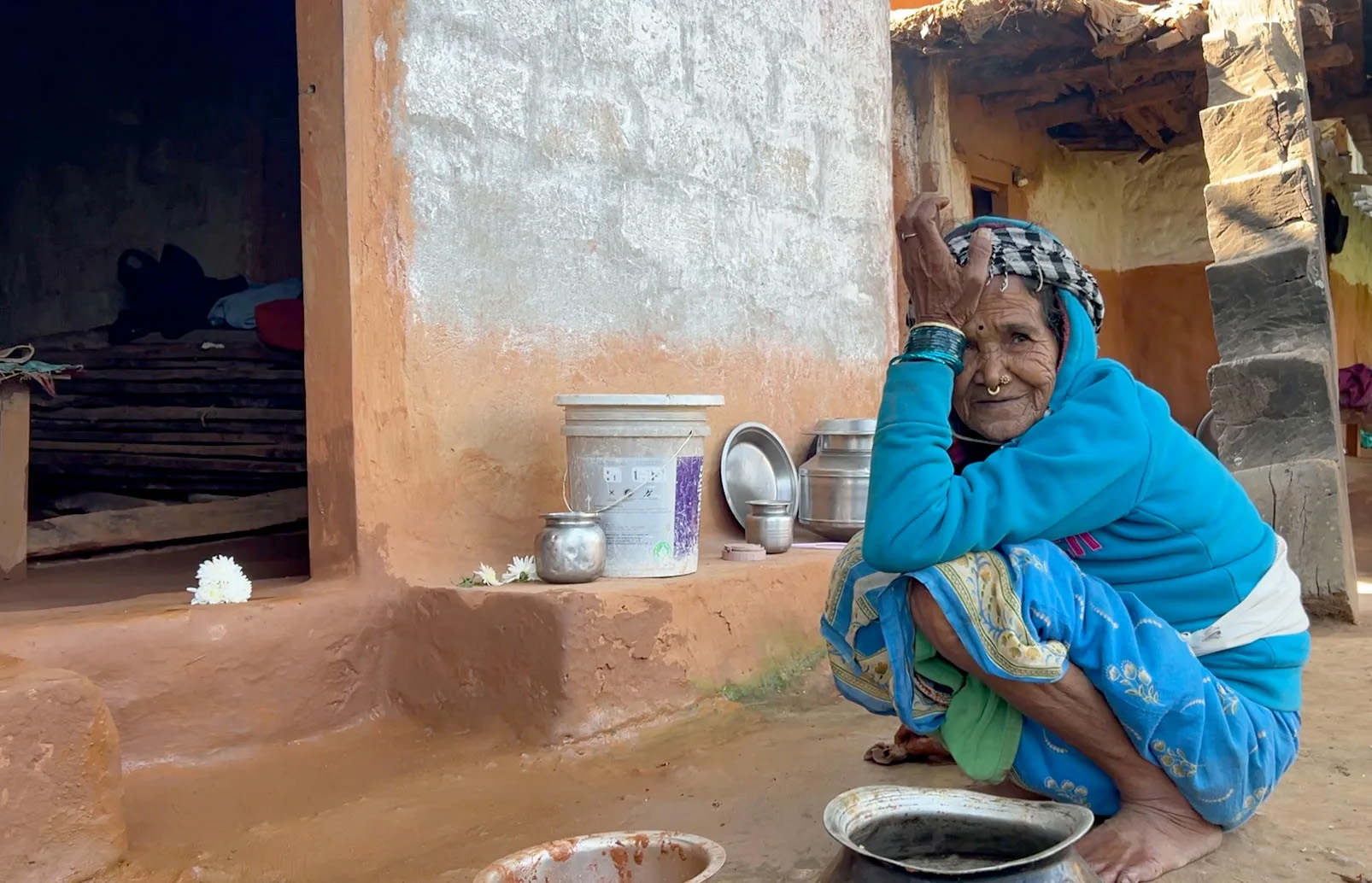
She wears a traditional phuli stud and bulaki ring on her nose, her frame slightly stooped. She does not know her exact age, yet her hands and feet still move briskly as she plasters the threshold of her home early in the morning.
Disaster struck the life of Champhadevi Saud of Simalkhet in Parshuram Municipality – 6, Dadeldhura, 19 years ago. A flood in Bhadra 2064 BS swept away her home, taking with it belongings and bundles of memories gathered over a lifetime.
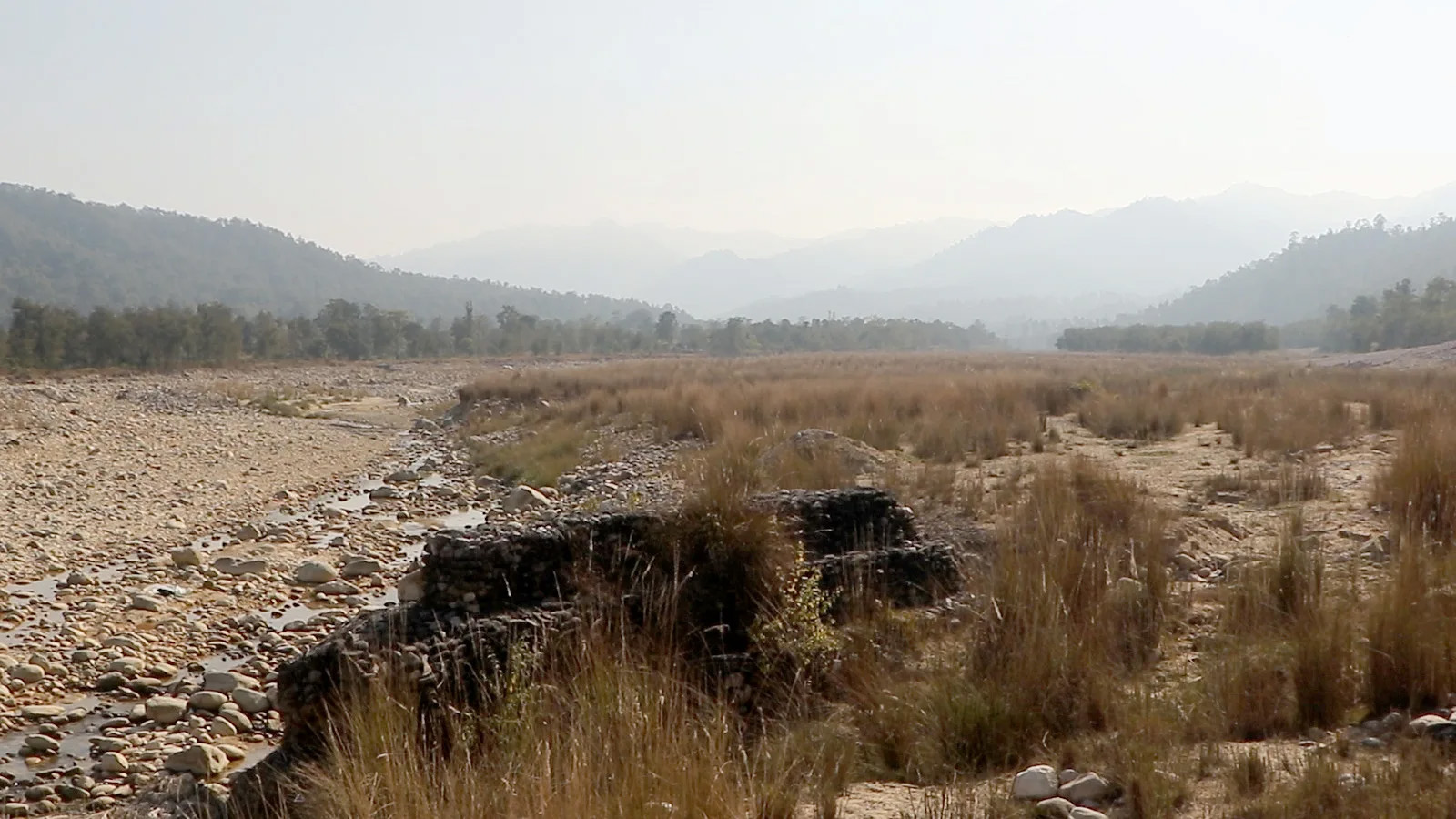
Since the flood turned nearly one bigha (around 0.25 hectares) of her land into a sandy riverbed, she has been living in a community forest area on the hill above.
"The government gave us only token relief at the time—40 kilograms of rice and a single cooking wok big enough to cook greens. All our other utensils had been washed away," she recalls.
Her husband passed away three years ago, and her daughter-in-law also died after falling ill. Now, the responsibility of raising her grandson rests on her shoulders.
She knows she is growing old, yet her hope of seeing greenery return to Simalkhet has not died.
From Lush Fields to a Barren Sandbank
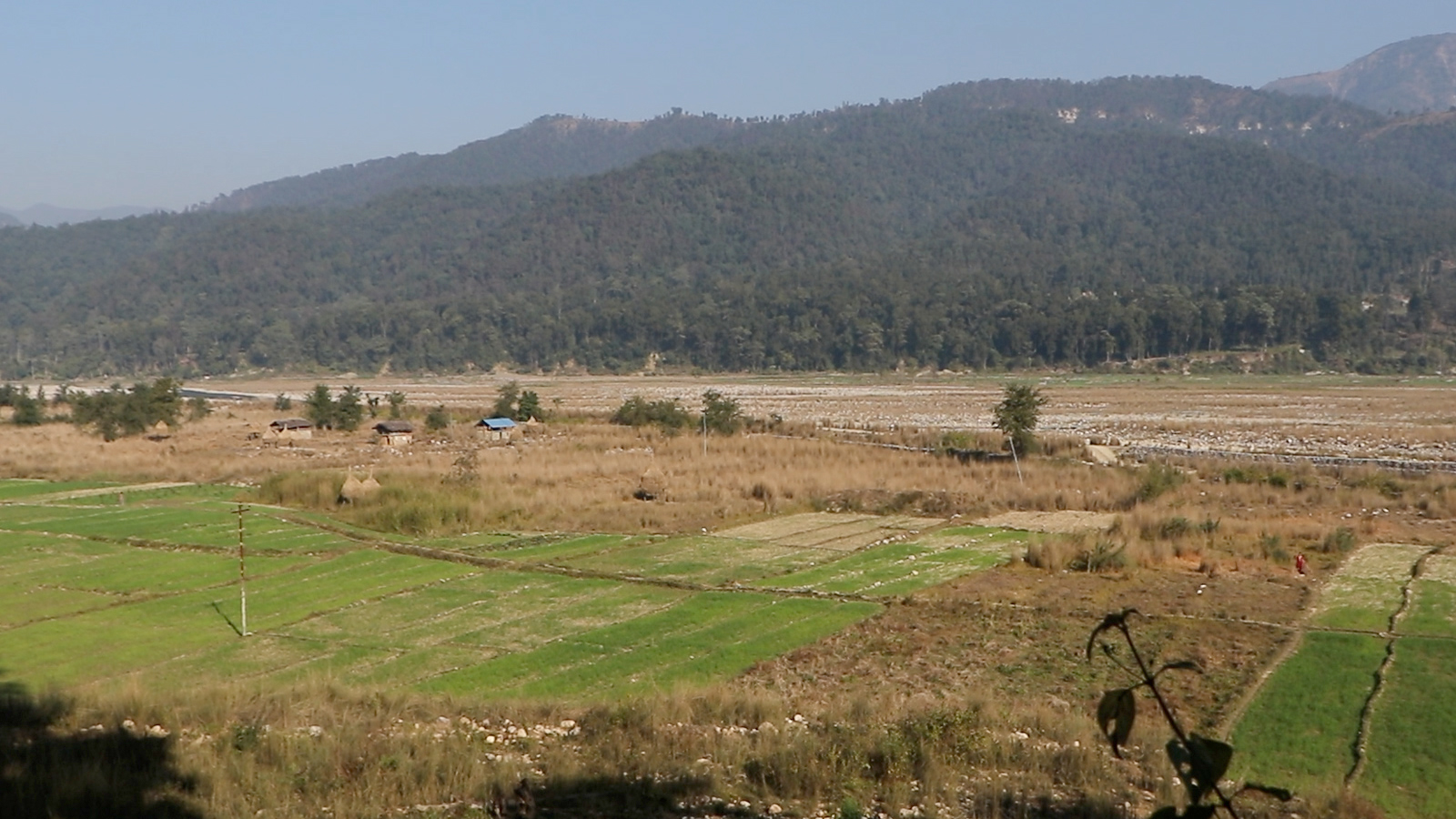
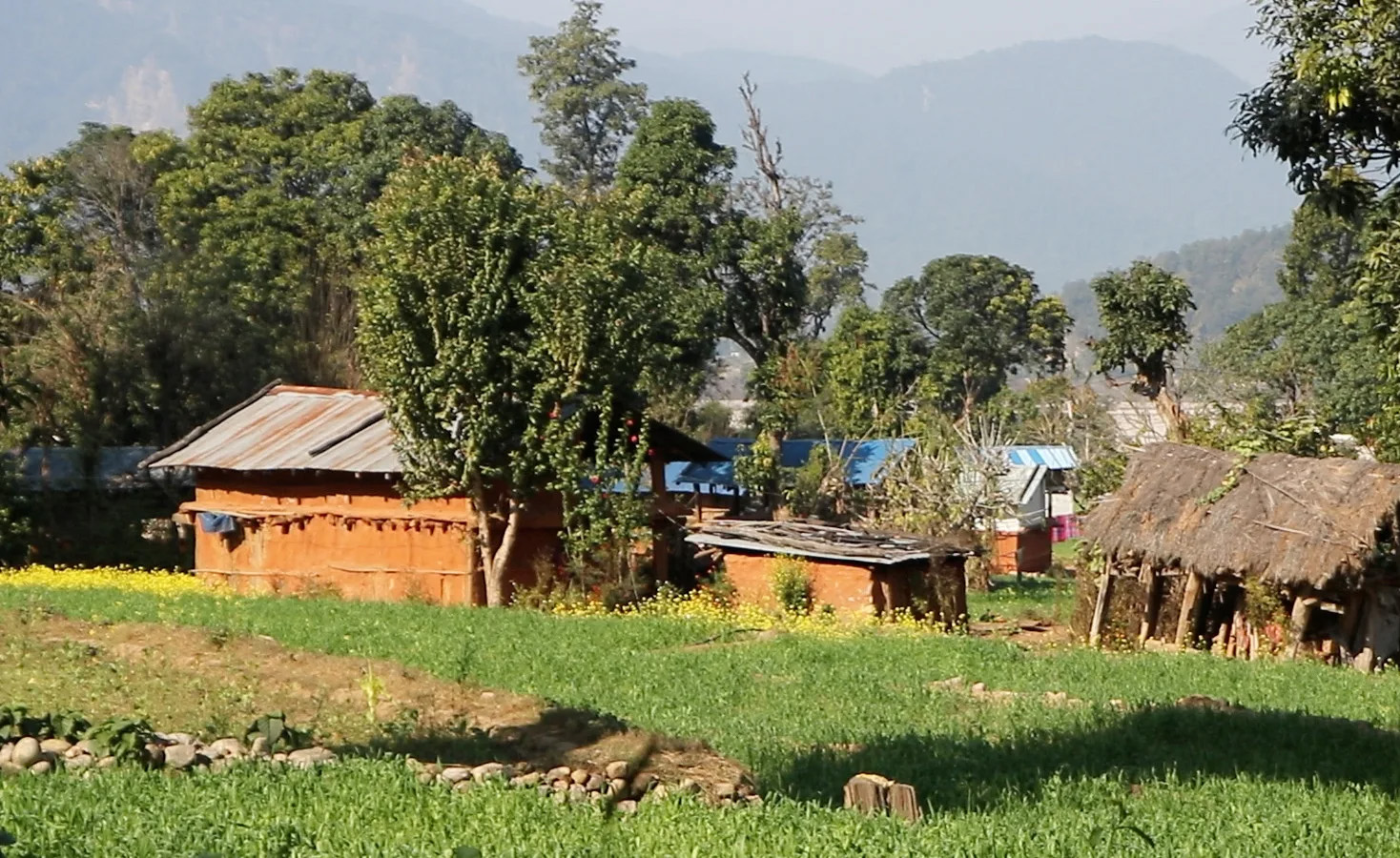
Until 19 years ago, Simalkhet would turn bright yellow with blooming mustard in one season and sway with golden ears of wheat in another. During the rice planting season, the fields echoed with the songs of planters. The flood of 2064 BS, however, reshaped the entire landscape.
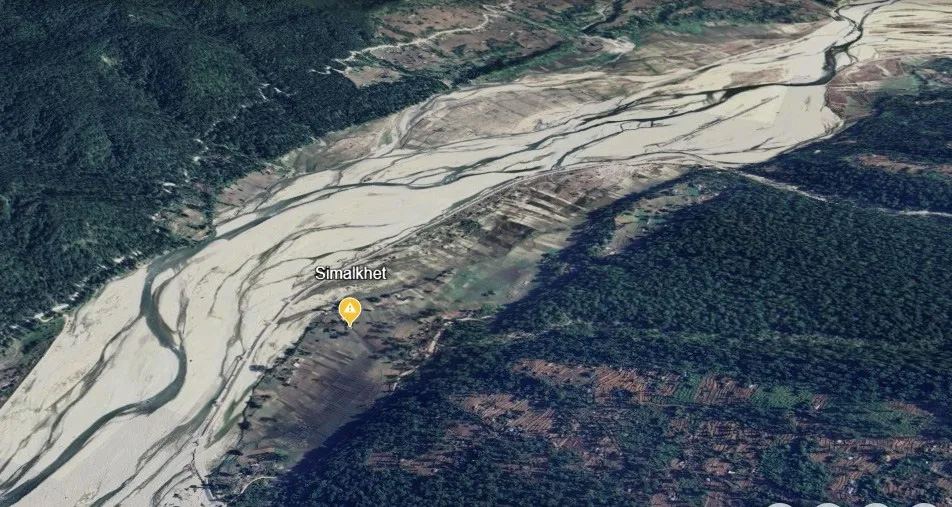
Following torrential rains, debris-laden floodwaters from the Rangun and Pantura rivers buried farmlands, swept away homes and livestock sheds, and altered the very course of the rivers. Across Dadeldhura's Inner Tarai belt, scores of families in villages including Simalkhet, Tatopani, Chandani, Kuna, Chhela, Thannajala and Patareni were displaced. In Parshuram Municipality – 6 alone, 770 ropanis (around 39.2 hectares) of arable land was reduced to a gravelly riverbed.
After the flood, some residents left for India to find work, while others migrated overseas for employment. Several families moved down to the Tarai plains, leaving mostly the elderly and children behind in the village. The flood did not just wash away farmlands; it shattered an entire way of life built around farming.
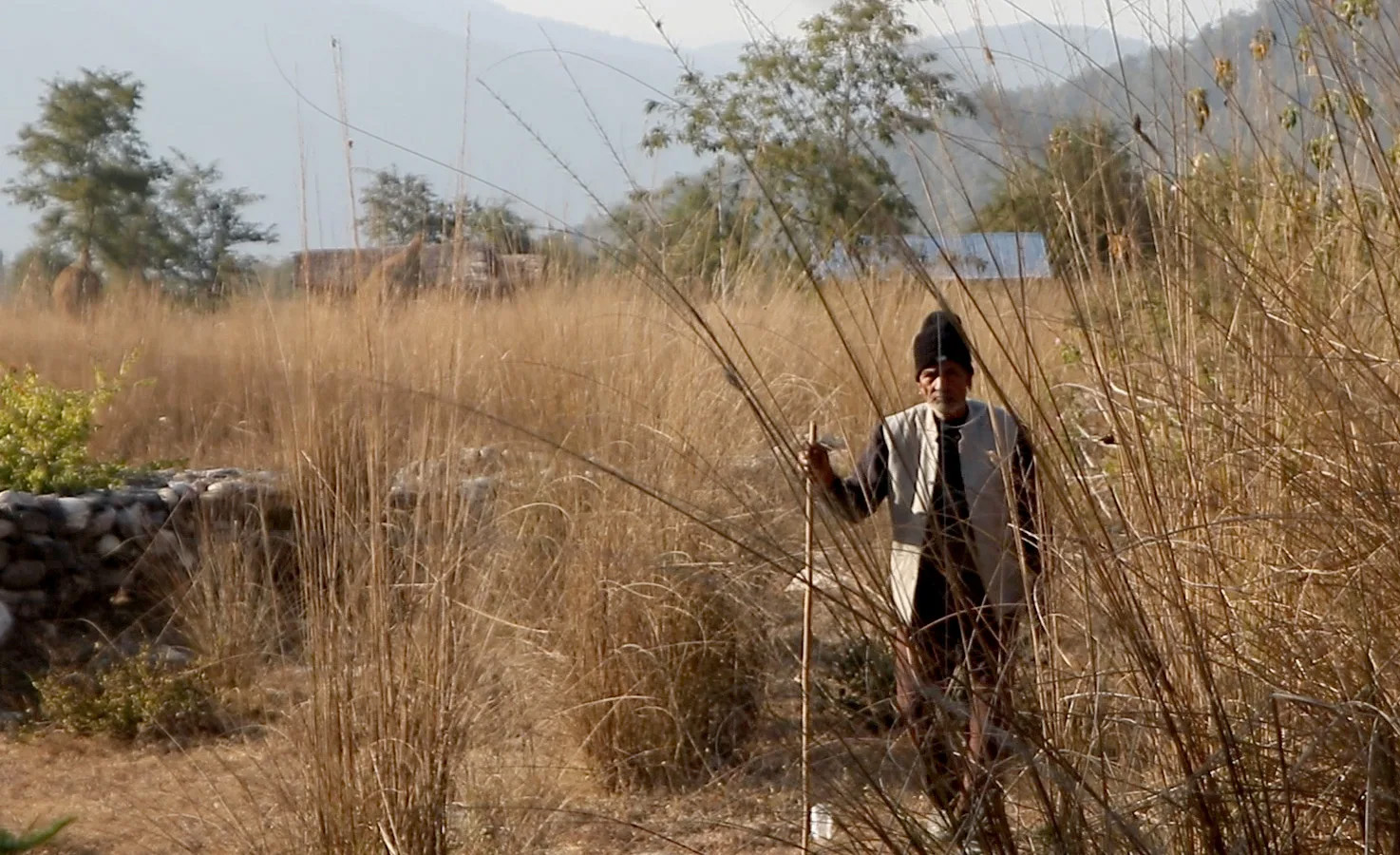
Dan Bahadur Bista is now 70 years old. Nearly 1.5 bighas of his land has turned into a riverbed, yet he still waits for the day his fields, buried beneath sand and boulders, can be reclaimed.
"The flood swept away our cows and calves, our ripened paddy and our home," he says. "Our good days are gone, and so is our youth."
Municipal records show that repeated floods in the Rangun and Pantura rivers between 2064 BS and 2072 BS displaced 265 families. Most of the displaced are living in the Devidhura and Baijanath community forest areas, while some families have migrated to the Tarai.
Living inside community and national forest areas, these families hold no land ownership certificates for the plots they occupy, yet they have nowhere else to go. "All we need is a permanent embankment; we don't ask for anything else," says Akbir Saud, who lives in the community forest area.
Although Parshuram Municipality does not have detailed records of the losses from 2064 BS, its records show that floods in 2078 BS damaged 164 homes and buried 200 ropanis of farmland in sand across the municipality.
An NPR 320 Million Embankment, Yet the Risk Remains
Local residents tried to reclaim their buried fields through their own efforts. Using money earned working in India, they hired bulldozers, cleared away boulders, leveled the land and resumed cultivation. As soon as the monsoon arrived, however, fresh floods in the Pantura and Rangun rivers washed away their hard work once again.
Various tiers of government have built embankments along the riverbanks to curb erosion. According to the Water Resources and Irrigation Office in Dadeldhura, 6.4 kilometers of embankments were constructed along the Pantura and Rangun rivers at a cost of around NPR 320 million.
Contracted in fiscal year 2074/75 BS, the project was completed in fiscal year 2078/79 BS. Shortly after completion, however, sections of the embankment began to collapse. Subsequent floods in 2080 BS, 2081 BS and 2083 BS damaged multiple parts of the structure.
Following complaints from local residents about substandard construction, a monitoring committee comprising representatives of the Water Resources and Irrigation Development Division Office in Dadeldhura and the local government was formed in fiscal year 2080/81 BS. Ward Chair Khagendra Bahadur Singh was also a member of the committee.
According to Singh, the monitoring team identified both technical and construction flaws in the embankment's gabion wire-mesh structures.
The monitoring report noted that substandard construction materials had been used, the foundation of the gabion wall had not been dug deep enough to match design specifications, and the structure subsided when floodwaters scoured away the soil and sand beneath the base.
The report also found that the gabion apron, the protective mat laid along the riverbed to prevent floodwaters from undercutting the toe of the embankment, was not long enough. Because the apron was weak, floodwaters struck the base of the main wall directly, damaging the structure.
The monitoring team also concluded that unregulated extraction of stones and sand during the winter months had weakened the embankment's foundation, Singh says.
Although the report documented clear construction flaws, it remains unclear who was held accountable afterward or what steps were taken to rectify the structure.
Who Bears Responsibility?
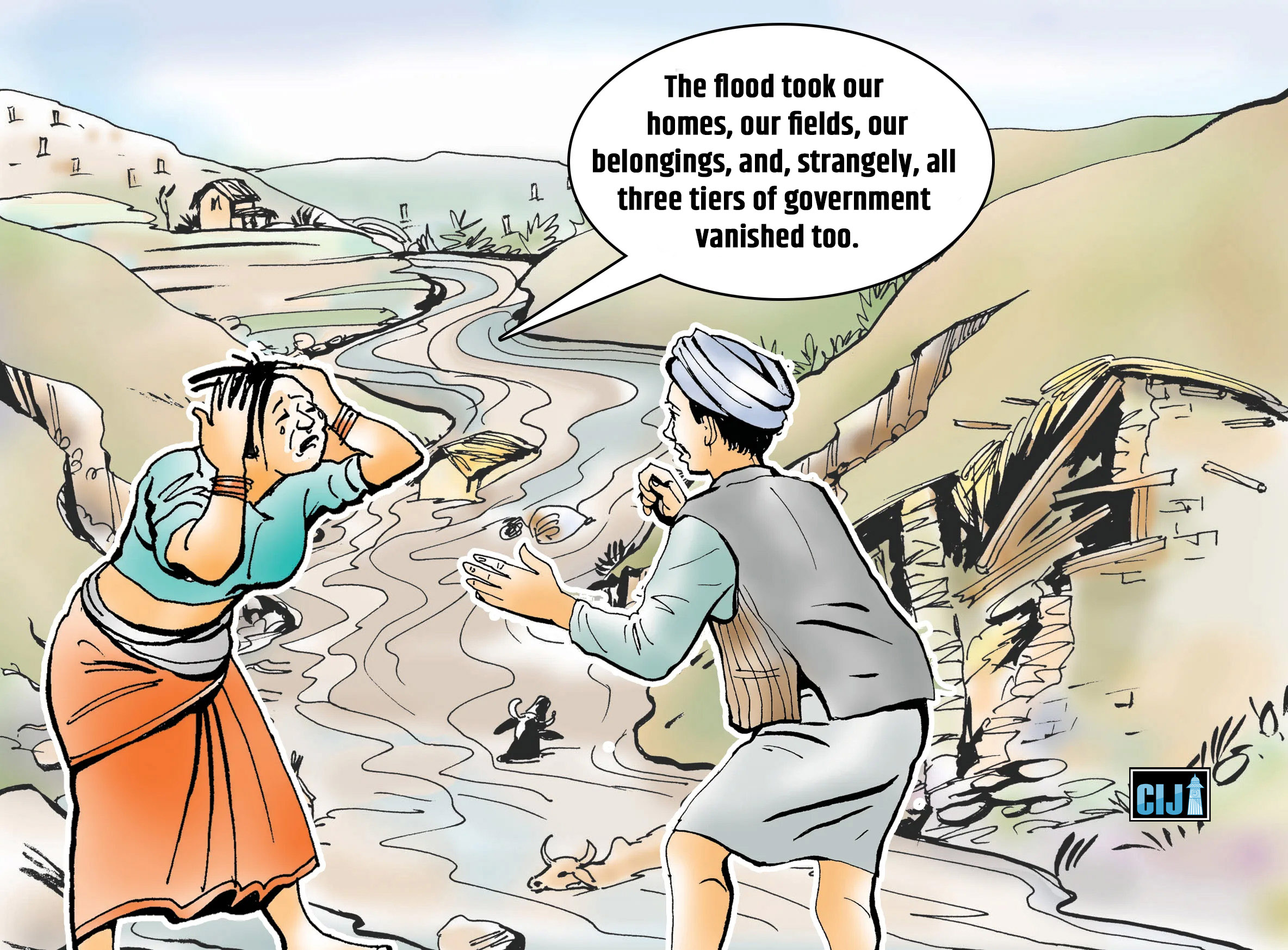
The question of who is responsible for flood control and embankment repairs in Simalkhet has also sparked a dispute among the federal, provincial and local governments.
According to Parshuram Municipality Mayor Bharat Badayar Joshi, river training falls under the jurisdiction of the federal government. The municipality can only submit requests for such work and has therefore not allocated a budget for it.
"This does not fall under our responsibility; it is the federal government's job. All we can do from here is make a request," Joshi says.
According to Ward Chair Singh, the failure to repair roughly 5.5 kilometers of embankment between Sargauda and Simalkhet on time has left three municipal wards at risk. He said the embankment had been built through the Water Resources and Irrigation Development Division Office in Dadeldhura under the Sudurpashchim Provincial Government, but no budget has been released for repairs since it was damaged.
There is no clarity among government agencies even over which body built the embankment and who is responsible for maintaining it. Despite documented construction defects, the question of who will take responsibility for fixing those flaws and ensuring the durability of infrastructure built with public funds remains unanswered.
Meanwhile, the question of who will ensure the safe rehabilitation of flood-displaced families also lingers. Although river training and the rehabilitation of displaced residents are distinct issues, both require coordination and accountability across government agencies.
Cut Off Without a Bridge
For Mahendra Saud, who runs a shop along the main road in Simalkhet, development means safe land and a safe road.
"You won't find a place as good as this anywhere else. All the people of Simalkhet need is a proper embankment," he says.
Although a road has been built, he says residents' hardships remain unchanged without a bridge. For the 7,490 residents of Parshuram Municipality – 6, 7 and 8 who must cross the Pantura River, every monsoon brings renewed danger. Sick patients, women in childbirth, children and students struggle to cross the river to reach Jogbuda Bazaar, the municipal center.
A bridge over the Pantura River and an embankment for Simalkhet are perennial campaign issues in local, provincial and federal elections alike. According to local resident Akbir Saud, politicians of every stripe have repeatedly promised to build the bridge and embankment. From now on, he says, residents will demand an accounting of actual work rather than fresh promises when politicians come knocking on their doors.
"Leaders from both old and new parties who visit us all promise to build the bridge and the embankment," says Dhaniram Tiwari, secretary of the Flood Victims' Struggle Committee, who also lost his home and farmland to the flood. "Yet to this day, the problem remains exactly the same."
A School Displaced by the Flood
The Simalkhet flood did not just lay waste to homes and fields; it also swept away the local school. The original building of Siddhanath Primary School in Khairenijala was washed away by the flood of 2064 BS.
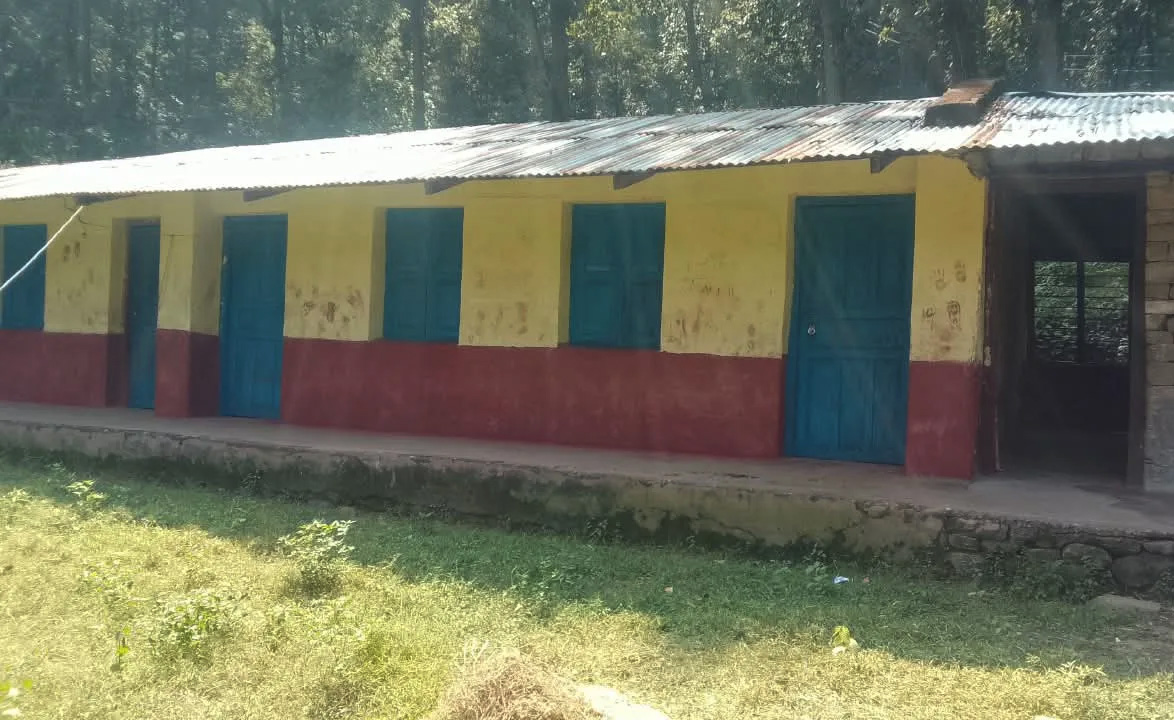
According to Headmaster Chandra Bahadur Dangi, physical infrastructure to run classes up to grade eight had just been completed at the time. The nighttime flood left neither the school building nor its official records standing.
Today, 94 children attend the school. Staffed by three teachers and running classes up to grade six, the school operates out of makeshift sheds inside a community forest area.
"During Ashadh, Shrawan and Bhadra, the school has to close because of floods and incessant rain, and in the winter cold of Poush, it is hard to hold classes at all," Headmaster Dangi says.
According to teacher Narendra Bahadur Khatri, as parents migrate to India for work, many have begun taking their children along with them. In this way, the fallout from a flood 19 years ago has reached the education of an entire generation.
According to Headmaster Dangi, the old school stood in the Patiyani area of Ward 6. It is now being operated inside the Siddhanath Community Forest area in Simalkhet, Ward 5, after spending NPR 5.6 million.
The Same Question 19 Years On
Roads and electricity have now reached Simalkhet. There is a school, and links to the market have grown. Yet the threat of flooding has not receded. Instead, as new development infrastructure is added, a more urgent question looms: why did securing the settlement take a back seat to building infrastructure? Why was nothing done either to relocate at-risk settlements to safer ground or to ensure safe living conditions where they stand?
Nearly two decades on, local residents are still forced to live with the exact same recurring hazard. They ask: what is the responsibility of the various tiers and agencies of the state? And when structures built with public funds collapse, who is held accountable?
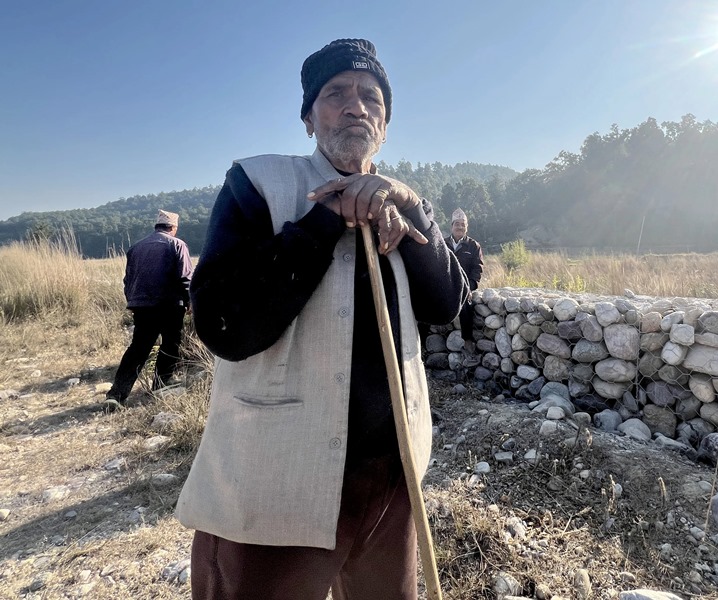
Local governments are tasked with disaster management, while provincial and federal agencies hold responsibility for river training, irrigation, major infrastructure and budgets. On paper, work appears to have been done, and hundreds of millions of rupees have been spent building embankments. Yet the residents of Simalkhet have still not secured safe housing or arable land.
For Champhadevi, Simalkhet is not yet dead. Looking down from the hill above, she remembers her old fields. She knows the flood has already taken much of her life, yet she still holds on to the wish of seeing greenery return to Simalkhet.
"I am like the setting sun now," she says. "Still, I hold on to the hope that greenery will one day return to Simalkhet."
More Investigative Stories
Despite Billions of Rupees in Insurance Subsidies, Farmers Remain Exposed to Risk
Although the government has spent billions of rupees subsidizing agricultural and livestock insurance premiums to attract smallholder farmers, crop insurance...
As Mustang Warms, Farming Shifts Uphill and Challenges Mount
Rising temperatures and rainfall are transforming agriculture in Mustang. Yet efforts by farmers and the government to cope with the...
Comment Here