Investigative Stories
As Mustang Warms, Farming Shifts Uphill and Challenges Mount
Rising temperatures and rainfall are transforming agriculture in Mustang. Yet efforts by farmers and the government to cope with the accompanying surge in crop diseases, water scarcity and threats to livestock have failed to keep pace.

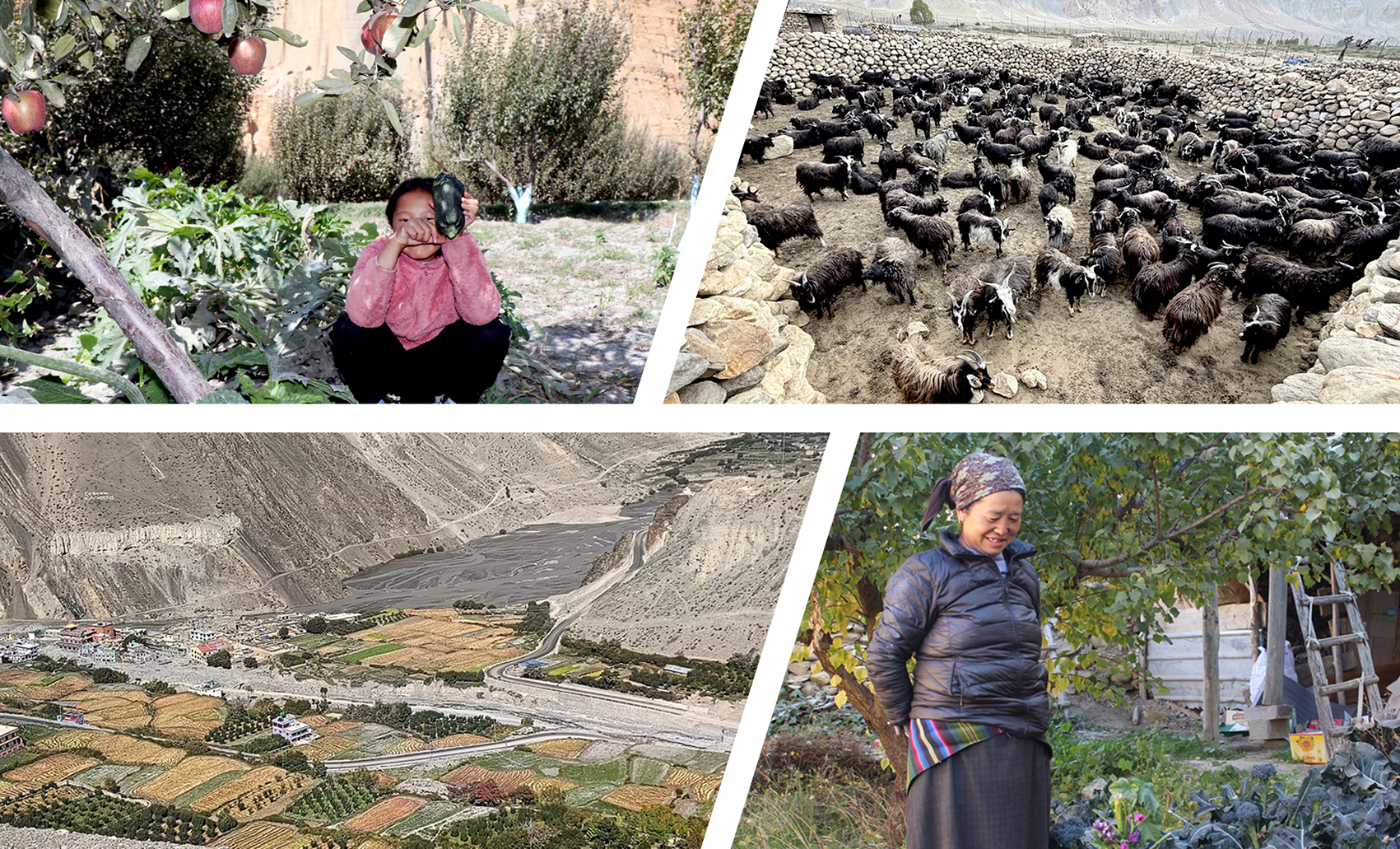
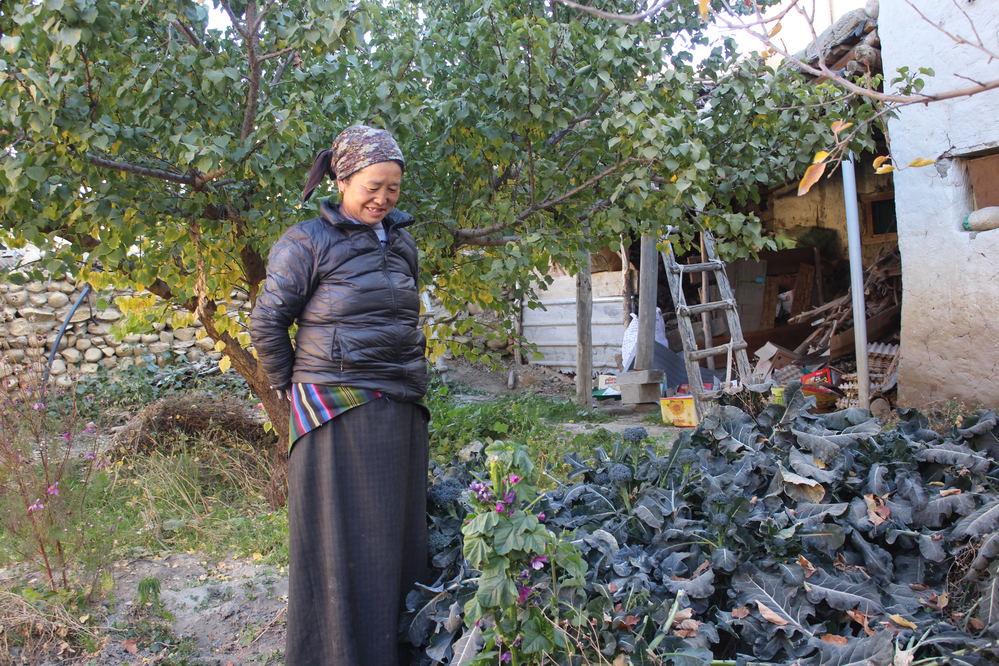
These days, 50-year-old Chhiring Dolma Gurung of Ghami in Loghekar-Damodarkunda Rural Municipality – 4 picks fresh broccoli, zucchini and tomatoes from her own garden to serve guests at her hotel. Nestled at the foot of a barren mountain, her kitchen garden is brimming with cauliflower, broccoli, tomatoes, zucchini and broadleaf mustard greens (rayo). In Chhuksang, Waragung Muktikshetra – 3, Chhimi Gurung has even grown cucumbers and bitter gourds in her plot.
"It feels like just yesterday that we had to walk for 12 days down to the lowlands just to eat green vegetables," Dolma recalled. "When I was 13, I followed my father down through Jomsom, Ghorepani and Naudanda to Pokhara. That was the first time I ever tasted green vegetables. Seeing those very same vegetables growing in abundance in my own garden now feels like a dream."
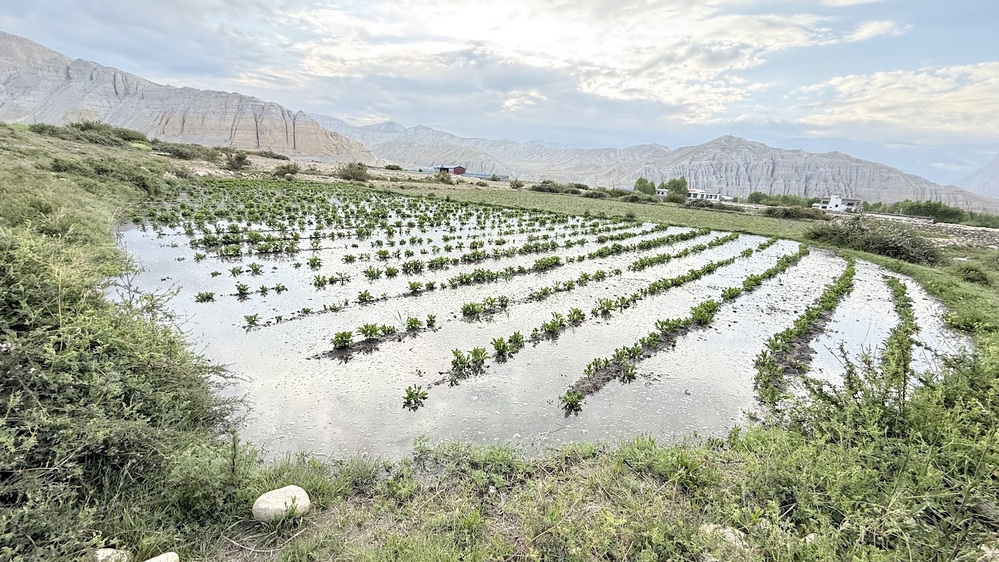
Dolma, Chhimi and their neighbors are astonished to see lush green vegetables thriving in plots that until a few years ago yielded only potatoes, buckwheat and naked barley (uwa). Why do crops that never grew here in the past flourish today?
For centuries reliant on potatoes, buckwheat and naked barley, Mustang's agriculture is undergoing a transformation. The arrival of road connectivity has made it easier to get farm produce to market, broadening avenues of income for local farmers.
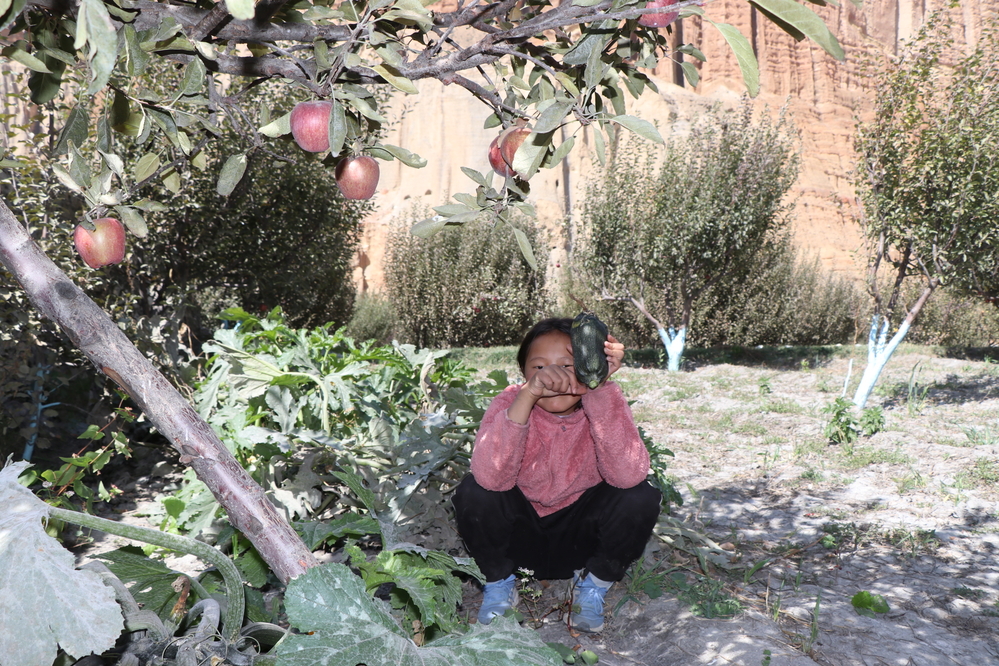
Yet this shift is not merely a story of prosperity brought by roads, technology and market access. Alongside the new flavors entering Mustangi kitchens, it is also a sign of deeper changes unfolding across the Himalayan ecology. More pressingly, now that the impacts of climate change are already visible in Mustang's fields, it raises the question of whether the policies, programs and three tiers of government meant to address them have actually reached farmers' plots.
'Cold, Snow and Winter Are Our Gods'
Apples, which once grew only in Lower Mustang, have begun fruiting in Lomanthang in Upper Mustang. Commercial production of vegetables and apples in the high mountains has brought economic gains as well. Yet agricultural scientist Tika Bahadur Karki warns that a shift that looks like an opportunity in the short term could turn into an adverse fallout of the climate crisis over the long run.
"Among the many impacts of climate change is the gradual upward shift of agro-climatic zones," Karki says. "This is a direct consequence of the global climate crisis."
According to data provided by the Pokhara office of the Department of Hydrology and Meteorology (DHM), average annual rainfall in Mustang remained below 300 millimeters until 2010, but climbed to 665 millimeters by 2023. The district recorded 337.8 millimeters of rainfall in 2024, 377.7 millimeters in 2025 and 176.1 millimeters up to July 2026.
At the weather station in Chhoser in Upper Mustang, annual rainfall stood below 200 millimeters in 2009 before reaching 331 millimeters in 2023. Records show 280 millimeters of rainfall in 2024, 259.4 millimeters in 2025 and 139.7 millimeters up to July 2026.
Although increased rainfall and reduced snowfall have raised soil moisture and allowed cultivation to move uphill, the shift has stirred growing anxiety among local residents.
"It makes us happy to see apples and vegetables growing in our fields, but I fear this might just be a fleeting phase," says Dechhen Dolma Gurung of Chhoser in Lomanthang Rural Municipality – 3. "Cold, snow and winter are our gods. I don't know whether our children will ever get to see this environment."
According to Sumana Regmi, a meteorologist at the DHM office in Pokhara, an analysis of Mustang's temperature records shows that alongside an overall warming trend, average minimum and maximum temperatures have become highly erratic. "Liquid precipitation has also increased," Regmi says. "When we isolate and examine records for the summer months alone, warming appears much more pronounced. As snow cover shrinks in Mustang, the risk of glacial lake outbursts and snowmelt floods is rising, which will also affect agriculture."
Pests and Diseases Climb Alongside Crops
Just as lowland crops have migrated upward with rising temperatures, pests and crop diseases have climbed the mountains too. According to Nishan Khadka Magar, agriculture extension officer at the Agriculture and Livestock Development Office in Mustang, new pests and diseases have spread all the way to the upper reaches of the district.
"White grubs, blight, tuber moths and scale insects have started appearing in potatoes grown in Upper Mustang," says Tamdi Angyal Gurung of Surkhang in Loghekar-Damodarkunda Rural Municipality – 4. "With borers and scab disease affecting our apples, we have been forced to use pesticides."
According to Arjun Regmi, chief administrative officer of the rural municipality, armyworms, never before seen in the area, have also begun infesting indigenous crops such as wheat, barley and naked barley.
As natural water springs begin to dry up, the rural municipality has increased investment in conservation ponds and greenhouse technology, but it faces a shortage of technical staff.
According to the Hindu Kush Himalaya Snow Update 2026 published by the International Centre for Integrated Mountain Development (ICIMOD), snow persistence across the Himalayan region has declined by 27.6 percent. As snow reserves dwindle, the danger grows that Mustang's newfound greenery could soon turn to despair.
"The weather has changed and it has stopped snowing," says 68-year-old Kasang Bista of Charang in Loghekar-Damodarkunda Rural Municipality – 1. "Short-stalked maize and vegetables that never grew here before are now fruiting in our fields. Yet the indigenous naked barley, buckwheat and black peas that sustained our ancestors are beginning to disappear."
A study conducted by ICIMOD and a team from Kathmandu University including Dr. Roshan Man Bajracharya, titled Soil Study in Mustang: Assessing Soil Productivity and Organic Carbon Linked to Climate Change Mitigation, notes that disruptions to natural cycles have impaired the soil's capacity to retain moisture and store organic carbon. The study concludes that this could jeopardize indigenous food security in the Himalayan region.
Declining Indigenous Grain Harvests
Official figures show a sharp decline in both the cultivated area and total production of traditional food grains in Mustang over the past decade.
According to data from the former District Development Committee and the Agriculture and Livestock Development Office in Mustang, a comparison between fiscal years 2070/71 BS and 2082/83 BS reveals a steep drop in the cultivated area and output of major cereal crops including maize, wheat, barley and buckwheat.
While 1,110 metric tons of wheat were produced across 604 hectares in fiscal year 2070/71 BS, the cultivated area fell to 117.97 hectares and output to 316.60 metric tons by fiscal year 2082/83 BS.
Over the same period, maize production dropped from 817 metric tons to 196.65 metric tons. Barley output declined from 506 to 391.69 metric tons, while buckwheat production fell from 1,248 to 645 metric tons.
Naked barley (uwa), however, shows a different pattern. Although its cultivated area shrank from 370 hectares in fiscal year 2070/71 BS to 335.13 hectares in fiscal year 2082/83 BS, production rose from 740 metric tons to 1,242 metric tons.
Agricultural technicians point out that climate change is not the sole reason behind the shrinking acreage and output of food grains. Land left fallow due to farm labor shortages in Upper Mustang, farmers shifting from cereal crops to apples that fetch immediate cash returns, and the expansion of high-density apple orchards, which crowd out the intercropping traditionally practiced inside older orchards, are also major drivers.
Soaked Down, Dried-Up Pastures
At a time when Nepal's pashmina industry relies heavily on imported raw materials, efforts have been launched to establish a Chyangra (mountain goat) zone in Mustang to reduce pashmina imports.
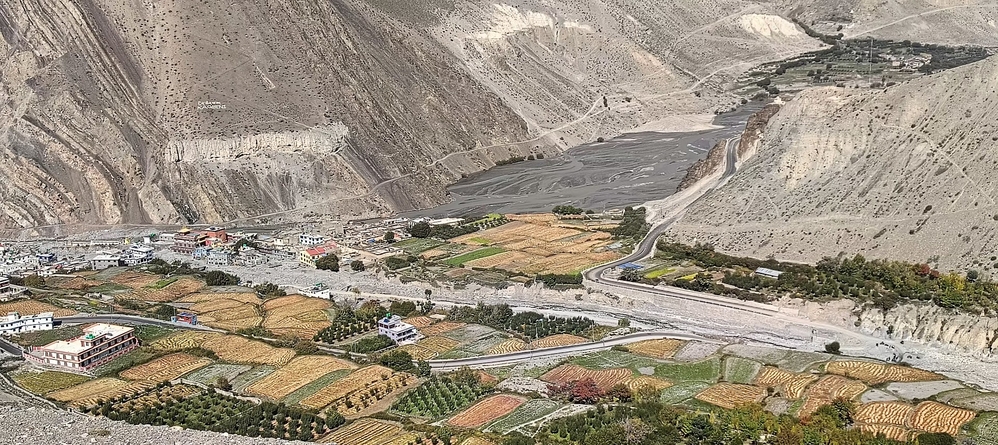
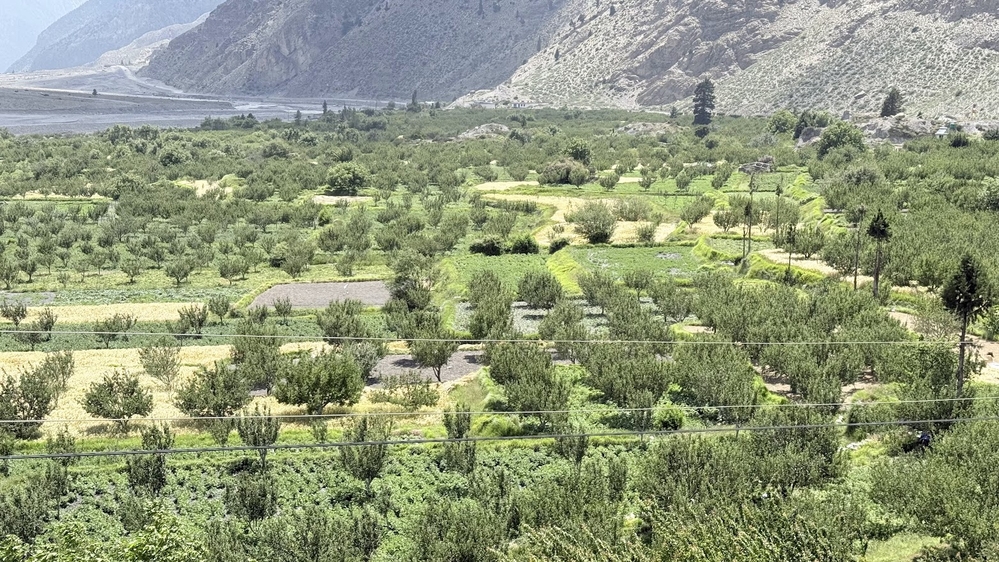
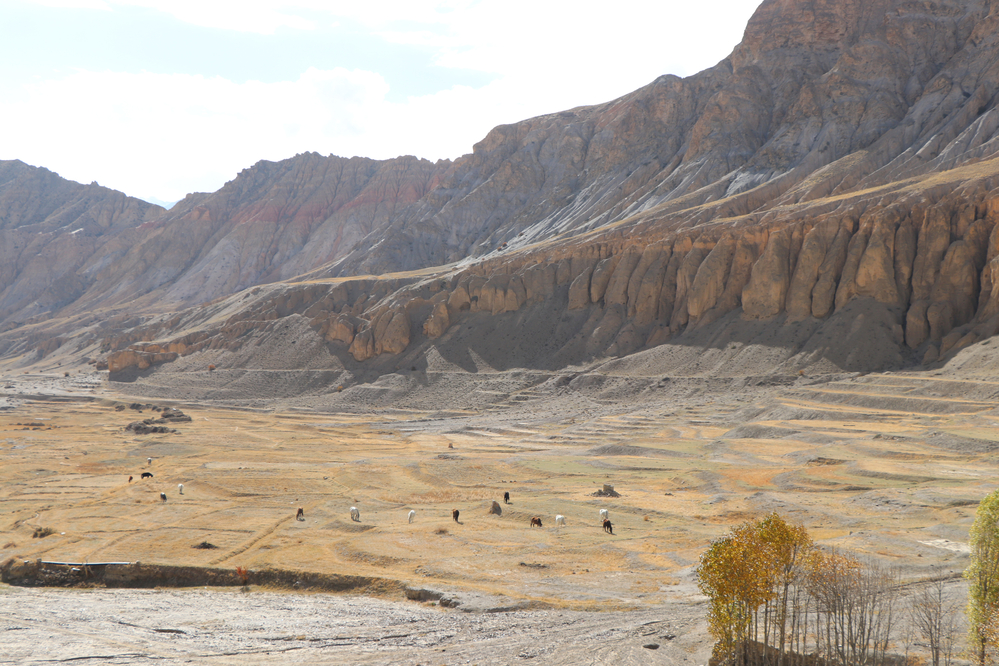
Fields of buckwheat and barley in Kagbeni, Waragung Muktikshetra Rural Municipality – 4.
According to veterinarian Dr. Lalmani Aryal of the Agriculture and Livestock Development Office in Mustang, the sale of Chyangra goats shipped out of the district for meat during the Dashain festival alone brings more than NPR 400 million in cash into Mustang each year.
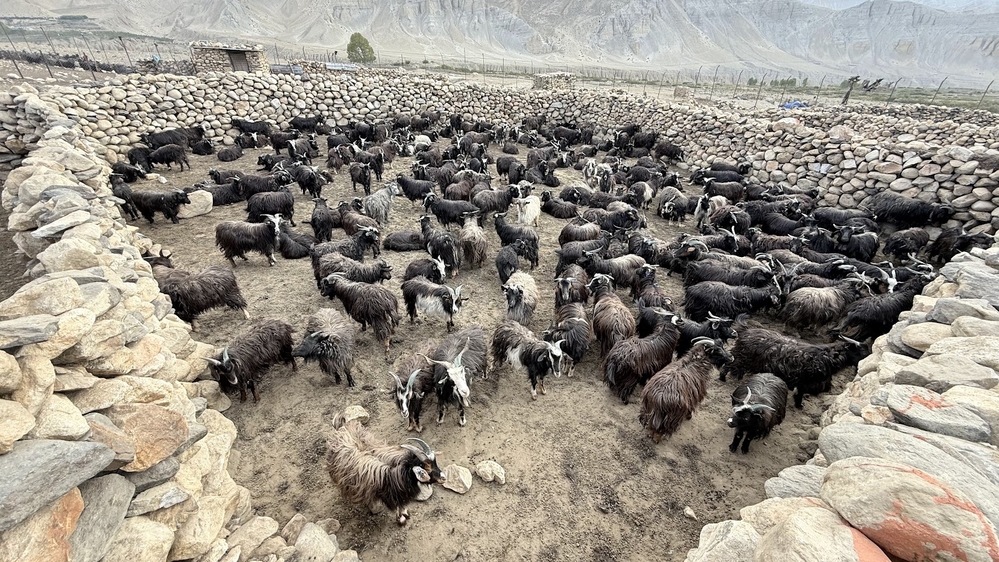
Yet the Chyangra itself is now under threat from the climate crisis. According to Dr. Aryal, the mountain goat has a double-layered coat: a coarse outer layer that sheds dry snow, and a soft, fine undercoat of down (pashmina) next to the skin that keeps the animal warm.
When rain falls instead of snow, however, moisture seeps all the way through and soaks the pashmina undercoat, heightening the risk of the goats dying from pneumonia. Livestock technicians say traditional open pens and grazing practices can no longer protect the herds, making new adaptation measures essential.
"Mountain goats that have traditionally been kept in open enclosures now need to be moved into climate-adapted permanent sheds built with steel trusses and corrugated metal roofs," says Jagadish Pandey, chief of the National Livestock Resource Management and Promotion Office. Doing so, he adds, requires aligning policy, budget, technical support and local needs.
Keshav Bhatta, under-secretary at the National Livestock Resource Management and Promotion Office under the Ministry of Agriculture, Forestry and Tourism, says policy ambiguity has already delayed handing over the management of alpine rangelands to local governments and communities so they can confront challenges brought by the climate crisis.
"The rangeland policy drafted before federalism must be updated to fit current realities, and alpine pastures should be handed over to local governments under a framework of climate-resilient habitat and rangeland management," Bhatta says.
A report published by Dialogue Earth on 21 May 2024, citing field research in Ladakh, India, noted that native pashmina goats adapted to withstand freezing winds and dry snow across the Trans-Himalayan region were increasingly succumbing to pneumonia and liver ailments following unseasonal rains and cloudbursts triggered by shifting weather patterns.
Local Efforts Alone Are Not Enough
The expansion of the road network has given Mustang's agricultural economy a new direction.
According to Chhiring Gurung, vice-chair of Loghekar-Damodarkunda Rural Municipality, tens of millions of rupees worth of apples now flow down to lowland cities every year. By subsidizing apple saplings, transport and orchard management, the rural municipality has brought fallow land back into productive use, creating a new source of income for Mustang. Yet the apple crop, considered the backbone of this farm economy, is itself caught in the grip of climate change.
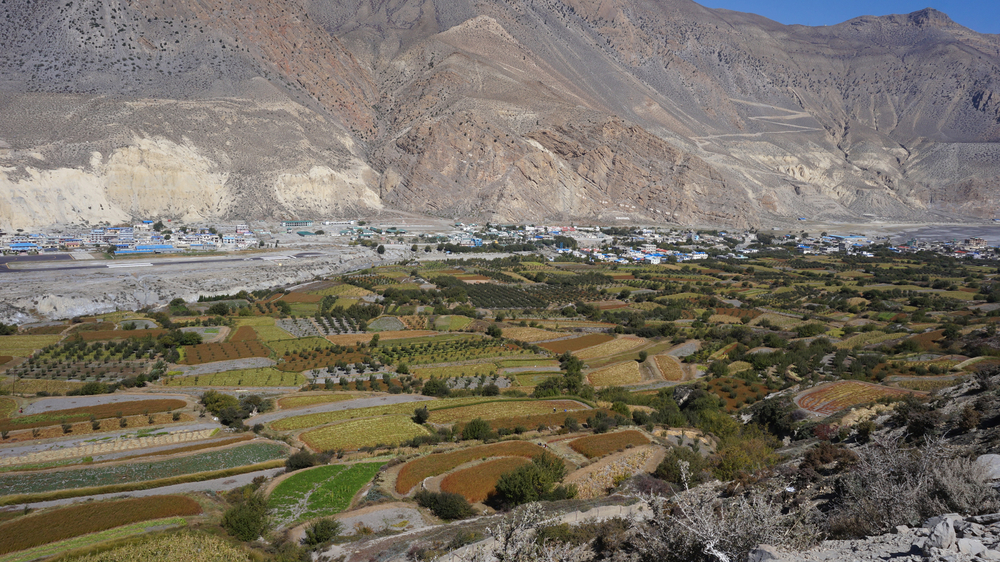
Apple trees require at least 1,000 to 1,500 chilling hours, defined as temperatures below 7 degrees Celsius, each year. Since snowfall has declined, orchards in Lower Mustang no longer receive the required chilling hours, forcing farmers to shift cultivation to higher elevations.
Mustang's agricultural geography is moving in two directions at once: farm produce is flowing downhill to market, while cultivation itself is climbing uphill driven by a warming climate.
In Loghekar-Damodarkunda Rural Municipality, apples are now being cultivated at altitudes of up to 3,900 meters. However, Bharat Gautam, chief of the Apple Zone in Mustang under the National Agriculture Modernization Program, said apple trees planted in the upper reaches blossom and ripen later than those in lower areas.
According to Gautam, the productivity, taste and quality of apples grown at these higher altitudes are still being tested.
Outbreaks of fungal and bacterial diseases, along with infestations of red spider mites, have appeared not only in traditional lower-elevation apple belts but also in orchards that have shifted to higher altitudes. As farmers increasingly turn to chemical pesticides to save their crops, the Apple Zone team has developed and begun testing a biopesticide using lactic acid bacteria cultured from native Mustang grasses.
The Adaptation Challenge
With the impacts of climate change already playing out in Mustang's farmlands, questions arise over how responsibility for tackling them is divided among the three tiers of government, and how effectively those measures are being implemented.
Nepal's federal structure distributes responsibilities related to agriculture, the environment, natural resources and disaster management across all three levels of government.
Local governments are running adaptation programs relying on their own limited resources, experience and technical staff. The provincial government says it is operating subsidy, insurance and orchard management schemes, while the federal government claims it has channeled conditional grants and programs for pest control, soil improvement and indigenous crop promotion to the local level. Yet none of them has a unified picture of the crisis unfolding in farmers' fields.
Neither the Department of Agriculture nor the Nepal Agricultural Research Council (NARC) has clear, up-to-date data on the upward shift of cultivation. Without updated information on which crops are moving where, how far pests and diseases have spread, how water sources are changing, and what kind of technical support each municipality needs, the effectiveness of policies drafted by all three tiers of government remains in question.
Gharapjhong Rural Municipality says that while it has been running climate adaptation programs based on its own local knowledge and skills, it has received no direct policy or budgetary support from the federal government.
According to Dr. Rajesh Kumar Chaudhary, information officer at Gandaki Province's Ministry of Agriculture, Land Management and Cooperatives, the provincial government has allocated NPR 62.8 million to Mustang for climate adaptation and climate-smart technology, alongside an apple and walnut orchard management program carrying a 50 percent subsidy through the Nut and Fruit in Hilly Areas (NAFHA) project.
Because unseasonal rains and floods inflict heavy losses on apple growers, he said the province has introduced crop insurance premium subsidies of up to 80 percent as well as a provincial relief program for uninsured farmers.
He also stressed the need for coordination among local, provincial and federal agricultural agencies to monitor the effectiveness of subsidies.
Meanwhile, when asked whether climate adaptation policies have actually reached farmers' fields, Tilak Raj Chaulagain, senior agricultural economist and information officer at the federal Department of Agriculture, said the department has not conducted any study on the matter and therefore cannot comment on the basis of hard data. Questions about preserving the quality of apples and other fruits, he added, could be answered by NARC.
However, repeated attempts to reach NARC Information Officer Dr. Sudha Sapkota by phone and email for comment went unanswered.
As powers were divided among the three tiers of government, so too were responsibilities. Yet the question of who is accountable for measuring the fallout of the climate crisis and reforming policies accordingly remains unanswered.
According to Lomanthang Rural Municipality Chair Tashi Narbu Gurung, the rural municipality has adopted plastic polyhouse tunnels for vegetable farming, agricultural insurance and integrated pest management, yet it is struggling to contain new pests and diseases.
Thasang Rural Municipality has begun promoting climate-resilient kiwi cultivation in the Ghasa area. According to spokesperson and Ward Chair Gautam Sherchan, the rural municipality has emphasized agricultural mechanization alongside greenhouse technology. However, Chief Administrative Officer Anil Aryal says service delivery has suffered because the entire rural municipality has to rely on just two agricultural technicians.
According to Basanta Giri, chief administrative officer of Waragung Muktikshetra Rural Municipality, farmers have had to spend heavily on pesticides to control new crop pests and diseases. Although the rural municipality allocated NPR 5.06 million in fiscal year 2083/84 BS for organic fertilizer, mechanization and crop treatment, Giri says there is still a lack of concrete planning and adequate grant support from the federal government.
For Chhiring Dolma, the broccoli thriving in her garden brings joy on one hand, even as dwindling snowfall and the emergence of unfamiliar pests in that very same plot deepen her worry on the other.
In Mustang, climate change is no longer a distant prospect. Confronting it will require a coordinated, evidence-based effort across all three tiers of government.
More Investigative Stories

Shifting Himalayas Above Put Hydropower and Local Revenue at Risk Below
Growing instability in the high mountains is clouding the safety of Nepal's hydropower projects and its dream of achieving prosperity...
Government Cuts Trees for Public Projects without Paying Mandatory Compensation
Thousands of trees are felled every year in the name of infrastructure development. More than NPR 8.54 billion remains unpaid...
Comment Here