Investigative Stories
The Orchid Smuggling Route
How are valuable yet prohibited plants collected from Nepal’s forests reaching cross-border markets?

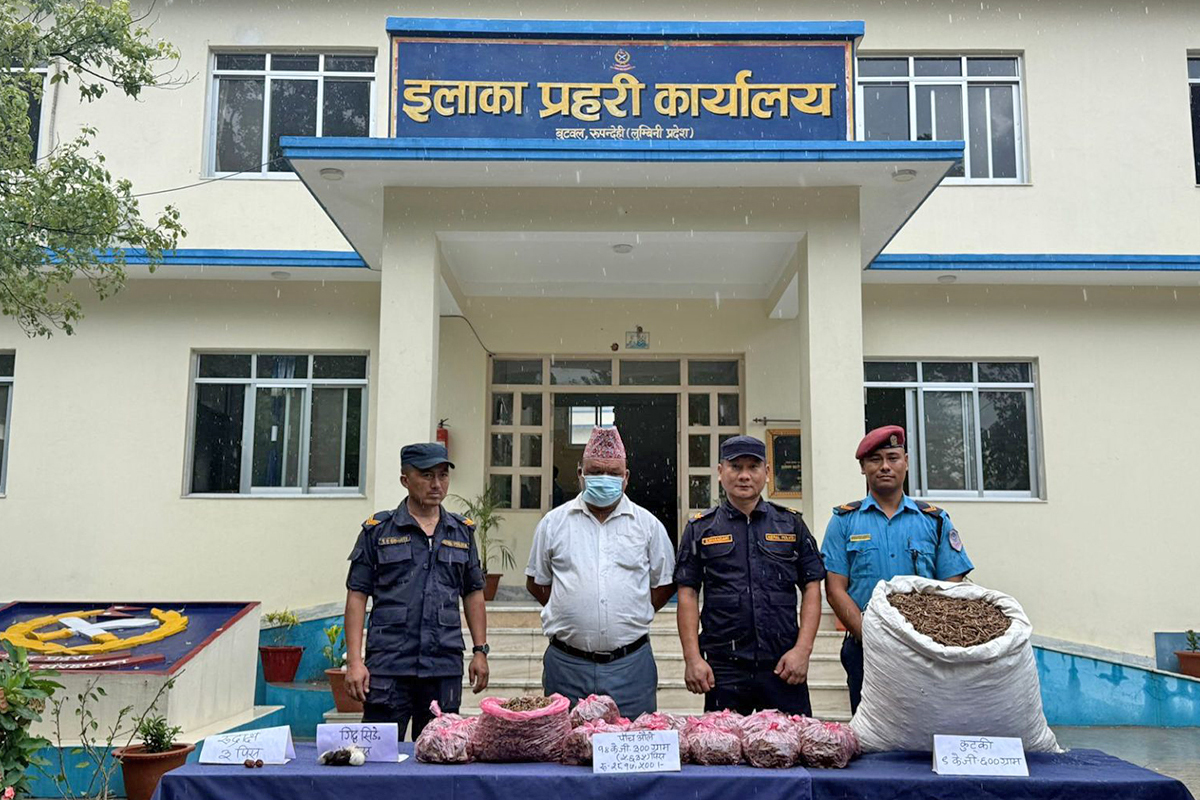
In August 2025, acting on a tip-off about the illegal trade in medicinal herbs, police raided a warehouse in Butwal Sub-Metropolitan City-2, Rupandehi. They arrested Suk Bahadur Budha and seized 9.5 kilograms of kutki (Picrorhiza kurroa) along with 16 kilograms of a herb resembling the Himalayan marsh orchid (Dactylorhiza hatagirea), commonly known as paanchaunle. Laboratory tests later identified the seized orchid species as fragrant orchids (Gymnadenia conopsea), a species listed in Appendix II of the Convention on International Trade in Endangered Species of Wild Fauna and Flora (CITES), a treaty to which Nepal is a party.
Appendix II includes species that are at risk of extinction if trade is not strictly regulated. Such species can only be collected and traded under regulated conditions, and only after scientific studies determine the sustainable volume and duration of collection. But because Nepal has yet to prepare the required species management plans, the collection and trade of Appendix II-listed plant species remain effectively prohibited in the country. In other words, their trade is illegal.
The Division Forest Office in Rupandehi investigated Budha only under the Forest Act, charging him with the “theft, transport, or sale of forest products from national forests or collection sites.” The District Court sentenced him to a fine of just Rs. 8,000. No investigation was conducted under the CITES Act.
Had he been investigated under that law and convicted of illegally trading a CITES-listed plant species such as Gymnadenia conopsea, he could have faced six months to one year in prison, a fine ranging from Rs. 50,000 to Rs. 100,000, or both.
Despite the CITES Act being in place in Nepal for nearly a decade, its implementation remains incomplete. The Act mandates scientific studies and management plans for the collection and trade of listed plants such as wild orchids (Orchidaceae), commonly known as sunakhari in Nepal, but the government has yet to formulate these plans. As a result, while legal trade is blocked, illegal collection and trafficking continue to flourish. CIJ’s analysis of police seizures and subsequent prosecutions shows that, in most cases, only low-level individuals involved in collection and transport are being caught in the legal net.
Suk Bahadur is one such example. Although the charge sheet identifies him as a medicinal herb trader, the investigation failed to probe the broader illegal trade network beyond him.
Mani Ram Khanal, the investigating officer, says the case was handled in line with advice from the government attorney’s office, and that no action was taken under the CITES Act because the lab report concluded the seized orchids were not paanchaunle.
“We are technical staff; we are not fully versed in every level of investigation,” says Khanal, now a senior forest officer at the Division Forest Office in Nawalparasi. “We followed the instructions of the government attorney.”
Nepal became a signatory to CITES in 1975, but it took more than four decades to pass a domestic law, which was enacted only in 2017. Under Nepal’s CITES Act, the Department of Forests and Soil Conservation and the Department of Plant Resources must coordinate before granting permission for the collection and sale of listed flora. If a company or firm seeks permission to export such a plant, it must first apply to the Department of Forests and Soil Conservation, which then requests a scientific assessment from the Department of Plant Resources and decides whether to grant the permit.
These decisions must also align with a management plan, prepared by the Department of Forests, that establishes export quotas for wildlife or flora. Nearly a decade after the law was enacted, that management plan still does not exist. That is why orchid trade remains illegal in Nepal.
Surendra Adhikari, head of the CITES section at the forest department, acknowledges that the absence of a management plan is at the heart of the problem. But he says he does not know when such a plan will be prepared, or why it has still not been completed. Instead, he downplays the scale of Nepal’s orchid trade.
“There isn’t really much trade in this,” he said. “Even if a little happens, the collection process is cumbersome.”
While forest department officials insist trade is limited, another government agency identifies orchids as the most frequently smuggled plant species. In a 2018 publication titled Information on the Most Poached Wildlife and Plant Species in Nepal, the Department of National Parks and Wildlife Conservation identified sunakhari — wild orchids — as a major category of illegally exported plant species. According to experts, of the approximately 500 orchid species found in Nepal, 82 are used for medicinal purposes. Botany researcher Kamal Maden says orchid smuggling has surged because of their medicinal properties and use in cosmetic products.
Illegal Trade
Seizure records of wild orchids by police offer a clear indication of the scale of the illicit trade. Since Nepal enacted the CITES Act, more than 3,500 kilograms of orchids have been seized in districts including Lamjung, Dolakha, Gorkha, Rupandehi, Darchula, Dhading, Baglung, Makwanpur, and West Nawalparasi, according to police and forest office data.
The single largest seizure during this period came in March 2022, when authorities in West Nawalparasi confiscated 2,180 kilograms of orchids in one shipment. Trade in prohibited plants is typically conducted in an organized and highly secretive manner. As a result, experts estimate that only five to 10 percent of the actual trade is ever intercepted.
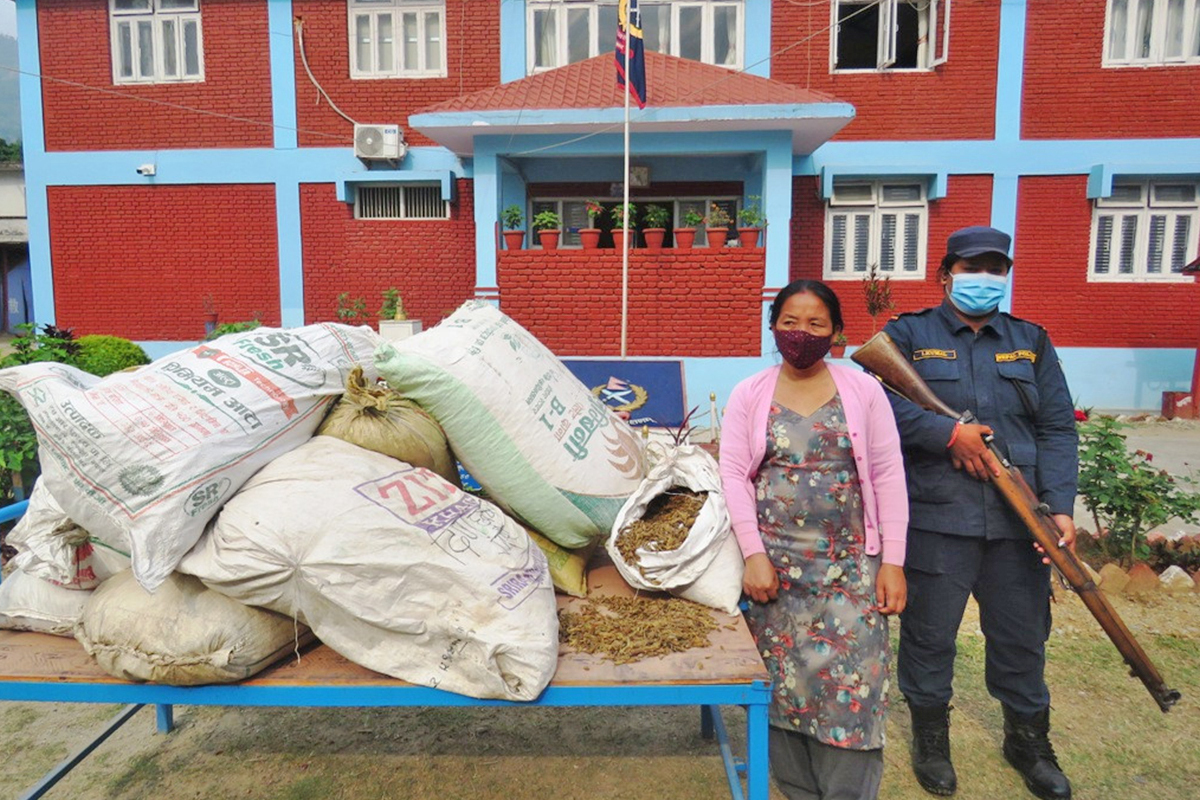
Before the CITES Act came into force, orchids were legally exported from Nepal. Data from the CITES Trade Database show that between 2008 and 2016, nearly 50,000 kilograms of orchids were exported from the country. Since the law was enacted, however, the database shows no official exports. But that does not mean Nepali orchids have stopped reaching global markets through illegal channels, says Reshu Bashyal of Greenhood Nepal, an organization involved in research on illegal orchid trade.
According to traders, the final destination for orchids leaving Nepal is China. During the period when exports were still legal, Nepali orchids only occasionally went directly to China. Because there was no government-level agreement between Nepal and China, shipments were often routed through Thailand before being shipped onward to China.
The CITES Trade Database shows that large quantities of orchids were exported from Nepal to Thailand. Now that exports are illegal, such transactions no longer appear in official trade records. But seizure records inside Nepal indicate that the trade continues through illicit routes, Bashyal says.
“There is a tendency within government agencies to treat illegal plant trade less seriously than wildlife crime,” she says. “Because no one (person or wild animal) has been killed — because it’s ‘just plants’ — issues like this, despite their ecological impact, are often taken lightly.”
Permits Issued Under Different Species
Bishnu Bhandari, former president of the Herbal Entrepreneurs Association of Nepal, still receives photos and videos of different orchid species on his mobile phone. “This one came from Dhading,” he said on February 27, 2026, showing a photo, he had just received. “Even though I’ve stopped trading in these, I still keep getting messages saying the stock is ready.”
Bhandari runs New Bhandari Traders, a herbal products business in Sitapaila, Kathmandu. Until 2016, the company also traded in orchids. But after the CITES Act closed the legal route for that trade, Bhandari says he withdrew from the business. Without naming the district, he then showed another video on his phone. It was of jeevanti, another local variety of wild orchid.
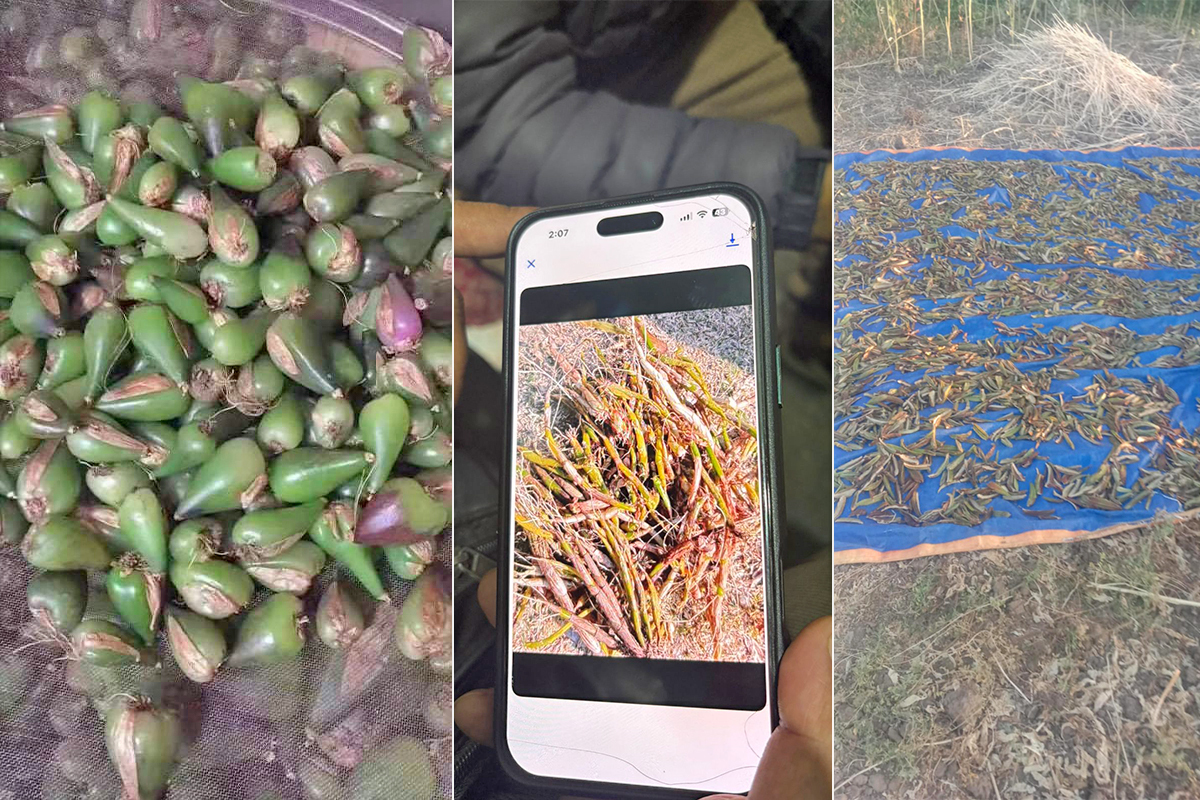
Jeevanti is another local variety of wild orchid. “They sent photos and videos saying they have four to five thousand kilograms,” he said. “This goes to India by the truckload without any documentation.”
Bhandari adds that he frequently receives messages from people offering to supply paanchaunle, the Himalayan marsh orchid, as well. “The market exists; you can sell as much as you can get,” he says.
Standing beside him was Devendra Dhakal, the current president of the Herbal Entrepreneurs Association. “It is being traded illegally,” Dhakal said. “Traders are willing to pay the royalty and take it legally. But what can they do when forest officials themselves ignore it?”
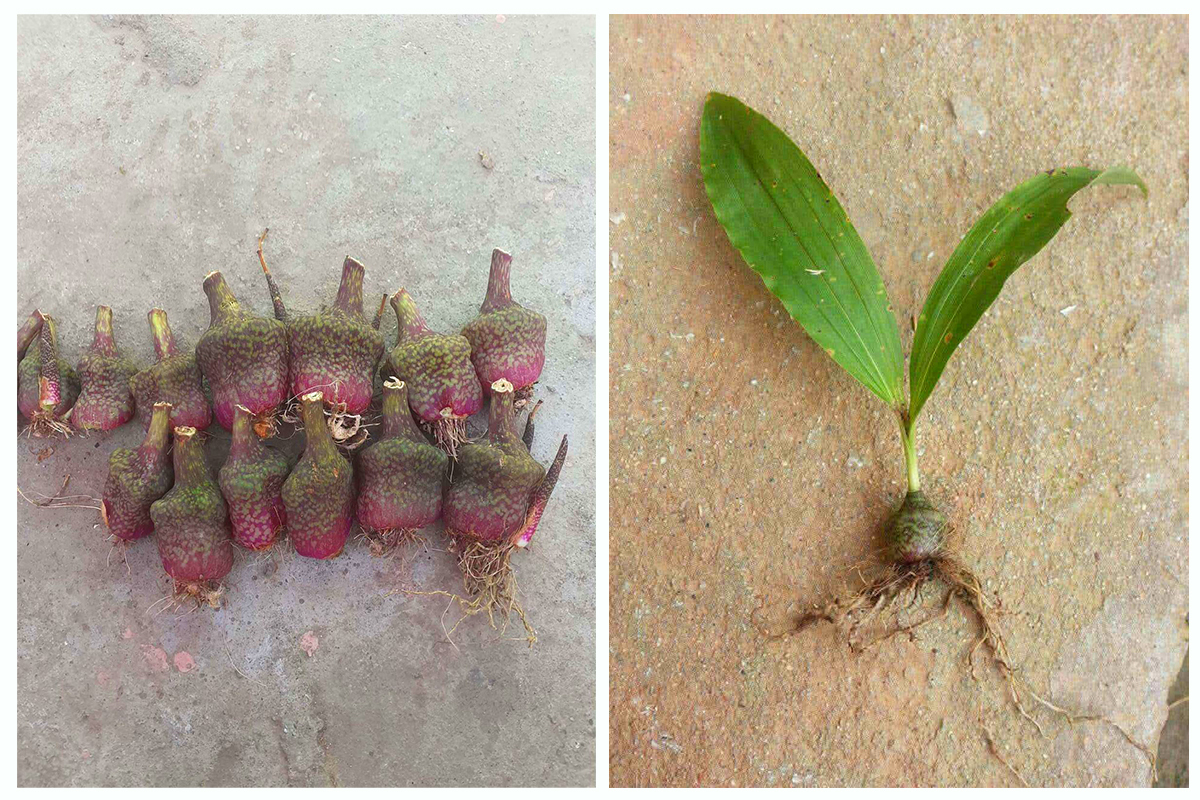
Both Bhandari and Dhakal say that permits for orchid collection are often issued under the name of sword fern (Nephrolepis cordifolia), locally known as paani amala, another common medicinal herb. Division forest offices issue collection permits for non-protected herbs, and traders say orchids, locally known as shaktigumba, are routinely collected under the guise of paani amala. Botanical researcher Kamal Maden notes that shaktigumba typically belongs to the Pleione species of orchids.
A 2023 report by the nongovernmental organization Greenhood Nepal, titled Making Sense of Domestic Wildlife and CITES Legislation: The Example of Nepal’s Orchid, notes that since the CITES ban, shaktigumba has been traded under the name paani amala. The two plants look strikingly similar. Because paani amala is not a protected species, collection permits can be obtained easily. “It is possible that this misidentification is being done deliberately to evade legal restrictions and taxes,” the report states.
Traders say other varieties of wild orchids, known locally as chuchche and junge, are also traded under the guise of different herbs. Bhandari notes that junge orchids sell for Rs. 50,000 per kilogram, shaktigumba for Rs. 10,000, and chuchche for Rs. 5,000. “Government officials themselves suggest trading them under different names to avoid CITES-related issues,” says association president Dhakal. “The officials want money, and the traders want to sell. They use whatever name allows the sale to proceed.”
Tanka Sharma, a herbal trader in Nepalgunj, says that Satyrium nepalense, another species of orchids known locally as gamdol are exported to India and China without any paperwork. “The government doesn’t even treat it as an orchid,” he says. “It goes out under a different name.”
The reality of trading orchids as paani amala was exposed by a recent case. In January 2024, police in Khudi of Marsyangdi Rural Municipality in Lamjung arrested jeep driver Jagar Bahadur Gurung and Shree Prasad Lama with 390 kilograms of orchids. Because the seizure took place inside the Annapurna Conservation Area Project (ACAP), police handed the two men over to the ACAP office. The subsequent investigation exposed a tiered network involved in orchid collection, transport, and procurement from market intermediaries. It identified Jagar Bahadur Gurung, Shree Prasad Lama, Tek Bahadur Gurung, Hira Jung Lama, and Aas Purna Lama as collectors. Among them, Jagar Bahadur and Shree Prasad were responsible for transporting the orchids as far as Besisahar.
From Besisahar, a buyer identified as Aas Bahadur, also known as Kaman Singh Gurung, had ordered the consignment at Rs. 300 per kilogram. The entire 390-kilogram load was being traded among them for a total of just Rs. 117,000.
For the collection of orchids for research and study purposes, the official fee is set at Rs. 500 per kilogram. Using that rate, ACAP filed a case against them seeking Rs. 195,000 in damages. In February 2025, a bench led by Asim Thapa, the Department of National Parks and Wildlife Conservation’s liaison officer at ACAP, sentenced Aas Bahadur to one year in prison and imposed combined damages and fines of Rs. 390,000. Jagar Bahadur was sentenced to one year in prison and fined Rs. 78,000, while the others were each fined Rs. 78,000.
Aas Bahadur is a trader who buys herbs like allo (Girardinia diversifolia), lokta (Daphne bholua), and kaalo musli (Curculigo orchioides) from locals in Gorkha and Lamjung to sell in Kathmandu. He had sent photos to the collectors via mobile phone, instructing them: “I will buy this if you bring it as paani amala.” The arrested porters and collectors claimed in court that they did not know the plants were orchids. Researcher Maden says this illustrates how pervasive the mislabeling of orchids as paani amala has become.
Superficial Investigations
While ACAP, in coordination with police, was able to identify the network involved in collecting and transporting orchids, it was clearly unable to trace the higher levels of the syndicate. In other cases, too, forest offices have largely failed to penetrate the layered networks behind the trade.
Take the case of 43-year-old Devi KC of Pyuthan, who was arrested on April 29, 2022, in Maldhunga of Baglung Municipality with 250 kilograms of orchids. In statements given to police and the court, KC said she had collected the orchids herself from the forests of Burtibang and was planning to transport them to Kathmandu for sale. The seized orchids belonged to the Coelogyne species, which is listed under Appendix II of CITES.
In July 2023, the court sentenced KC only to a fine of Rs. 100,000. She was not given a prison term. Whether it was even possible for one person to collect, transport, and market such a large quantity of orchids alone was never truly examined. The forest office carried out no further investigation.
Another case involved the largest seizure of orchids since the CITES law came into force, but that investigation appears to be in even greater disarray. In February 2022, Nepal Police and the Armed Police Force jointly seized 2,180 kilograms of orchids in West Nawalparasi. The confiscated orchids are still being stored at the Division Forest Office. Nearly five years on, there is still no trace of those behind the trade.
At the time, authorities had also seized 5,100 kilograms of moss. According to Rabindranath Chaudhary, senior forest officer at the Division Forest Office, the moss was sold through an auction process, while the orchids remain in storage. “The Department of Forests granted permission to auction the moss, but the prohibited orchids could not be auctioned,” Chaudhary said. “It was established early in the investigation that one of the traders in this case was an Indian national, Ramu Paswan.”
But Paswan has not been arrested. The forest office suspects the consignment may have been headed to India, yet the investigation failed to reveal anything further about the trader.
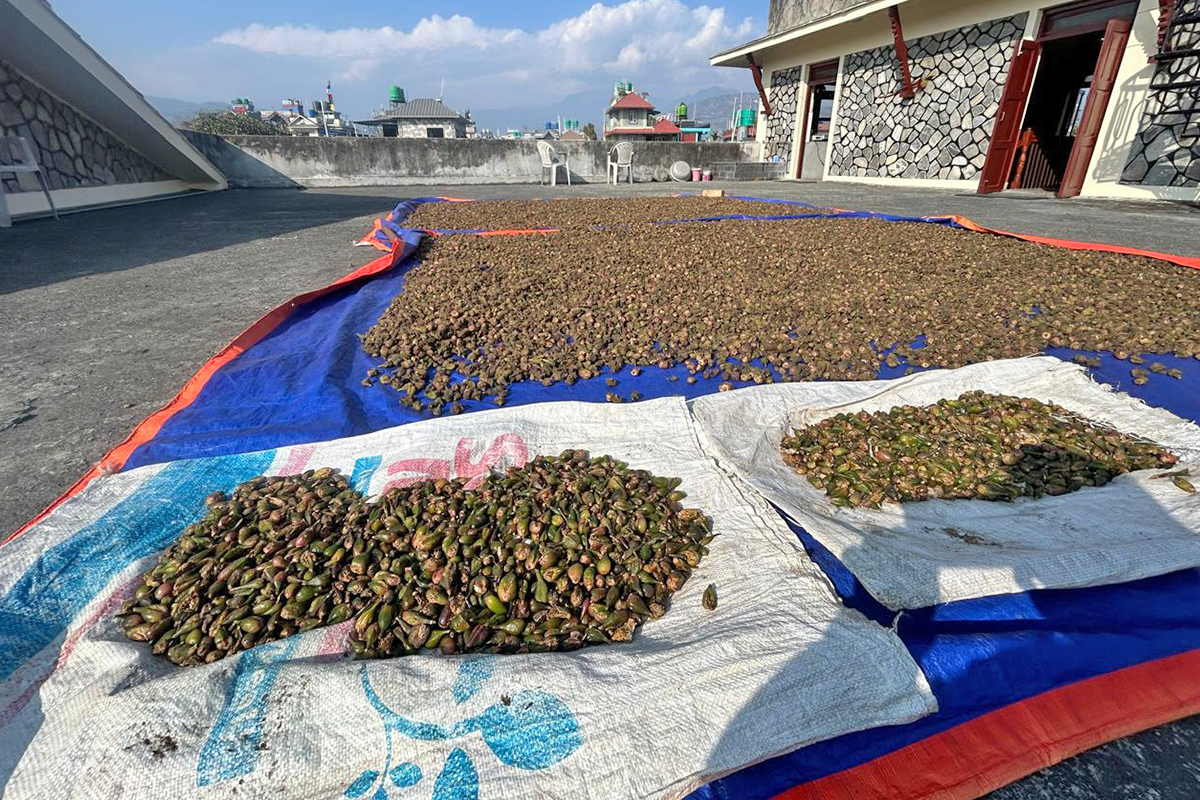
A review of another case involving seven kilograms of orchids seized in Baglung two years ago shows even more clearly how casually such investigations are handled. In March 2024, police arrested Lal Bahadur Khatri in Tityang with orchids in his possession. During the investigation, he said the orchids had been left at his house by a man from Kalikot. He even provided the man’s phone number and Facebook ID. But there is no indication in the investigation record that any effort was made to trace that person.
In June 2025, the court acquitted Khatri, citing insufficient evidence.
The investigation into another seizure in Baglung in March 2023, involving 138 kilograms of orchids, appears similarly weak. Police arrested jeep driver Milan Bhandari and his assistant, Resham Malla, in Burtibang with the orchids and handed them over to the forest office. Bhandari said he had agreed to transport the consignment to Beni for a fare of Rs. 10,000 and did not know it was orchids. Both men stated that the consignment belonged to a man from the Beni area, who had gotten out of the vehicle just before the police check, saying he needed to buy something. But no further investigation was conducted to establish who that man was.
In April 2024, the district court sentenced Bhandari and Malla only to fines of Rs. 50,000 each. Those behind the trade escaped easily.
This is the fate of most orchid-related cases. Even when those involved in transport are arrested, the network above them is rarely exposed.
There is another case. In October 2017, Kamal Bahadur Gurung was arrested in Arughat Rural Municipality-5, Gorkha, with 75 kilograms of paanchaunle. But the investigation revealed nothing about any other traders involved. Paanchaunle — the Himalayan marsh orchid (Dactylorhiza hatagirea) — is listed under Appendix II of CITES. It is one of the most protected plant species in Nepal. Nepal has banned the trade of paanchaunle since 2001.
Gurung had been transporting the prohibited herb in eight sacks on public transport. In his statement to the investigating officer, he said he had purchased it from local residents in an area called Hulchuk at Rs. 300 per kilogram and was taking it to Kathmandu to sell.
But no investigation was carried out into who had collected such a large quantity of paanchaunle, or who was buying it in Kathmandu.
For the purpose of study and research, the government has fixed the official fee for paanchaunle at Rs. 1,000 per tuber. The seized consignment contained 19,538 tubers. On that basis, the forest office filed charges seeking Rs. 19,538,000 in damages and an equal amount in fines.
A review of the investigation file shows that, in a trade involving such a high-value and large-volume prohibited plant, Kamal appears as the only accused. In June 2018, the district court sentenced him to a fine of nearly Rs. 40 million and one year in prison. In March 2019, the Pokhara High Court upheld the verdict. The bus driver, however, was acquitted.
The trade in high-value medicinal plants such as orchids may be illegal, but it is almost always organized. Yet a review of case files from major seizures shows little sign that investigators examined the organized nature of the trade. Nepal Police is the primary agency responsible for criminal investigations. But in cases involving wildlife- and plant-related offenses, those arrested must be handed over to the forest office or national park office within 24 hours, and the remaining investigation is then carried out by those agencies.
These agencies do not have specialized criminal investigators, nor do they have the authority to investigate organized crime. “The fundamental question is whether the government wants to invest resources only in environmental conservation, or also in preventing forest and wildlife crime,” says former Deputy Inspector General Hemant Malla Thakuri, who also served as chief of the Central Investigation Bureau (CIB) of Nepal Police.
Contradictions Within the State
Weak investigation alone does not explain the problem. Policy ambiguity and contradictions among government agencies have made orchid smuggling even more difficult to tackle, while indirectly enabling the illegal trade.
On the one hand, controlled trade in orchids is legally possible. But the government has not developed the management plan required to regulate it. On the other hand, division forest offices continue to list orchids among non-timber forest products that can be collected. The division forest offices in Dadeldhura, Okhaldhunga, Sindhupalchok, and Gorkha have all included orchids and jeevanti in the list of species that may be collected under their five-year operational plans and strategic documents.
In its forest management plan for the period 2022-23 to 2026-27, the Division Forest Office in Dadeldhura states that up to 5,000 kilograms of orchids and 3,000 kilograms of jeevanti can be collected each year. While the plan identifies jeevanti as prohibited, it does not describe orchids in the same way. Ranendra Singh, the office’s information officer, says the figures were included only for record-keeping purposes. “If the government were to allow collection and export of this plant in the future, the idea was simply to indicate that this quantity could be harvested from Dadeldhura,” he said.
The strategic plans of the relevant forest offices similarly state that Okhaldhunga has a stock of 24,300 kilograms of orchids, with up to 3,600 kilograms collectable annually, while Sindhupalchok has 8,333 kilograms in stock, with up to 5,000 kilograms collectable each year.
In the absence of a clear government policy, the state is losing revenue on one side, while on the other, people who collect or transport orchids without fully understanding what the law says are ending up in jail for the lure of relatively small sums. Meanwhile, the traders and middlemen who play the central role in the trade remain beyond the reach of the law.
“Illegal trade in plants is not treated with the same seriousness as wildlife crime,” says Bashyal of Greenhood Nepal. “Orchids have both economic value and medicinal properties, yet there is no meaningful regulation or lawful use. What is growing instead, quietly, is the illegal trade.”
More Investigative Stories

Who Does The Annapurna Belong To?
In fiscal year 2082/83 BS, the Annapurna Conservation Area Project (ACAP) received 508,000 visitors and collected more than NPR 1.77...
Politicized Budget Distribution in Madhesh is Contrary to the Spirit of Federalism
From small projects that local governments can implement themselves to the selection of projects based on political connections, the pattern...
Comment Here