Investigative Stories
How the poor living in forest fringes are paying the price for tiger conservation
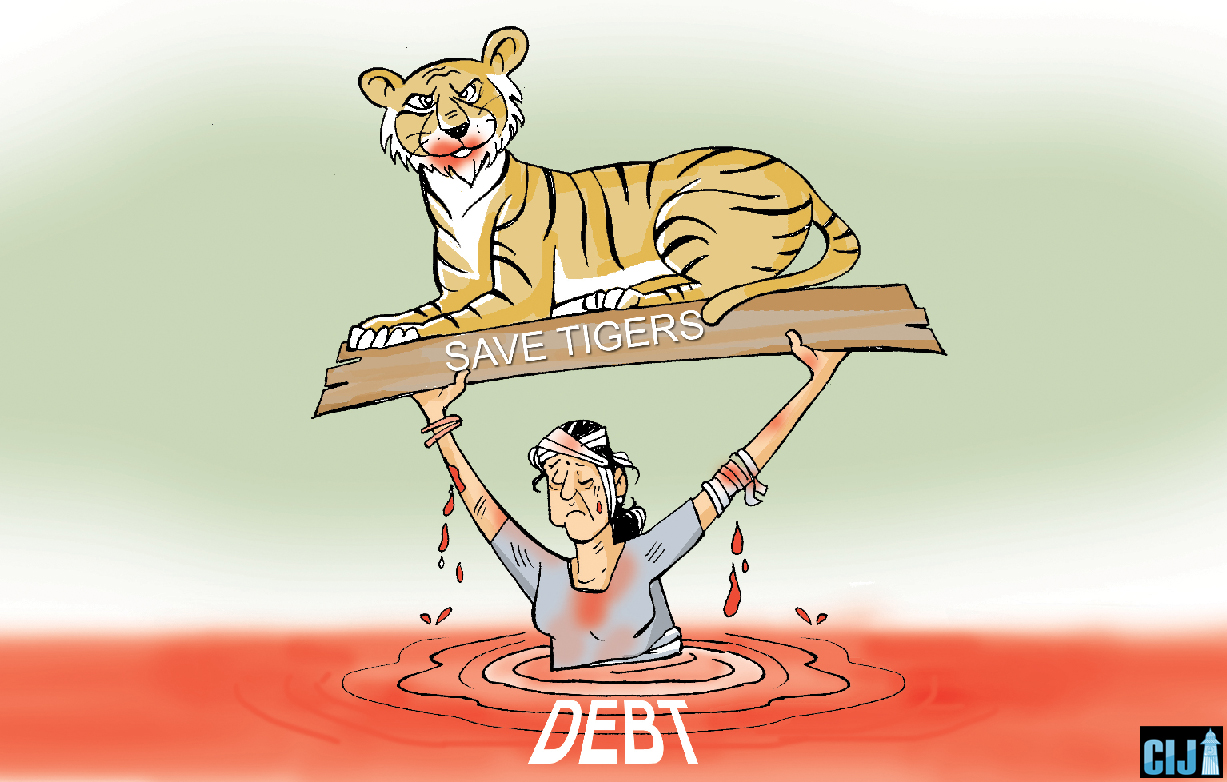
Nepal has been celebrated worldwide for nearly tripling its tiger population in about a decade. But this has had an unintended side effect: victims of tiger attacks are deep in debt while seeking treatment, with little help from the state.

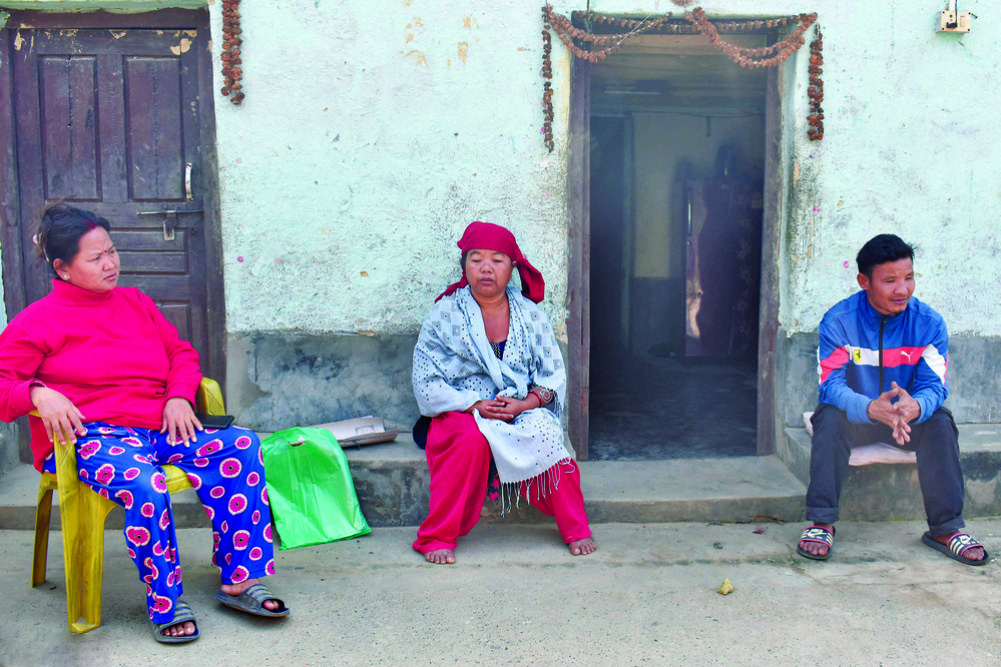
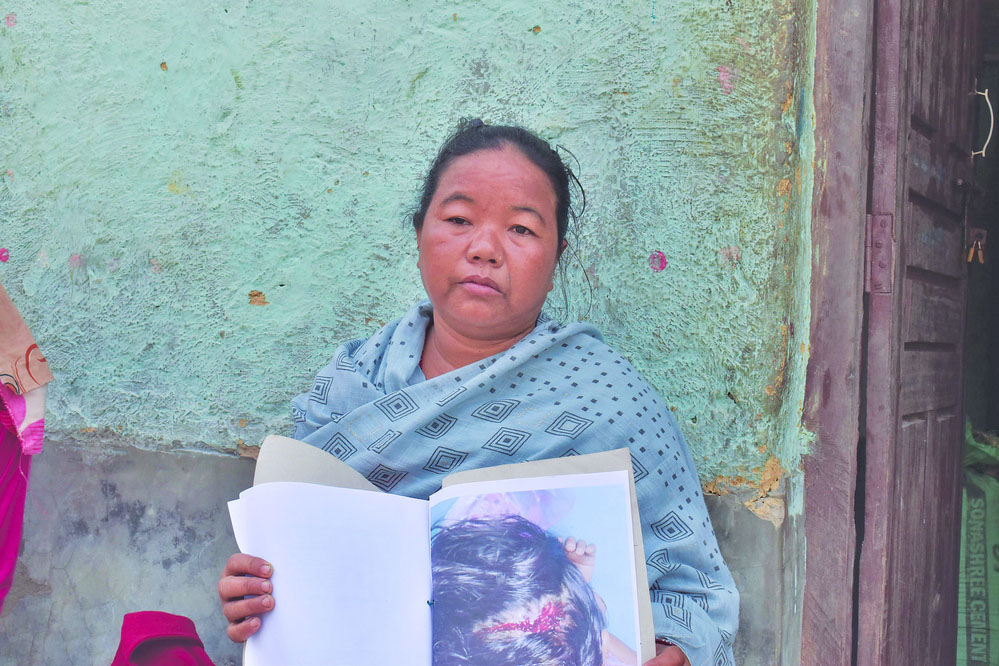
Puspa Tamang went to a nearby jungle one day in the summer of 2019 to fetch grass for her cattle. For her, it was a regular day and a routine activity. Little did she know that her life would take a turn for the worse that day. She was attacked by a tiger. She fell on the ground, unconscious. Her friends took her to Teaching Hospital in Kohalpur. Tamang, who is 42 now, survived, but with deep wounds on the right side of her head.
“I may look fine now but there is a pain within me,” Tamang, a resident of Gavar village at Rapti Sonari Rural Municipality in Banke, told CIJ recently, six years after the incident. “I survived the tiger attack but I don’t know if I can make it through the debt that the incident pushed me into.”
Residents of Banke and Bardiya who sustained injuries in tiger attacks face a double whammy: on the one hand, they live with disabilities, and on the other, they have hundreds of thousands in debt, incurred during treatment. The government provides a maximum of Rs500,000 as relief to those who survive wildlife attacks but the treatment cost tends to be far higher. Moreover, the process to receive that relief is long and cumbersome. The very conservation programmes that the Nepal government is presenting as achievements on international platforms are imposing direct costs on poor residents living near the forests.
Debt kept piling up
The first three days of Pushpa’s treatment incurred a cost of Rs50,000. But that did not fully cure her. Even now, she continues to suffer from headaches, paralysis of her left arm and leg, and occasional fainting spells. She loses coordination while cooking and sits in the toilet for long periods. She cannot be left alone even for a moment.
The life of Pushpa’s husband, Mitralal Tamang, who is 45, is now entirely devoted to caring for her and the family. He had gone to Malaysia and Qatar for foreign employment but returned home to look after his wife. Although he works as a carpenter in the village, he cannot do it regularly due to her condition. The responsibility of three children, elderly parents, and a sick wife rests solely on his shoulders. “I have the skills in my hands, but I cannot go to work,” says Mitralal. “Right now, I don’t even have money for medicine.”
Pushpa needs medicines costing about Rs3,500 per month. Including travel expenses to and from the hospital, the total monthly cost is around Rs5,000. Since she needs cold water in both summer and winter, they have to freeze ice at home.
So far, she has been managing treatment and medicine costs by taking loans from various cooperatives. The debt has exceeded Rs700,000. In the name of property, they only have a mud house built on unregistered land and four kattha of land. “I survived the jaws of a tiger, but even though I’m alive, I feel like I am dead,” she says.
Likewise, Juna Chaudhary of Barbardiya–10 in Bardiya still feels afraid when she goes to work in the fields. Five years ago, while cutting paddy in broad daylight, she was attacked by a tiger. “It suddenly pounced,” she says. “I was drenched in blood from head to toe.”
She spent 15 days in the hospital. “My treatment is still not complete,” she says. “More than Rs350,000 rupees has already been spent, and my hand still doesn’t function properly.”
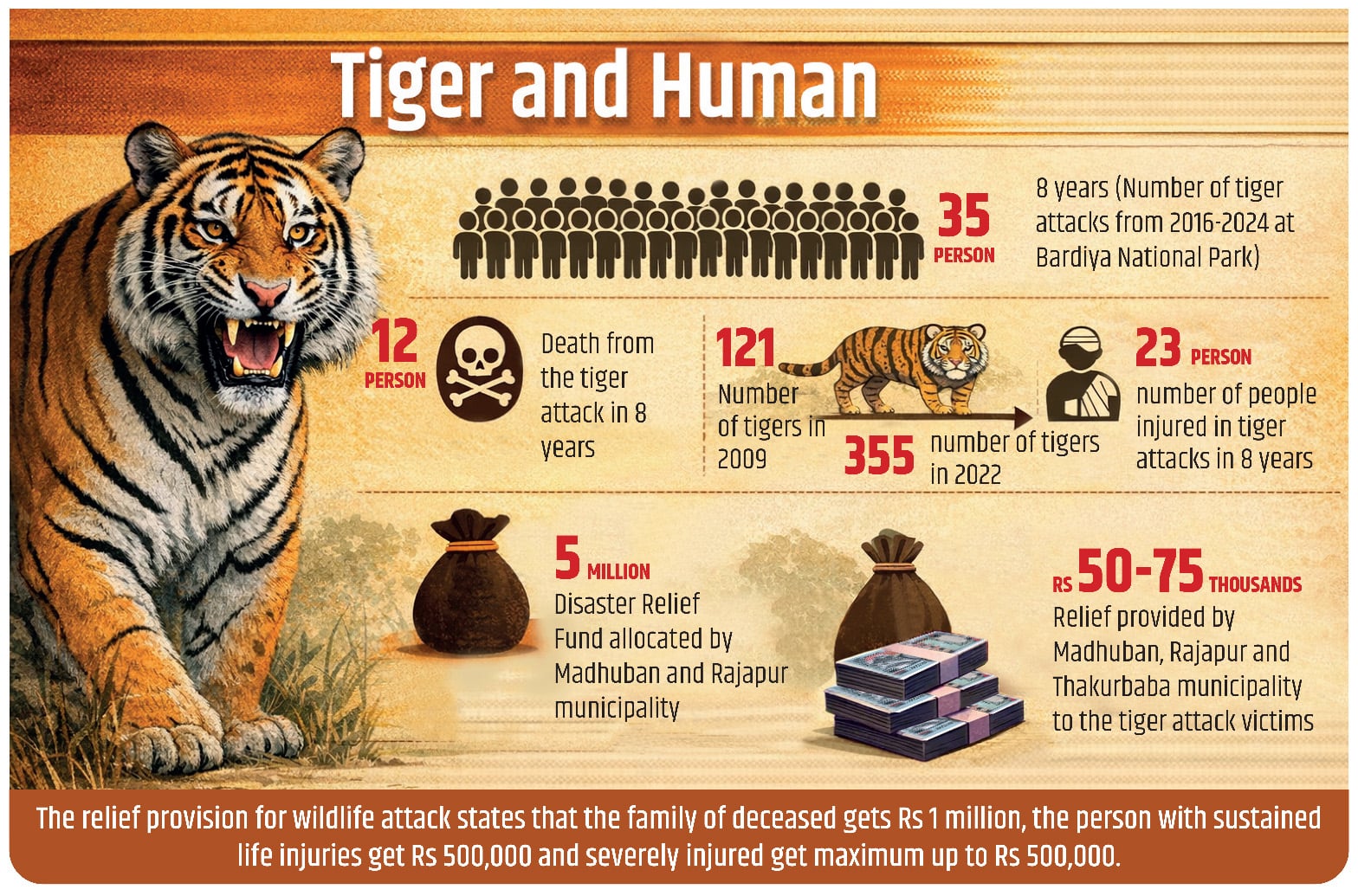
Juna’s husband is a police officer, but his salary is barely enough to support a family of four. After completing a long process, they received Rs135,000 rupees in relief from Bardiya National Park, but it was nowhere near sufficient.
Inadequate and belated relief
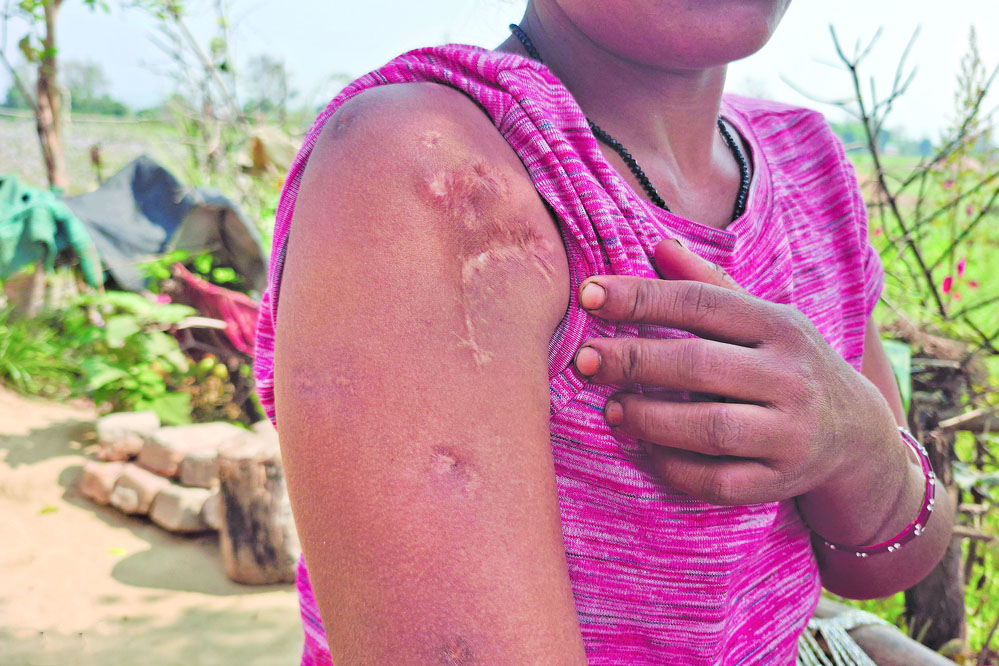
The Human-Wildlife Conflict Relief Guidelines, formulated under the Forest Act and the National Parks Act, provide for relief and compensation to victims of wildlife attacks. According to the revised guidelines implemented from mid-July 2023, families of those killed in wildlife attacks receive Rs1 million. Similarly, individuals who become permanently disabled are entitled to a lump sum of Rs500,000 rupees, and those seriously injured can receive up to Rs200,000 in relief.
However, this amount is far less than the actual expenses incurred during treatment, and even receiving it takes months. The process of obtaining relief is also complicated. According to Shankar Prasad Gupta, chief of the Division Forest Office, Banke, in the first stage of the process, the ward office and police must prepare an official report within 35 days of the incident. After that, the victim must submit an application to the Sub-Division Forest Office along with a doctor’s prescription and a recommendation from the local government.
We don’t need much. Even if the government cannot provide relief, it would be enough if the local municipality could at least cover a month’s worth of medical expenses. We are forced to skip meals just to buy medicine for my wife. It seems that the lives of poor people like us have no value
- Mitralal Tamang
The Sub-Division Office then conducts a field investigation and forwards its recommendation to the Division Forest Office. The Division Office forms a board committee, which recommends relief and treatment expenses to the Ministry of Forests. The ministry then sends the file to the Department of National Parks and Wildlife Conservation, which, through the ministry, releases the funds to the account of the concerned Division Forest Office. Only after this lengthy process does the Division Office provide the money to the victim. “The money does come, but the process is extremely slow,” said Gupta.
According to Gupta, the Division Forest Office does not have its own fund to cover treatment costs; all funds must be released from the ministry. “If the relief distribution were handled directly through the Division Forest Office from the beginning, it would be easier and faster,” he said.
Sushil Subedi, information officer at the Division Forest Office, Banke, says that although the guidelines have been revised over time, there is still a need to simplify the process of providing relief. “The amount is not sufficient according to the victims’ needs,” he said. “The guidelines are being revised at the policy level, but in practice, there are still problems in the process of receiving relief.”
As incidents of wildlife attacks continue to rise, the government’s lack of attention toward reducing them has increased anger among local residents. In early June 2022, after 41-year-old Asmita Tharu of Madhuban–2, Bardiya, was injured in a leopard attack in broad daylight, enraged locals blocked the Gulariya–Rajapur road section in protest.
During a clash between protesters and police, 18-year-old Nabina Chaudhary of Madhuban–2 was shot and killed. Her death left the Madhuban area tense for three days. The situation was calmed after authorities promised Rs2 million to the victim’s family and free treatment for the injured.
As attacks increased, the National Tiger Conservation Committee, chaired by the prime minister, decided in late July 2022 to implement the ‘Prime Minister Tiger Conservation and Livelihood Programme’. Its main objective was to improve the livelihoods of local communities around tiger habitats while also reducing human-tiger conflict. To implement the programme, the ministry of forests requested the finance ministry to allocate a fund of Rs1 billion. However, the budget has not yet been released.
Nepal has enhanced its image globally by increasing its tiger population. But the failure to take effective measures to prevent loss of life and property from wildlife attacks has eroded trust in the government among people living near national parks. Criticism against the government has increased. Data from recent years show that, along with deaths and injuries from wildlife attacks, damage to crops has also been increasing.
35 people attacked in 8 years
In Bardiya National Park, 35 people were attacked by tigers between 2016 and 2024. According to a park report, in the first four years, 16 people were attacked, of whom 6 died. The following year saw 8 attacks, but all victims survived with injuries. In 2022, tigers attacked 10 people, killing 6 of them. The next year, one more person was injured.
According to the 2022 census, Nepal has 355 tigers nationwide, with 25 in Banke and 125 in Bardiya. Nepal had set a goal of doubling its tiger population by 2022 from 121 tigers recorded in 2009. Not only did the country meet this target, it exceeded it by adding 100 more tigers.
Ajit Tumbahamphe, chief of the National Trust for Nature Conservation in Bardiya, said that the increase in tiger numbers in recent years is due to conservation efforts. “With stronger conservation, tiger numbers have increased,” he said. “Tigers do not naturally want to attack humans, but attacks have risen under certain circumstances, creating new challenges for conservation.”
Conservationist Krishna Shah has a different perspective. “We enthusiastically increased the number of tigers, but we did not assess the consequences that might follow,” he said.
Nature guide Shah himself is a survivor of a tiger attack. A resident of Thakurbaba-9, Banugaun, he was attacked in 2016 while guiding a Dutch tourist in Bardiya National Park. “Some problems have arisen because laws have not been updated with time,” he said. “How can a wildlife law from 1973 function effectively in today’s context?”
With stronger conservation, tiger numbers have increased. Tigers do not naturally want to attack humans, but attacks have risen under certain circumstances, creating new challenges for conservation.
- Ajit Tumbahamphe, chief of the National Trust for Nature Conservation in Bardiya.
The daily lives of people living around the parks and forest areas of Banke and Bardiya depend heavily on forests. Analysis of attack incidents shows that people entering forests to cut grass, collect firewood, or gather vegetables are the most frequent victims of tiger attacks. According to Tumbahamphe, such incidents mostly involve individuals—especially women—working alone in forests and buffer zones.
Conservationists complain that while the government has prioritised tiger conservation, it has not given equal attention to protecting local residents from attacks. Conservationist Ashish Chaudhary says the focus should now shift from merely increasing tiger numbers to improving their habitat.
He suggests expanding grasslands, constructing artificial ponds, and installing fencing in high-risk areas. “Forests are habitats for wildlife,” he said. “Humans and wildlife need separate pathways,”
Government officials say there is a lack of budget for constructing water ponds in Bardiya and Banke national parks. According to experts, each tiger requires a water source within roughly four square kilometers and grassland areas of 3 to 5 hectares. Creating these would require an estimated budget of Rs1.8 to 2 million.
There have long been calls to implement programmes that reduce the dependence of people living in high-risk areas on forests. But according to local residents, government authorities often seem indifferent to attack incidents, assuming that relief for deaths and medical expenses for the injured is already in place.
Some local governments are proactive, but many stay silent
As the federal government’s relief process is lengthy and complicated, some local governments in Banke and Bardiya have started providing immediate assistance to the injured from their own disaster funds. But these efforts are insufficient.
Bardiya’s Madhuban Municipality has allocated Rs5 million from its disaster fund. Mayor Tej Bahadur Bhat said that Rs75,000 is provided to the families of the deceased, and treatment expenses are covered for the injured depending on their condition. This year, one person died due to a tiger attack in Madhuwan Municipality.
Likewise, Rajapur Municipality Mayor Dipesh Tharu said that the municipality provides Rs50,000 rupees to the families of the deceased and covers treatment costs for the injured. For this, Rs5 million has been allocated in the disaster fund. This year alone, three people have died and three others have been injured in tiger attacks in Rajapur.
Geruwa Rural Municipality’s vice-chair Laxmi Kumari Chaudhary said that since 2017, the municipality has been providing relief and compensation to victims of wildlife attacks through an established procedure.
Thakurbaba Municipality has also been supporting victims of wildlife attacks through its disaster fund. According to Chief Administrative Officer Ramhari Rijal, the municipality provides Rs50,000 to the families of the deceased and covers treatment costs for the injured. He added that Rs15 million has been allocated to the disaster fund this year.
However, Banke’s Rapti Sonari Rural Municipality, where tiger attacks are most frequent and where Pushpa Tamang lives, has not created any relief fund for victims. Vice chairperson Manisha Tharu said that since federal government bodies already provide relief, the municipality has not established a fund under a policy of avoiding “duplicate benefits.” Nevertheless, the federal relief process is lengthy and complicated, and even when received, it remains insufficient for the injured.
‘Life seems to have no value’
Pushpa Tamang and her husband Mitralal have little hope from the government. They have just one request: “We don’t need much. Even if the government cannot provide relief, it would be enough if the local municipality could at least cover a month’s worth of medicine expenses.” But no such provision has been made so far in Rapti Sonari Rural Municipality, where Pushpa lives.
When Pushpa escaped from the jaws of a tiger, she thought it was a miracle. But now, for her family, that incident seems to have marked the beginning of long-term suffering and hardship. “We are forced to skip meals just to buy medicine for my wife,” Mitralal says. “It seems that the lives of poor people like us have no value.”
More Investigative Stories

Who Does The Annapurna Belong To?
In fiscal year 2082/83 BS, the Annapurna Conservation Area Project (ACAP) received 508,000 visitors and collected more than NPR 1.77...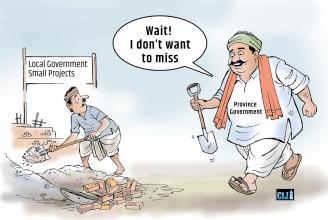
Politicized Budget Distribution in Madhesh is Contrary to the Spirit of Federalism
From small projects that local governments can implement themselves to the selection of projects based on political connections, the pattern...
Comment Here