Investigative Stories
Sudurpaschim governance beset by headless institutions and poor service delivery
The provincial governance system has come under scrutiny due to power-sharing, legal vacuum and haphazard spending.
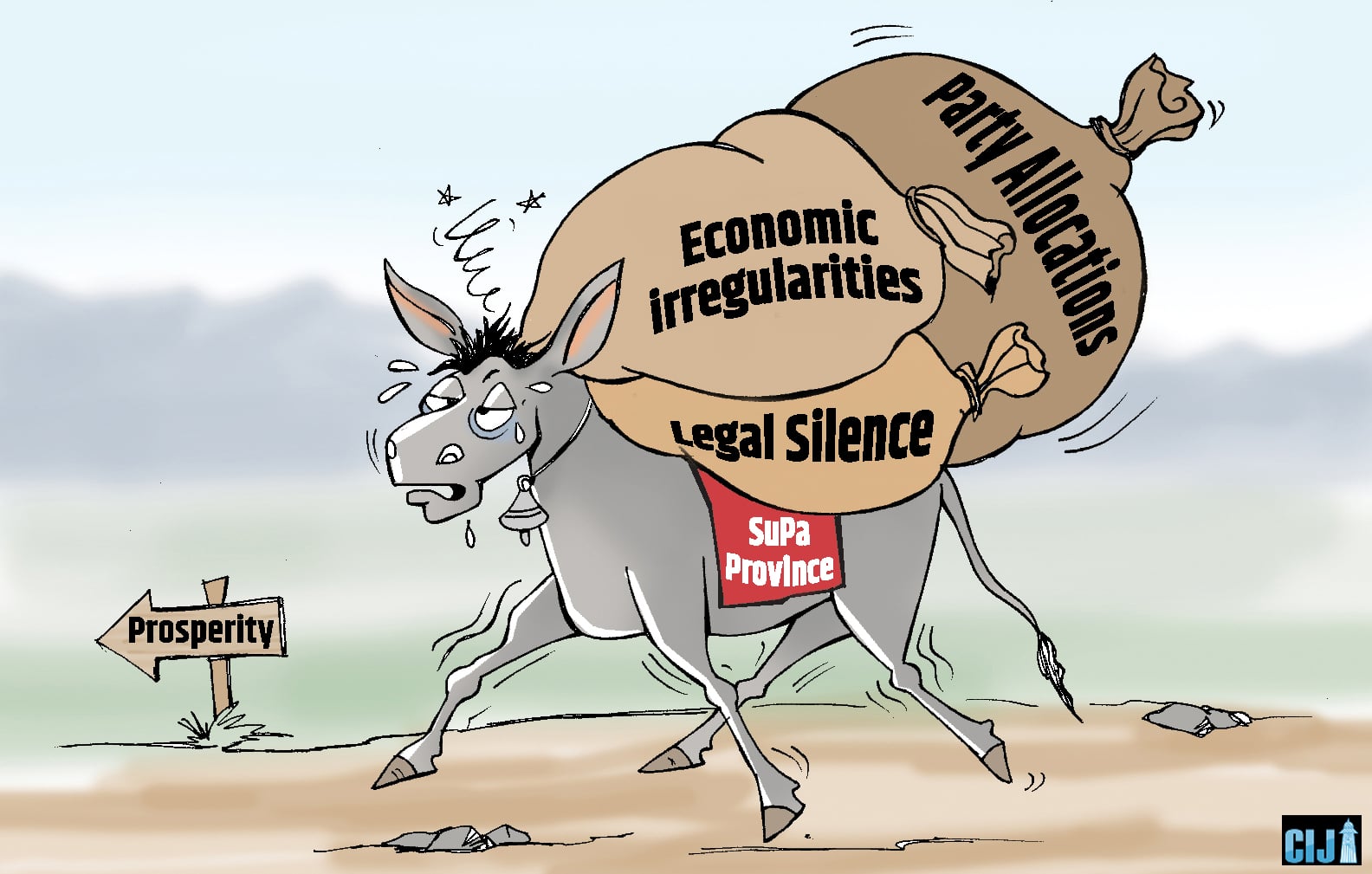
On 24 January 2024, the Sudurpaschim Provincial Assembly amended the Sudurpaschim Academy Act 2076 to scrap the provision that made the chief minister and minister of social development the Academy’s chancellor and vice-chancellor, respectively.
According to the amended Act, the chief minister would serve as the Academy’s chief patron and the minister as patron. Distinguished scholars would be chosen and serve as chancellor and vice-chancellor. But two years after the amendment, the Academy has yet to get a chancellor.
The Academy is currently run under the vice-chancellor appointed before the Act was amended. Not just the vice-chancellor, the provincial government has been unable to appoint any other official.
The Act has also envisioned a recommendation committee under the leadership of the social development minister to pick names for the Academy’s assembly.
The Act has also made a provision for the chief minister to appoint a chancellor and a vice-chancellor from among people renowned in fields of language, literature, culture and arts according to the committee’s recommendation. But such a committee is yet to be formed.
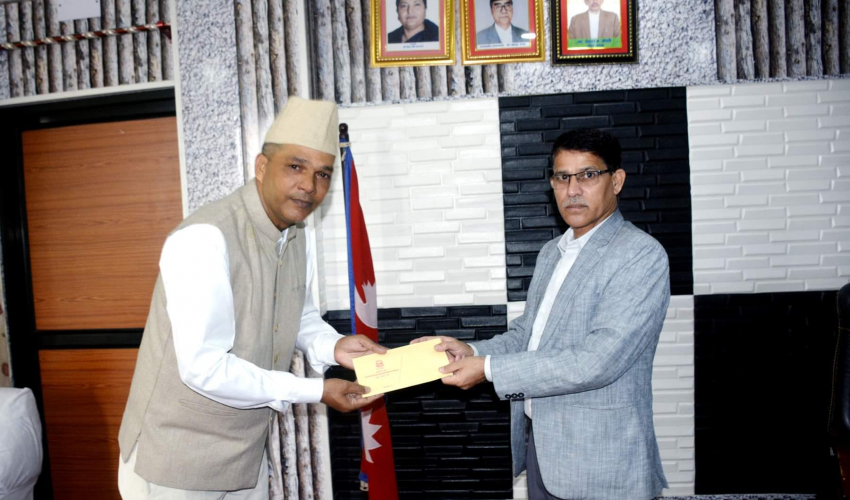
Sudurpaschim’s Minister of Social Development Meghraj Khadka says that internal discussions on the issue are still ongoing, even after two years since the Act’s amendment. “The process to appoint the officials will move forward once the recommendation committee is formed,” Khadka said.
The chief minister nominates 22 scholars from different fields to the Academic Assembly. The Act has a mandatory provision that states the recommendation committee should pick a chancellor and vice-chancellor from among the Academic Assembly members. But the Academic Assembly is yet to be formed. And this has barred the process to appoint the chancellor and vice-chancellor.
The Academy Council should have the chancellor as the chair and the vice-chancellor as the deputy. The chief minister appoints three members from the Academic assembly to the council, including one woman. But since the Academic assembly is not yet formed, it’s uncertain when the institution will get its chancellor, vice-chancellor and members.
The reason: power-sharing dispute
The Sudurpashchim Academy was established to promote and develop the language, literature, culture, and arts of Sudurpashchim Province.
The amended Act requires that either the chancellor or the vice-chancellor must be a woman. But because the Sudurpashchim provincial government, a coalition of the Nepali Congress and CPN-UML, has not been able to agree on power-sharing, both the Academy Council and the Academic Assembly have not yet been fully formed. As a result, the office bearers have also not been appointed.
“Appointments have to be made on the basis of political consensus,” says Sudurpashchim Chief Minister Kamal Bahadur Shah. “We have discussed the matter many times. Now we are close to reaching an agreement.”
Even though the Bill has already been published in the national gazette, “it is unfortunate that such a large institution is still running under the responsibility of a single person,” says Dharma Raj Pathak, chair of the Social Development Committee under the Sudurpashchim Provincial Assembly. “The government should immediately appoint office bearers according to the new law and complete the Academy’s structure.”
Dr Trailokyanath (TN) Joshi, who was appointed vice-chancellor by the previous government, is considered close to the Nepali Congress. The UML is now claiming the position of chancellor for a new appointment, while the Nepali Congress is also insisting that it should get the post.
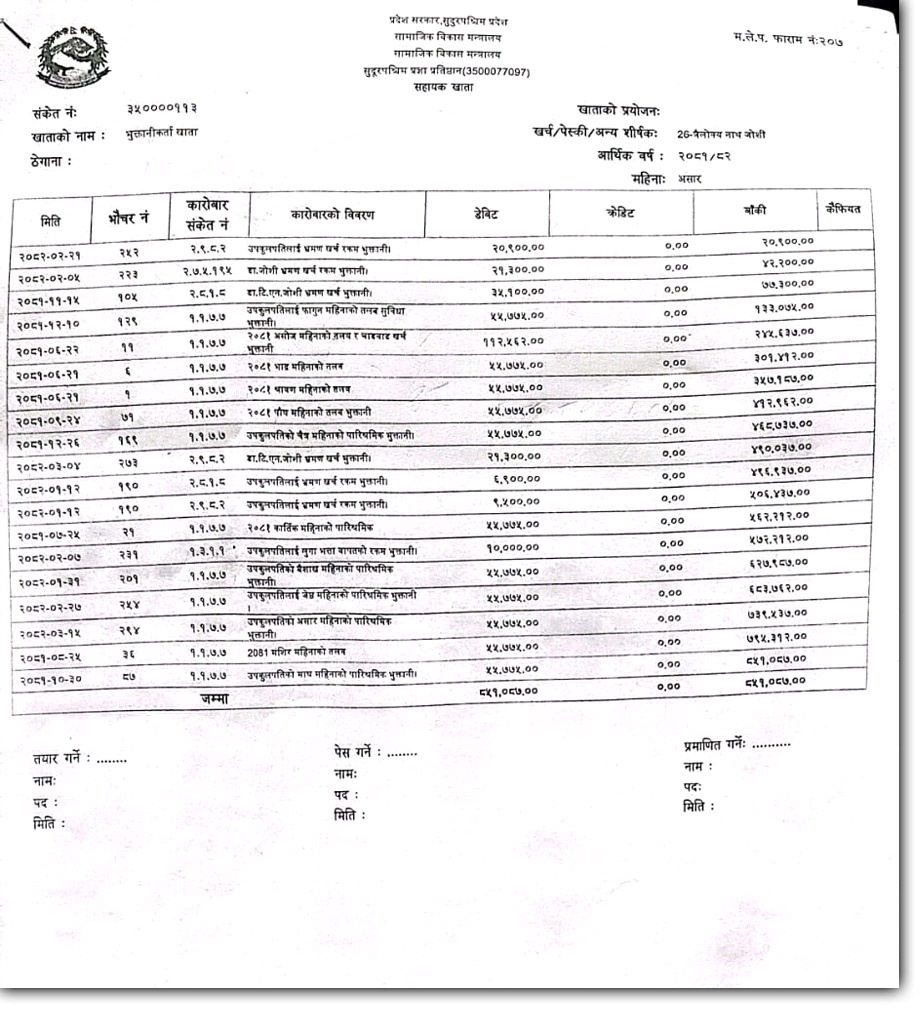
Because both parties are sticking to their respective positions, the Sudurpashchim Academy continues to operate under the old law with only a single office bearer. Even though office bearers, the council, and the assembly have not been appointed or formed, the academy’s budget is still being spent.
Out of the Rs15.3 million allocated to the academy in fiscal year 2081/82 (2024/25), Rs12.661 million was spent. In fiscal year 2082/83 (2025/26), the academy has spent Rs10.3 million rupees.
This spending includes the benefits and facilities of the vice-chancellor and funds used for small-scale projects. Because there are no office bearers in the council, there are no clear standards for donations or assistance given to activities such as literary programmes, seminars, exhibitions, or conferences. The vice-chancellor has been accused of arbitrarily giving funds to individuals or organisations of his preference.
Janak Rasik, a member of the Academic Assembly of the Nepal Academy, says that the Sudurpashchim Academy has not been able to function according to its purpose.
“We had hoped that academic activities would increase after an empowered academy was established in the province,” Rasik said. “But no such thing has happened. The academy has not functioned the way it was supposed to.”
Rasik added that many tasks remain unfinished, such as researching about the province’s languages, literature, and culture, working toward language standardisation, and preparing reference materials for local curriculum.
Ramlal Joshi, a Madan Puraskar-winning writer and also the president of the Sudurpashchim Literary Society, says the academy has failed to do its job.
“The term of a vice-chancellor is about to end, yet no significant work has been done in the fields of art, literature, or culture here,” Joshi said. “It seems as if the academy was formed just to place one person in a position.”
Illegal benefits to the single office bearer
Vice-chancellor Joshi, who has been running the Academy alone for the past three years, has been accused of illegally receiving benefits.
Joshi has been receiving a monthly salary as well as festival allowances, travel expenses, clothing allowance, fuel expenses, programme expenses, meeting allowances, and other benefits from the Academy. The benefits Joshi has been receiving so far are contrary to what the law provides, says Kulananda Upadhyay, former Chief Attorney of Sudurpashchim Province.
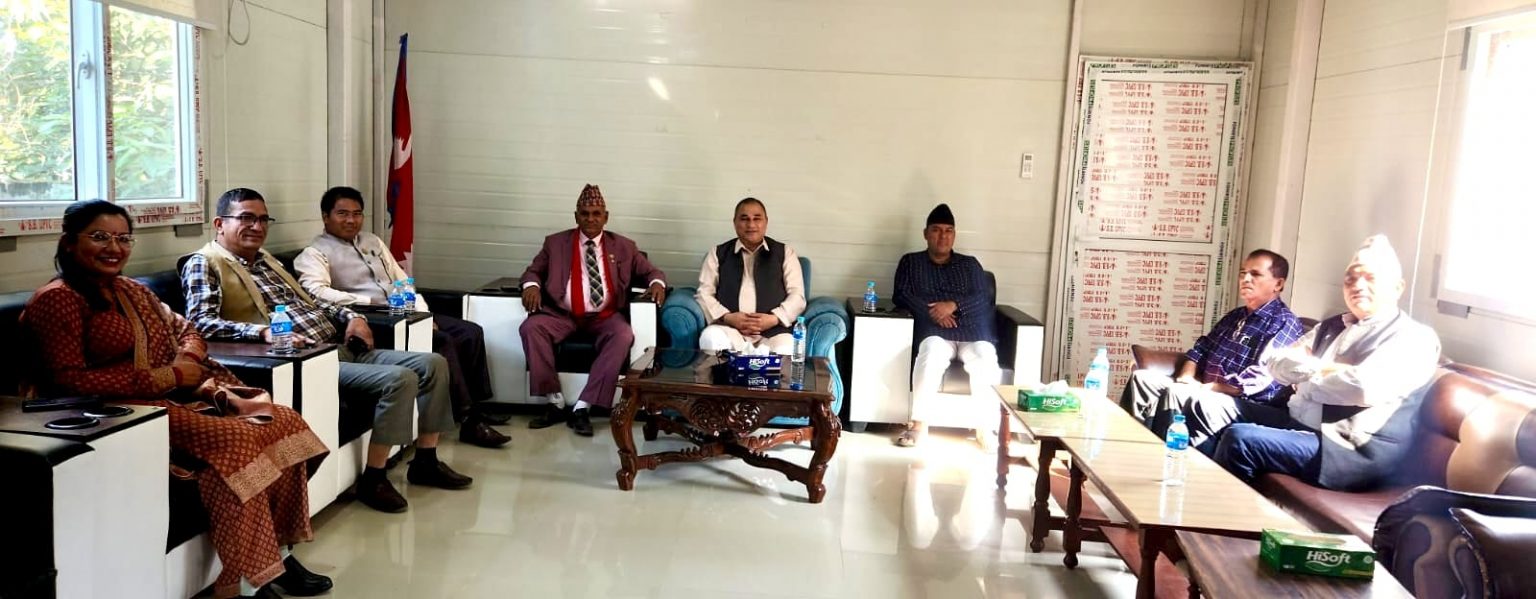
Upadhyay adds that since the law requires that the vice-chancellor’s benefits be determined through regulations, any benefits received without such regulations are illegal.
“Either the Act should contain a schedule of benefits, or the benefits should be determined through regulations,” Upadhyay says. “Any benefit taken outside these two provisions is against the law.”
Regulations should have been created to further clarify duties, responsibilities, and authority after Joshi was appointed on 6 October 2022. The Act itself grants the Academy the authority to formulate such regulations. But after nine months since his appointment, the regulations were still not prepared.
Instead, citing the lack of clear provisions in the law, the provincial Cabinet decided nine months after his appointment to grant him the starting salary equivalent to that of a gazetted first-class government officer. As a result, Joshi has been receiving benefits for more than three years.
“Since the law was not clear, the Cabinet meeting decided to provide only the monthly salary to him,” says Dan Bahadur Sunar, legal officer at the Ministry of Social Development. “Other benefits are not included in the Cabinet’s decision.”
“Continuing to take benefits without creating regulations is illegal. And taking the festival and clothing allowances in the name of monthly salary is also illegal ,” says Amod Dahal, undersecretary at the Ministry of Internal Affairs and Law.
Chairperson Pathak says that it is not appropriate to keep taking benefits and remain in office based on the old Act even after such a long time since the new Act was enacted. “The government should immediately appoint the chancellor, vice-chancellor, and other officials according to the amended Act, and also formulate the regulations,” he says. “It is shameful that the Act has been passed but not implemented. The provincial government should pay attention to this.”
Meanwhile, vice-chancellor Joshi claims that the benefits he is receiving according to the Cabinet’s decision are legitimate. He said that he has not been able to work as expected due to the provincial government’s failure to make necessary appointments.
“I am alone at the Academy—there are neither staff nor members,” Joshi said. “Four departments are supposed to be formed, but not even one has been established. One person has to look after everything. I have repeatedly requested the provincial government to make the appointments.”
Disorder at the planning commission
Irregularities are not limited to the Academy; serious mismanagement has also been seen in the Sudurpaschim Provincial Policy and Planning Commission.
Dr Jeevan Rana Tharu, vice-chair of the Sudurpashchim Provincial Policy and Planning Commission, received Rs626,000 in the four months between Shrawan to Kartik this year. Similarly, Nrip Sunar, a member, received Rs552,000, while Karna Kunwar, Hira Chand, and Sher Bahadur Bhandari each received Rs518,000.
The services and benefits of the commission’s members have not been determined by law but by the government. Officials of the commission, formed through an executive order, are receiving their benefits based on that same order.
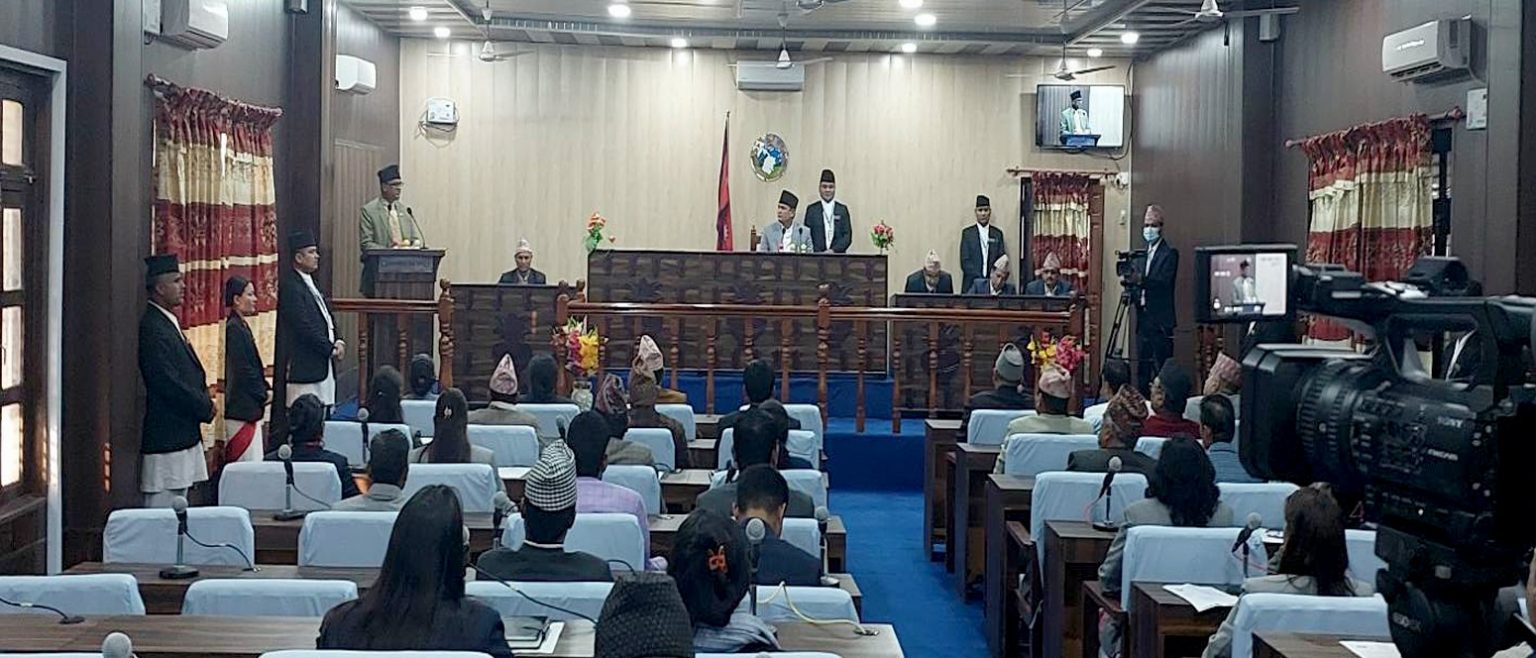
Man Bahadur Dhami, former parliamentary party leader of the then CPN (Maoist Centre), says that instead of determining the benefits of officials of such an institution through an Act passed by the Provincial Assembly, the government has been granting them through an executive order with questionable intent, even though the institution adds a significant financial burden to the province.
Dhami, who also previously served as Minister for Industry, Tourism, Forests and Environment, alleges that the government issued the order through a “backdoor” to benefit people close to it and set generous benefits that increase the financial burden on the state.
“Even though the chief minister has the legal authority to issue formation orders, it is not good practice for good governance and transparency,” Dhami says. “The benefits received by the officials of the Policy and Planning Commission are excessive. Offices and officials that add such a large financial burden to the state should have their benefits determined through law. But the government is using a backdoor.”
A ‘formation order’ is a formal directive issued by the relevant authorised body to establish an institution, committee, task force, commission, team, or position structure.
The Sudurpashchim provincial government has been rapidly issuing such orders based on a one-page law introduced in 2018 to regulate administrative procedures.
Officials of this commission are not included in the protocol ranking issued by the federal Ministry of Home Affairs. However, the Sudurpashchim government has assigned the commission’s vice-chair a protocol rank equivalent to a state minister and its members a rank equivalent to assistant ministers.
Ananda Kafle, spokesperson of the Ministry of Home Affairs, says that protocol rankings are issued by the federal government and that other bodies cannot issue legally valid protocol rankings on their own.
Sudurpashchim Provincial Assembly Speaker Bhim Bhandari also says the government should not arbitrarily determine protocol rankings through formation orders.
“How can officials appointed by the government rank above the members of Provincial Assembly?” Speaker Bhandari asks. “The government has not only given them benefits arbitrarily but has also granted them protocol rankings that do not even exist. The protocol ranking determined by the chief minister should be withdrawn immediately.”
Although the commission’s vice-chair and members have homes in Dhangadhi, they had previously been receiving house rent allowances. However, this time the commission has not provided such allowances.
The vice-chair had been using government vehicles until last month. Following the Gen Z movement, and citing another clause in the formation order stating that Rs15,000 should be provided if a government vehicle is unavailable, she has now started receiving that amount instead.
Akkal Rawal, deputy leader of the then Maoist parliamentary party, says the government has unnecessarily increased the financial burden by appointing too many officials in the Policy Commission.
“The government should reconsider this,” Rawal says. “We have repeatedly drawn the government’s attention to the issue.”
Rawal, who is also chair of the Public Accounts Committee, accused the commission of becoming a hub of policy-level corruption.
However, commission member Nrip Sunar says the government determined the benefits after considering conditions everywhere.
“The Policy Commission is a group of experts that assists the government,” Sunar said. “It has standards similar to the National Planning Commission. They are not very unusual. In our province, no one would come to work for such a small amount.”
In the previous fiscal year, although sufficient spending was made on items such as transport facilities, communication expenses, diesel, travel, and house rent, much of the budget allocated for other work remained unused.
Out of the Rs44.162 million allocated by the provincial government to the Policy and Planning Commission last fiscal year, only Rs29.065 million was spent.
Expenses made in the name of an Investment Conference have further exposed irregularities in the commission. The Sudurpashchim government had been preparing to hold the conference on November 17 and 18, but it was postponed following the Gen Z movement. Despite the conference not being held, Rs2.888 million was spent in its name. Commission member Sunar says the expenses were incurred during various preparatory activities.
“We organised a pre-conference to prepare for the event. Investors and ambassadors attended,” Sunar says. “This is not just for the programme itself. Two experts were appointed, all ministry secretaries participated, and it included snacks, meeting arrangements, and accommodation and travel arrangements for guests.”
The chief minister himself serves as the chair of the Policy Commission. When asked about the irregularities in the commission, he said, “We had only discussed increasing the number of officials based on the previous formation order. Now it appears that the services and benefits have also changed. I will immediately correct this issue.”
Formation order not an appropriate means
Constitutional expert Dr Bhimarjun Acharya says that although the constitution does not provide for the use of formation orders, governments have been issuing them to make their work easier. “However, formation orders are not an appropriate instrument for the rule of law,” he said.
He added that running institutions and carrying out work for years based only on formation orders goes against good governance and the rule of law. “A formation order is an executive directive,” he said. “It should only be used in difficult or special circumstances. The main law should be made by the legislature.”
Another constitutional expert Bipin Acharya says that institutions with long-term significance should not operate solely on the basis of formation orders.
“Bodies that are meant to function for a long time require a strong legal structure,” Acharya said. “When services and benefits are distributed based only on formation orders, governance is compromised. Parliamentary mechanisms should be used to determine the benefits of such institutions.”
Economist Dr Dilliram Khanal, chair of the Public Expenditure Review Commission, also says formation orders are being used to appoint favoured individuals and provide them with benefits.
“Even at the federal level, work is often done through formation orders and appointments are given to favoured individuals,” Khanal said. “Services and benefits are set arbitrarily. This is wrong.”
Khanal added, “Work should be carried out through laws passed by the legislative body.”
Formation orders being issued bypassing legislative body
The ‘Bill to provide for Dalit empowerment 2021” was registered in the Sudurpashchim provincial assembly on March 15, 2021, was passed by the assembly on March 18 of the same year.
Nearly four years after being passed by Parliament, the Bill has still not been implemented. As a result, discussions are currently underway in the provincial assembly to amend it.
It may seem normal that a Bill passed in the previous term is now being amended in the current term because it was never implemented. But in the same term and the same parliamentary session, the Sudurpashchim Province Local Service (Formation and Operation) Act, 2023—which was passed during this term, has already been brought back to Parliament for amendment within just seven months.
When the Act was passed, it was accused of being designed to benefit a limited number of employees. Based on that allegation, 26 cases were filed against the Office of the Chief Minister and Council of Ministers, 17 against the Sudurpashchim provincial assembly, and 16 against the Ministry of Internal Affairs and Law. All parties are currently preparing written responses for the court.
Amod Dahal, under-secretary for Law at the Ministry of Internal Affairs and Law, says that issues such as level adjustment and seniority provisions in the Act are under dispute and have become the subject of court cases.
After repeated pressure from the National Federation of Rural Municipalities and the Municipal Association for amendments to the Act, the provincial government has started preparing amendments even before drafting the regulations, in an attempt to resolve the issue.
The provincial assembly’s second term began its session on January 2, 2023. Nearly half of the term has already passed, but apart from the annual budget-related appropriation laws, only two bills have been passed. Meanwhile, six Acts have been amended. Nearly Rs200 million has been spent over the past two and a half years for the functioning of the assembly.
In Sudurpashchim Province last year, provincial assembly members collectively received Rs39.105 million, while their personal secretaries received Rs23.54 million in total. Additionally, Rs9.795 million was spent just on house rent for assembly members. Beyond this, millions more are being spent on clothing allowances, medical expenses, meeting allowances, and other benefits.
Despite such large expenditures, the Provincial Assembly has not been able to produce sufficient legislation. Even the laws that have already been passed have not been implemented because the government has failed to prepare the required regulations.
Among the laws that have been enacted but not implemented are Sudurpashchim Provincial Industrial Enterprise Act; Partnership Business Act; Province Radio, FM and Television Broadcasting Act; Sudurpashchim Province Dairy Development Board Act; Sudurpashchim Province Tourism Act; Sudurpashchim Province Environment Protection Act; Sudurpashchim Province Forest Act; Sudurpashchim Province Animal Development and Animal Health Service Act; Dalit Empowerment Act; Sudurpashchim Province and Local Level (Coordination and Dispute Resolution) Act; and the Sudurpashchim Province Police Act.
Unlimited medical expenses for lawmakers
According to the Sudurpashchim Province Health Treatment Financial Assistance Procedure 2023, patients with chronic illnesses can receive Rs100,000 through a ministerial decision and Rs200,000 through a Cabinet decision. However, it is not easy for ordinary citizens to access this service. While citizens face complicated procedures and delays in receiving the funds, members of the Sudurpashchim Provincial Assembly are reportedly receiving whatever amount they request with ease.
The Act on Remuneration and Facilities of Provincial Assembly Office Bearers and Members 2018 does not clearly specify how much medical expense lawmakers should receive. As a result, when a lawmaker falls ill, the government may end up paying very large sums for treatment.
Laxman Kishor Chaudhary, who was elected as a lawmaker from the Nagarik Unmukti Party and later became a minister, has already received Rs1.256 million for treatment related to kidney disease. Claiming that the amount was still insufficient, on October 12, he requested an additional Rs508,000 from the Provincial Assembly Secretariat, stating that he had undergone kidney treatment at a private hospital.
On the same date, he also submitted bills totaling Rs129,000 for treatment at the Shahid Dharmabhakta National Transplant Center, Bir Hospital, and Bhaktapur Hospital.
Chaudhary’s various bills totaled more than Rs1.1 million, and the Provincial Assembly Secretariat could not immediately provide the funds. On December 16, the Secretariat requested Rs1.187 million from the Ministry of Internal Affairs and Law to cover Chaudhary’s treatment expenses. The process to release that amount is currently underway.
Similarly, Dammari Mahara, a lawmaker from the Nepali Congress, has already received Rs1.286 million for medical treatment. Another Congress lawmaker, Prakash Bahadur Bam, who currently serves as State Minister for Economic Affairs, has taken Rs110,000 in the name of treatment expenses.
Because there is no limit on how much lawmakers can receive for medical treatment, it has added a significant financial burden to the government. The Speaker of the Provincial Assembly says that the law on remuneration and benefits for lawmakers should clearly define the treatment allowance.
“The government should provide financial assistance based on the seriousness and condition of the illness. The current law does not specify how much should be provided. A standard should be set and a limit determined,” Speaker Bhim Bhandari says. “This is a serious issue. We are also concerned that funds should not be misused in the name of financial assistance. We will move forward with discussions on this matter.”
Despite such large investments in its members, the Sudurpashchim Provincial Assembly has passed only one law in the past two and a half years. According to data from the Ministry of Internal Affairs and Law, even among the 63 laws issued so far, the implementation aspect remains very weak.
Although lawmaking in the Provincial Assembly appears weak, the government has been accelerating the use of formation orders.
The government has determined the management, appointments, and benefits for nine hospitals in nine districts of the province through a Sudurpashchim Province Hospital Development Committee Formation Order. Similarly, various structures are operating under eight formation orders, including those related to the Provincial Youth Council, tourism development bodies, and provincial hospitals.
While the government has been accused of failing to provide enough legislative business to the Provincial Assembly, Speaker Bhim Bhandari himself alleges that the government is instead relying heavily on formation orders.
“Even tasks that should be carried out through laws are being pushed forward through formation orders,” he says. “As a result, the Provincial Assembly appears idle on one hand, while on the other hand the benefits determined through formation orders are arbitrary and excessive. By bypassing the legislative, the government has created a significant financial burden.”
Because formation orders are prepared and implemented by the government itself, questions are also being raised about the structures created through them and the appointments made to those positions.
For example, nine hospitals in Sudurpashchim Province are currently operating under the Sudurpashchim Province Hospital Development Committee Formation Order 2019, which was approved by the Cabinet on February 15, 2019, first amended on January 6, 2020, and amended again on February 23, 2022.
Currently, all these hospitals are without leadership because parties in the ruling coalition have not agreed on how to divide the positions. The Nepali Congress and the UML are both claiming the right to appoint the chairpersons.
There are also policy flaws within the formation orders themselves. For instance, the Sudurpashchim Province Youth Formation Order, 2077, approved by the Cabinet on March 25, 2021 and amended on July 14, 2021, created the position of executive vice-chairperson.
The formation order states that the vice-chairperson must have at least a secondary education or equivalent qualification. However, the salary, service conditions, and benefits are equivalent to those of a tenth-level government employee.
To qualify for a tenth-level government position, a person must normally have at least a master’s degree and five years of experience as a section officer or above. Despite this, the government has been appointing people who do not meet such qualifications through formation orders.
In the Khaptad Area Tourism Development and Management Committee Formation Order, no educational qualification is mentioned at all.
This formation order was approved by the Cabinet on March 26, 2019 and later amended three times—on January 24, 2020, December 15, 2020, and February 1, 2021.
Originally, the order allowed a person aged 35 or above and a permanent resident of Doti, Bajhang, Achham, or Bajura to be appointed as vice-chairperson. In 2024, it was amended again to lower the age requirement from 35 to 30.
Similarly, the Badikedar Area Tourism Development and Management Committee Formation Order, 2077, Baidyanath Area Tourism Development and Management Committee Formation Order, 2077, and Ramaroshan Area Tourism Development and Management Committee Formation Order, 2076 do not specify educational qualifications. As a result, there are allegations that appointments are being made based on political power-sharing and influence rather than merit.
Whether in the Provincial Ayurveda Hospital Management Committee or in Bayalpata Provincial Hospital, the government has not made educational qualifications a key criterion for appointments.
More Investigative Stories
One Water Crisis, Three Governments, Three Directions
Despite the expenditure of millions of rupees on water, lake and watershed conservation in Kailali, groundwater levels are falling, lakes...
One River, Two Governments
The Local Government Operation Act gives local governments the authority to collect revenue from riverbed materials such as stone, gravel...
Comment Here