Investigative Stories
Federalism in Nepal has seen poor fiscal discipline
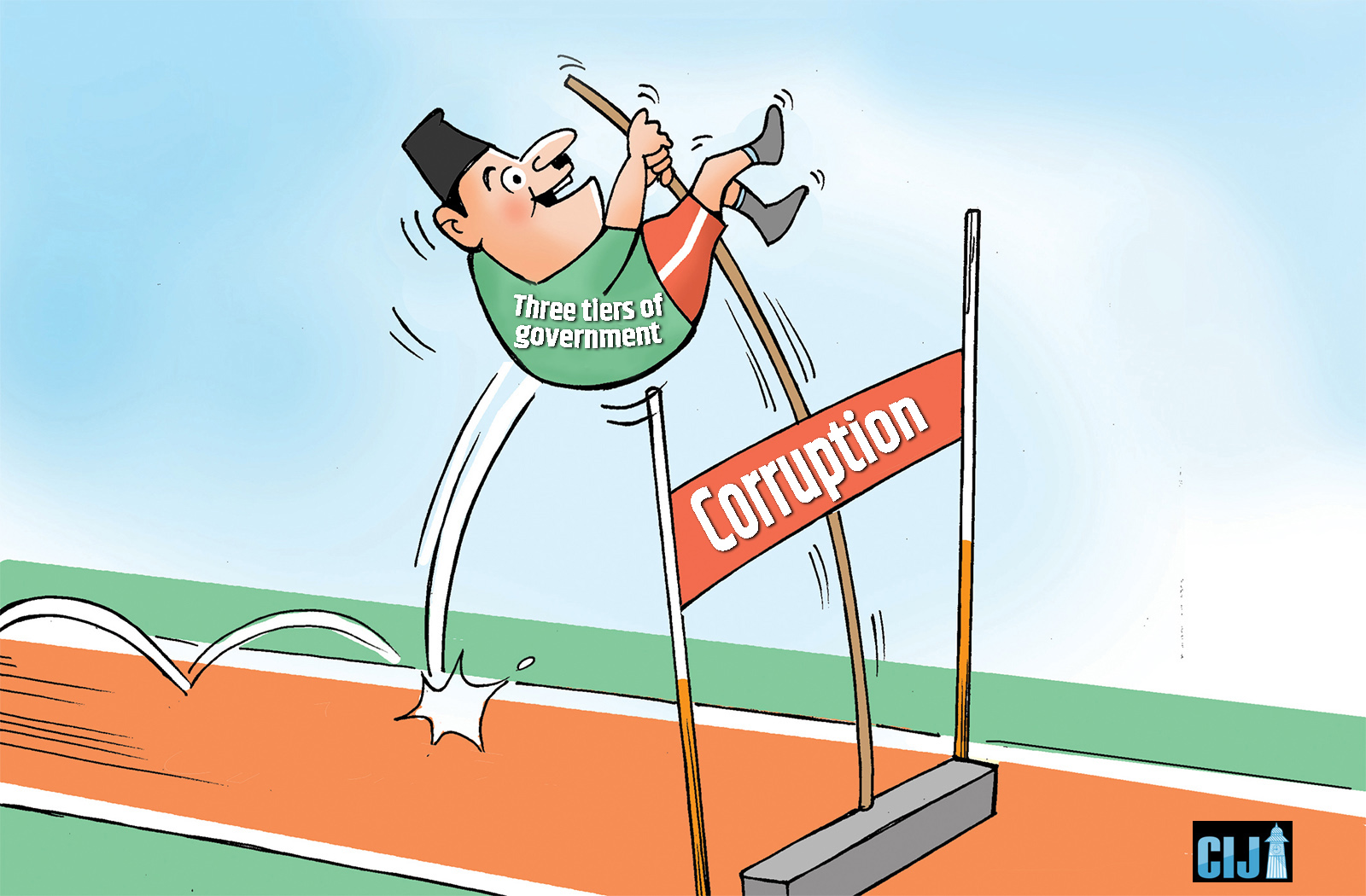
Eight years since their formation, Nepal’s provincial and local governments have attracted serious questions regarding good governance as public trust erodes with billions in unsettled accounts, growing irregularities and rising corruption.
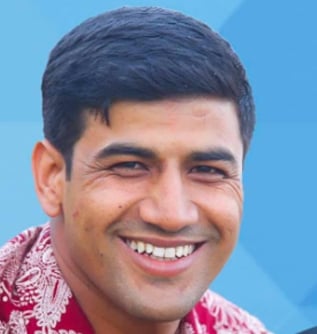
Bharat Kumar Thapa, mayor of Sarlahi’s Bagmati Municipality, is serving an eight-year prison sentence on a corruption charge. The Special Court sentenced him to prison after finding him guilty of embezzling revenue earned from the sale of construction materials excavated for building physical infrastructure in Bharat Lake. Thapa had been elected as mayor with a CPN (Maoist Centre) ticket in the 2022 local elections.
Mohan Bahadur Basnet, the mayor of Nagarjun Municipality in Kathmandu, is also serving a prison sentence in a corruption case. Basnet was elected mayor from the Nepali Congress in the local elections of 2017 and 2022.
Like Thapa and Basnet, many local government officials across the country—from mayors to ward members—have been implicated in corruption cases. Numerous cases have been filed against elected representatives on issues such as budget embezzlement, irregular payments, irregularities in procurement processes, grant distribution, consultancy services and bribery.
Among the total complaints registered with the Commission for the Investigation of Abuse of Authority (CIAA) in the fiscal year 2024/25, the highest proportion—53.84% or 19,933 complaints—are against local governments.
Complaints against the federal government account for 33.69%, while those against provincial governments make up 12.47%.
By province, the highest number of complaints against local governments is in Madhesh, at 35.48% (7,072 complaints). The highest number of complaints—413—has been filed against Pokhara Metropolitan City in Kaski. This is followed by Kathmandu Metropolitan City (381) and Chhipaharmai Rural Municipality in Parsa (298).
Irregularities galore
The 62nd Annual Report of the Office of the Auditor General published in 2025 shows that a total of Rs733.19 billion in unsettled accounts remains to be recovered across the country so far. As much as Rs91.59 billion in unsettled accounts was recorded in the fiscal year 2023/24 alone.
Likewise, a total of Rs47.74 billion in unsettled accounts has been identified across 3,093 offices under the federal government. Provincial governments account for Rs4.20 billion across 1,165 offices, while 753 local governments account for Rs25.32 billion in unsettled accounts. Other institutions and committees have Rs14.33 billion. Compared to the previous year, unsettled accounts have increased by 9.45% in this fiscal year.
Infographics
At provincial level, Madhesh Province has the highest percentage of unsettled accounts at 3.50% while Lumbini has the lowest at 1.78%. The total at the local level amounts to Rs24.7162 billion.
Among them, sub-metropolitan cities have the highest unsettled accounts at 2.45%, while metropolitan cities have the lowest at 2.10%. A total of 20 local governments have not even undergone audits for a long time. In Madhesh Province alone, 18 local governments have not been audited. Chankheli Rural Municipality in Humla and Likhu Tamakoshi Rural Municipality in Ramechhap have not undergone audits for the past nine years.
Unsettled accounts not just errors on paper
Deputy Auditor General Chandrakanta Bhandari says that unsettled accounts cannot be considered merely minor issues of mismatched paperwork. “Most cases involve expenditures made in violation of rules, which must be recovered,” Bhandari says. “Unsettled accounts should be viewed in terms of performance evaluation of employees and elected representatives. Only then can they be reduced.”
Dilliraj Khanal, an economist, also says that the increasing unsettled accounts hint at depleting governance. “Unsettled accounts are not a trivial matter,” Khanal says. “The budget has been spent, but there are no results. This shows that corruption has increased.”
Khanal, who headed the Public Expenditure Review Commission formed by the government in 2018, says that the commission’s recommendations given to the three tiers of government regarding public spending have still not been implemented.
Khanal had submitted a 371-page report to the government. He believes that public spending has continued to deteriorate because the recommendations of that report, as well as those from other commissions, have not been followed.
Nar Bahadur Thapa, an economist and former executive director of Nepal Rastra Bank, says unsettled accounts should not be treated as mere administrative errors. Thapa warns that failure to recover them causes significant loss to the state. “It creates the impression that the government provides money just to embezzle,” Thapa says. “Irregularities will only grow.”
Channels of corruption: budget transfers and lump-sum allocations
Experts say that two major tools of corruption at the provincial and local levels are budget transfers and lump-sum allocations. Transferring allocated budget to another heading at the last moment and keeping a lump-sum budget without a specific heading to spend arbitrarily later appear to be linked to financial self-interests.
Although the Local Government Operation Act 2017 prohibits transferring more than 25 percent under the capital budget heading, 116 local governments have transferred Rs4.10 billion in violation of the law.
Last fiscal year, as much as 14.64 percent of the total budget received from the federal government was transferred. Most of these transfers occurred in the final month of the fiscal year, suggesting foul play.
Although the Financial Procedures and Fiscal Responsibility Regulations prohibit budget transfers before the end of the first quarter, Rs11.64 billion—equivalent to 4.54 percent of total transfers—was reallocated during this restricted period.
Likewise, the law requires that budget estimates be presented by prioritising programmes without including lump-sum allocations. But 315 local governments approved more than Rs6.59 billion in lump-sum budgets, which the Auditor General’s report notes as a violation of fiscal discipline.
Khanal, the economist, says that including lump-sum budgets and making budget transfers are indirect forms of corruption. “The main purpose of keeping a lump-sum budget is to allow arbitrary spending,” he says. “Shifting funds from one heading to another is also done for self-interest.”
Likewise, Thapa, the former NRB executive director, accuses elected representatives and officials of using lump-sum budgets and transfers as a means to demand commissions. “There are cases where they directly bargain, saying, ‘I will give you this project, but I need this percentage as commission,’” he said. “It is difficult to extract commissions from pre-defined projects, but lump-sum budgets allow them to create new projects and take commissions.”
Thapa adds that unless the mindset of elected representatives, who believe they can design any budget and spend it arbitrarily simply because they have the authority—is restrained, such irregularities will only increase.
Shivaraj Adhikari, former vice-chairperson of the National Planning Commission, says the problem of lump-sum budgeting and budget transfers arises due to a lack of planning capacity and experience among elected representatives.
“There is already an established system at the federal government, but not at the provincial and local governments,” Adhikari says. “It seems lump-sum budgets are kept with the intention of spending whenever needed. It is necessary to provide them [elected representatives] with training and orientation on budget allocation.”
Borrowed budget remains unspent
The federal government borrows funds and disburses budgets to provincial and local governments but the money remains unspent. The federal government keeps on paying interest on those funds.
In the fiscal year 2023/24, a total of Rs149.26 billion remained unspent at the provincial and local governments. The federal government, which had borrowed the amount citing a lack of resources, paid Rs7.866 billion in interest in just one fiscal year.
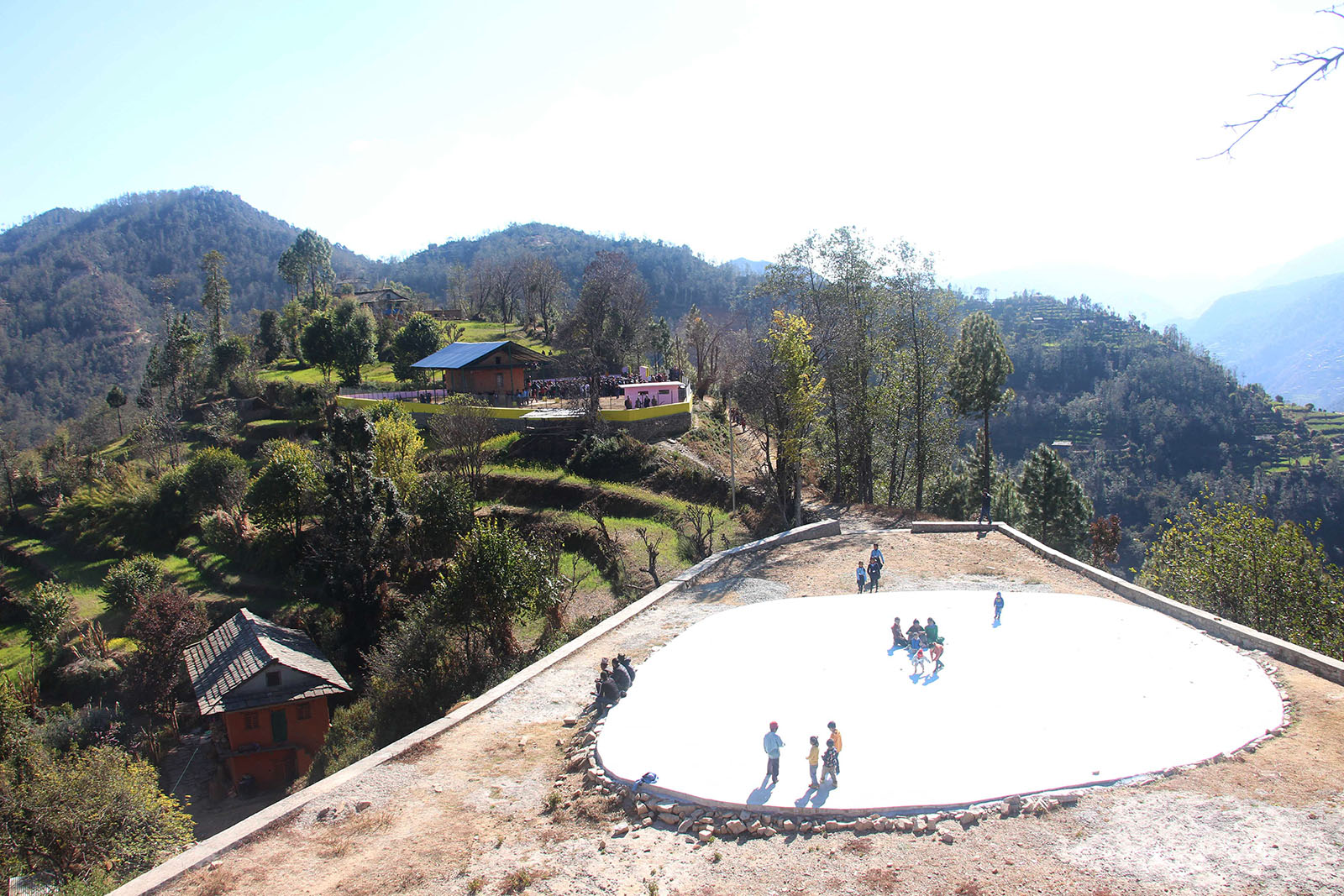
The average expenditure of provincial governments stands at 65.68 percent. Koshi Province has the highest spending at 76.12 percent, while Madhesh Province has the lowest at 55.64 percent. Although the total expenditure of local governments is 87.35 percent, capital expenditure is only 25.90 percent.
Khimlal Devkota, an expert in federalism, says that although authority and budgets previously held by the federal government were transferred to provincial and local governments under federalism, the lack of sufficient skilled human resources has made it difficult to spend the budget effectively.
“The federal government transferred authority and budget to the provinces and local governments but not the necessary workforce,” he said. “Even the existing personnel are unwilling to move to the provinces and local governments. Many local governments face staff shortages, which has made spending difficult.”
Flawed planning processes have also contributed to the problem, Devkota adds. Plans should go through multiple stages of selection, but issues have arisen because elected representatives have started designing them arbitrarily, Devkota says.
“Plans should be selected from the community level, but when mayors and deputy mayors directly formulate them, people do not feel ownership,” Devkota says. “This has led to problems in the implementation of projects.”
A long list of irregularities
The local governments have faced delays in presenting budgets due to disputes among elected representatives over financial transparency. In the fiscal year 2025/26, 42 local governments failed to present their budgets within the deadline on June 24.
Irregularities are widespread in most local governments, including procurement without competition, software purchases without approval, assigning complex construction work through user committees, making payments without deducting public contribution amounts, irregular appointment of contract staff, and excessive spending on consultancy services without implementing the reports.
A total of 102 local governments have spent the budget under the heading of capital expenditure for the concurrent expenditure. Meanwhile, 639 local governments have spent more than Rs2.36 billion under miscellaneous headings. As many as 576 have distributed financial assistance in violation of legal provisions.
Meanwhile, the Auditor General’s report states that effective action has not been taken in many cases that should have been prosecuted under the Corruption Prevention Act.
A total of 367 local governments spent Rs8.75 billion this year without verification, claiming it as pending payments from the previous fiscal year. The fiscal year before that, the number of such local governments was 280.
While deducted amounts under various headings and taxes must be deposited and reconciled within the same fiscal year, 161 local governments have failed to deposit Rs165 million that they had deducted.
According to the Financial Procedures and Fiscal Responsibility Act, cash collected by government offices must be deposited in the bank on the same day or the next day. However, in fiscal year 2023/24, 84 local governments had not deposited Rs26.4 million collected at the ward level, and 49 local governments had not deposited Rs21.3 million collected at the municipal level, even by the time of audit.
A total of 93 local governments failed to deduct Rs97.684 million in Value Added Tax while making payments under contracts. In fiscal year 2023/24, the number of local governments that did not conduct internal audits reached 327.
Another major issue is unnecessary spending in the name of consultancy services. There is a growing trend of spending large sums on consultancy with little to no results. Over the past three years, 418 local governments spent Rs1.4853 billion on consultancy services.
Most local governments do not even keep records of consultancy reports. Among those that do, 135 local governments have failed to implement 448 study reports, for which Rs323.168 million had been spent.
According to laws related to benefits of local officials and members issued by the provincial assembly, there is no provision for appointing personal secretaries and advisors with salaries. However, 152 local governments appointed such staff without any criteria and paid Rs81.238 million in remuneration.
Local officials are required to obtain approval from the federal government before traveling abroad. However, in one year, officials from 26 local governments went abroad without approval, spending Rs14.677 million.
According to the Provincial Public Service Commission Act 2018, consultation with the commission is required when appointing positions eligible for pensions or making appointments exceeding six months. However, 19 local governments increased employee grades without such consultation and paid an additional Rs20.779 million in one year.
The Local Government Operation Act 2017 allows contract-based hiring only for specific roles such as municipal police, drivers, office assistants, plumbers, electricians, guards, and gardeners. However, within a year, 523 local governments hired staff on contract in violation of the law and paid over Rs9.9 billion in salaries and allowances. Additionally, 280 local governments hired 5,623 staff beyond approved positions and paid over Rs2.8 billion.
Contrary to Local Government Operation Act 2017 and Guidelines for the Local Government Planning and Budget Formulation Guideline 2021, 700 local governments spent nearly Rs131 billion on 166,195 projects.
A total of 554 local governments procured goods and services worth Rs7.21 billion directly without any competition, violating procurement laws.
According to public procurement regulations, payments made through user committees must deduct a portion for public participation. However, 90 local governments paid Rs43.192 million across 493 projects without making such deductions. Furthermore, 118 local governments signed agreements for 1,791 projects to be carried out through user committees but instead got them executed by contractors, paying over Rs898 million.
Elected officials have their own grievances
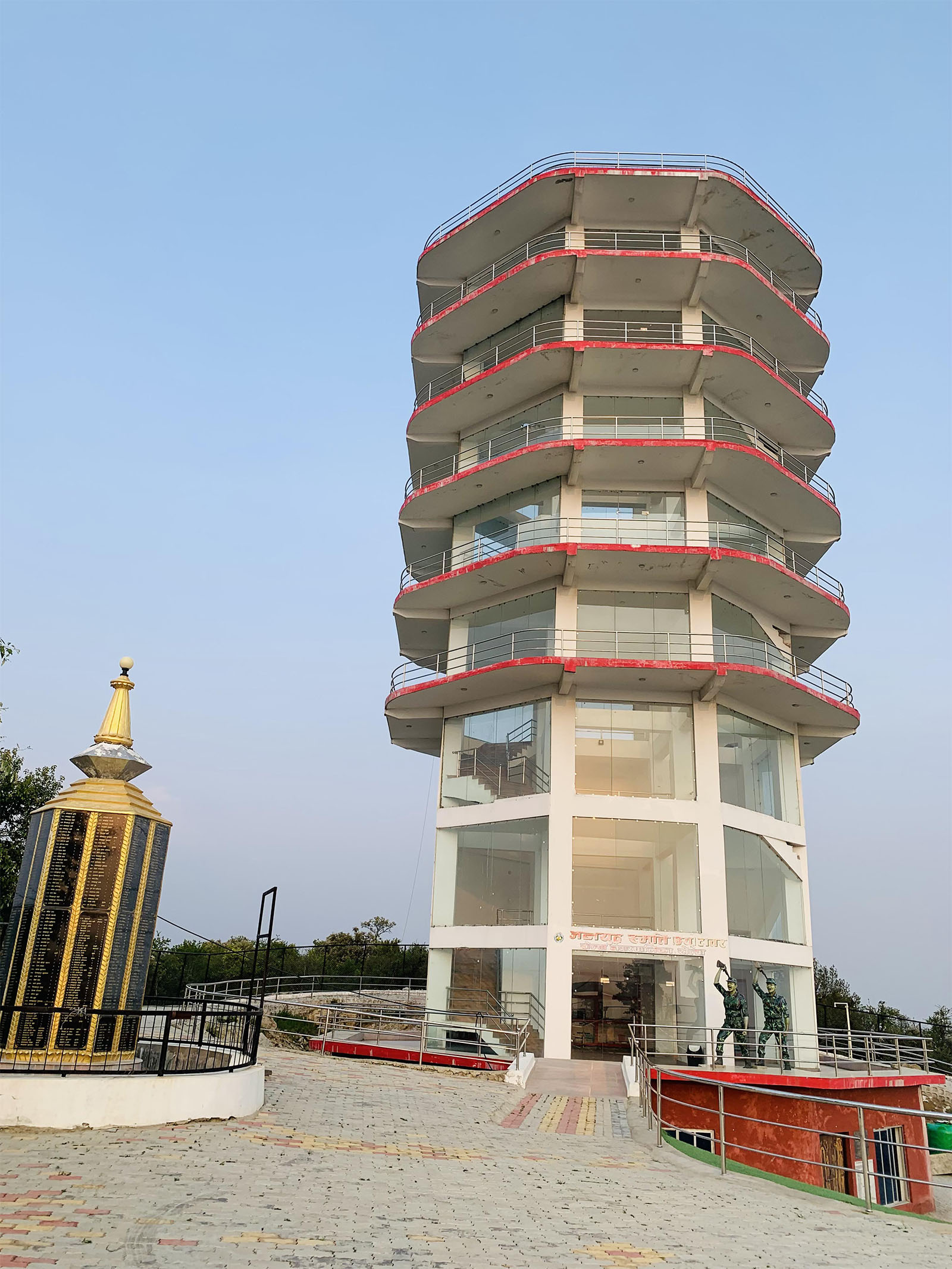
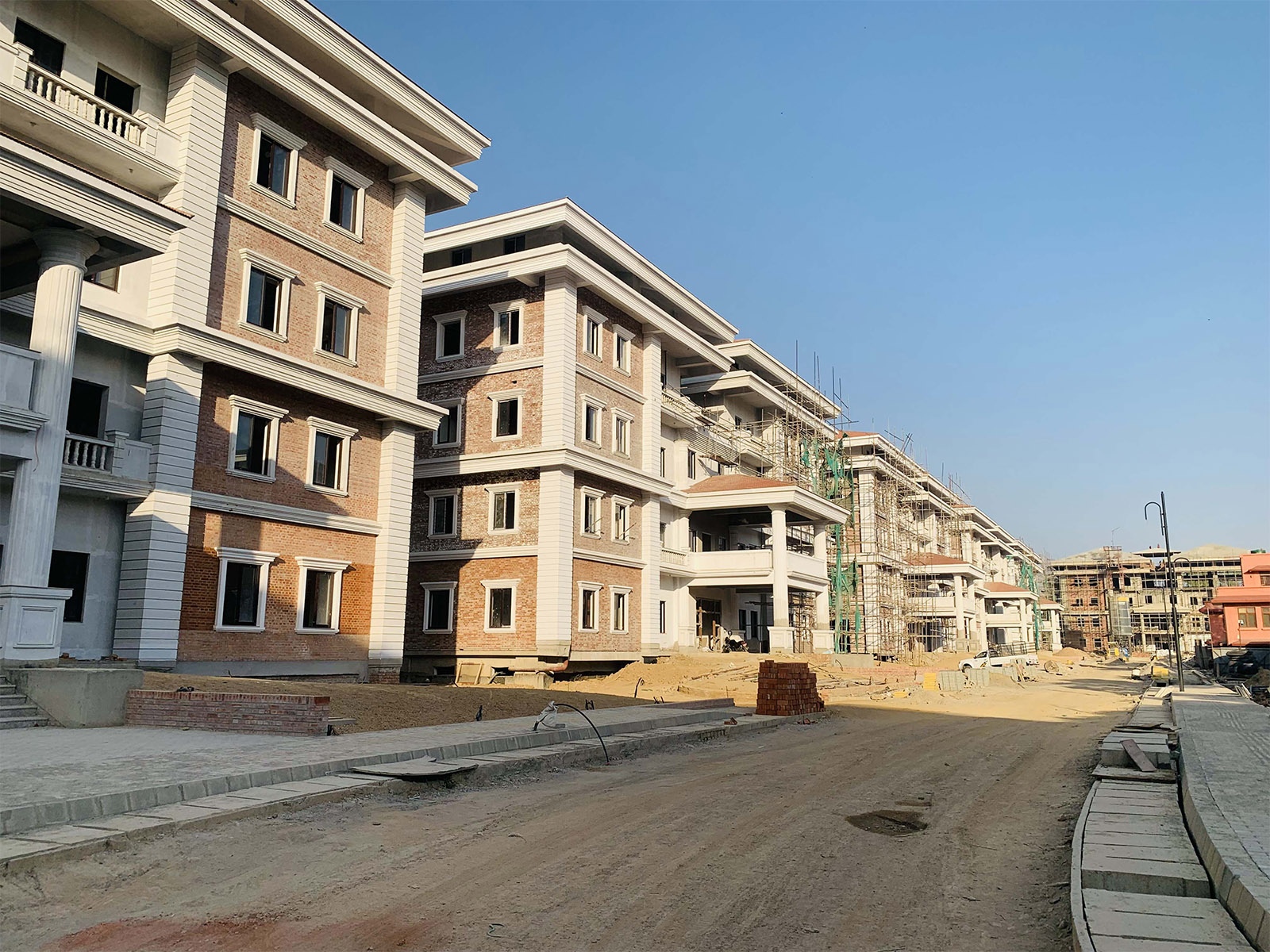
Centre built at Rolpa’s Pariwartan Rural Municipality-2, Rangshi. The budget of
local governments is being spent on such unnecessary structures.
Although data and statistics show financial irregularities at the local governments, elected representatives have their own complaints. Laxmi Devi Pandey, chairperson of the National Association of Rural Municipalities and head of Hupsekot Rural Municipality in Nawalparasi (East), says that not all work required at the local government can always be carried out strictly according to policies and regulations.
“Some works need sudden intervention,” she says. “There is no time to look for rules and procedures. The Office of Auditor General should understand the challenges of local governments and act accordingly.”
Pandey adds that in the beginning, due to a lack of knowledge about how to carry out tasks, issues such as lump-sum budgeting, budget transfers, and work against regulations occurred. But there is no longer any excuse of not knowing, she says. She further adds that the association is stressing the need to allocate budgets according to specific headings and has been issuing circulars to all rural municipalities to reduce lump-sum budgeting, transfers and unsettled accounts.
Bhim Prasad Dhungana, chair of the Municipal Association of Nepal and mayor of Dhading’s Nilkantha Municipality, says that local governments cannot function solely by listing projects in a ‘red book’ like the federal and provincial governments.
“Budgets do not arrive on time,” he says. “There are also maintenance works and small-scale projects. There may be some negligence, but to resolve ongoing minor problems, we sometimes have to spend funds that are not included in the budget.”
He also suggests that proper training should be provided, as a lack of knowledge among elected representatives leads to actions that violate regulations.
“An inexperienced representative must start working the very next day after winning the election,” he said. “If they are given at least 15 days of training before starting work, such problems can be reduced.”
Lumbini Province Chief Minister Chet Narayan Acharya also says that many things are being learned and improved during the practice of federalism. “Although various complaints are filed with anti-corruption bodies, actual corruption has not been proven in many cases,” he said.
Elected representatives also say that the high level of unsettled accounts seen in provinces and local governments is partly due to weaknesses in the Office of the Auditor General.
However, Deputy Auditor General Chandrakanta Bhandari says that all governments and offices are clearly aware of what should and should not be done according to laws and regulations.
“If work is carried out according to laws and procedures, there will be no unsettled accounts,” Bhandari said. “They occur where work is done without establishing legal frameworks. Even for similar types of work, whether rules were followed or not determines whether irregularities are identified.”
Bhandari added that provincial and local governments knowingly continue to ignore rules they are already aware of. “Everyone knows that lump-sum budgeting and improper budget transfers should not be done, yet this continues,” he said. “Elected representatives are deliberately disregarding the rules.”
Published in Kantipur on 15 March 2026
More Investigative Stories

Who Does The Annapurna Belong To?
In fiscal year 2082/83 BS, the Annapurna Conservation Area Project (ACAP) received 508,000 visitors and collected more than NPR 1.77...
Politicized Budget Distribution in Madhesh is Contrary to the Spirit of Federalism
From small projects that local governments can implement themselves to the selection of projects based on political connections, the pattern...
Comment Here