Investigative Stories
Corruption in Allowances as “Mainstreaming” Efforts Deepen Risks for Raute Community
Nepal’s last nomadic community, the Raute, now faces an existential threat from outside interference and state-led efforts at “mainstreaming” them. Even the social security allowances meant for the community have been marred by irregularities.

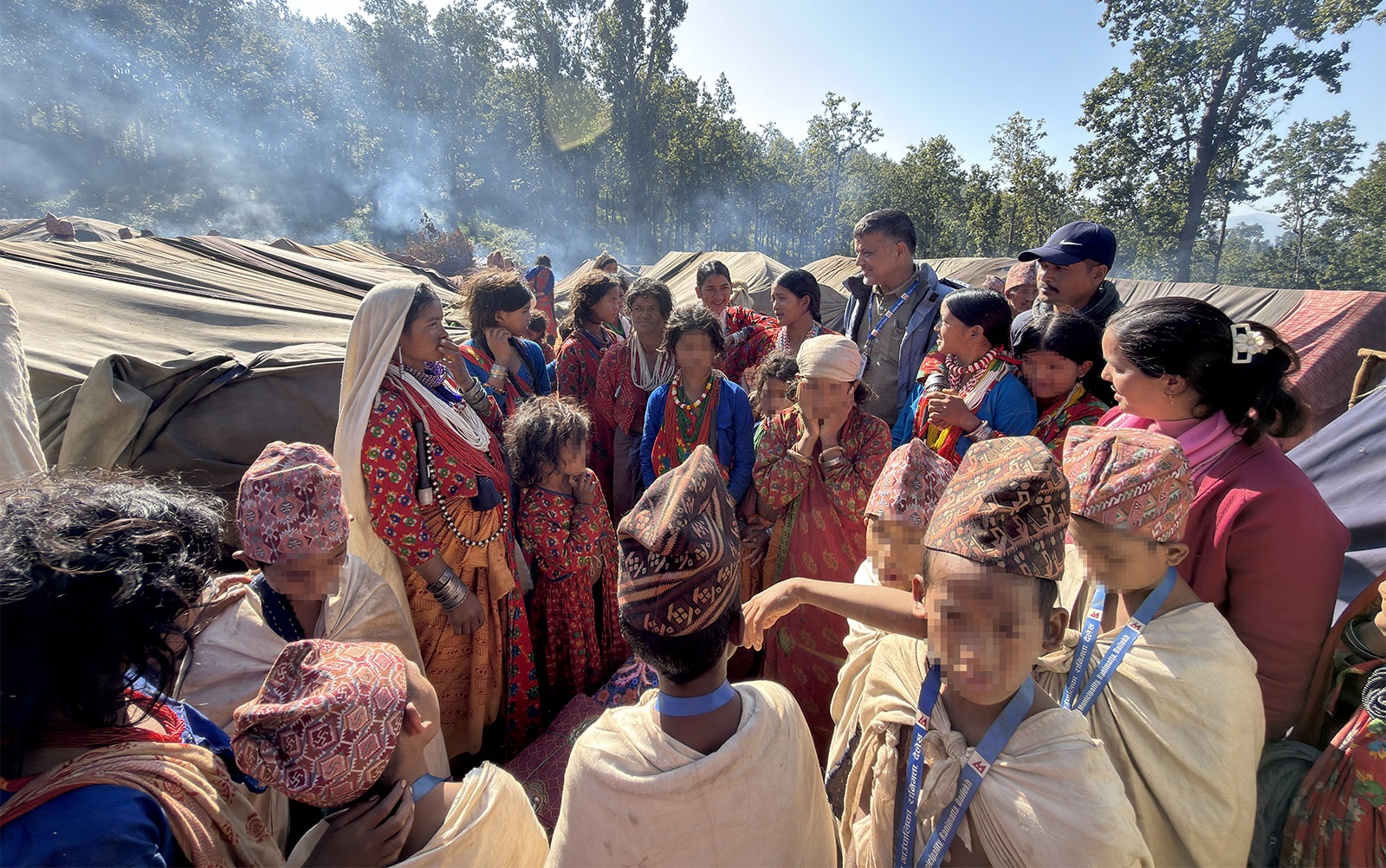
In 2008, when the then Dailekh District Development Committee distributed social security allowances to the Raute community for the first time, their population stood at 165. Seventeen years later, on February 25, 2026, a count conducted by the Social Service Center (SOSEC) put that number at just 133.
In the years in between, both government and non-government actors have launched a range of programs in the name of improving the Raute community’s condition. But according to researchers, if things continue this way, rather than being uplifted, the community itself may not survive much longer.
The Raute, a nomadic community that has long lived with minimal needs and in close dependence on the forest, are now being drawn into the state’s “mainstreaming” project through far more than cash allowances. The government distributes everything from food grains to soap. Organizations and individuals regularly visit Raute settlements with salt, cooking oil, and mobile health camps. Increasingly, TikTok and YouTube content creators also show up in the settlements in the name of helping the Raute, turning the community itself into content.
A study published in September 2025 in the KDCBAR Law Journal identifies the Raute community’s greatest threat as the state’s policy of trying to bring them into the national mainstream. According to the study, the Government of Nepal is gradually pressuring the Raute people to integrate into mainstream society, even at the cost of their distinct identity, values, and culture.
According to a report by the human rights organization Survival International, at least 196 communities worldwide remain in minimal contact with the outside world.
One of the largest among them is Peru’s Mashco Piro community. To protect them, the Peruvian government has barred local residents not only from approaching them, but even from attempting to speak with them.
Peru adopted this policy after similar isolated communities in Brazil began disappearing following outside contact that brought disease, malnutrition, and addiction. External contact and intervention can severely damage the social structure and health of such communities. Nepal’s Raute community now appears to be facing similar risks.
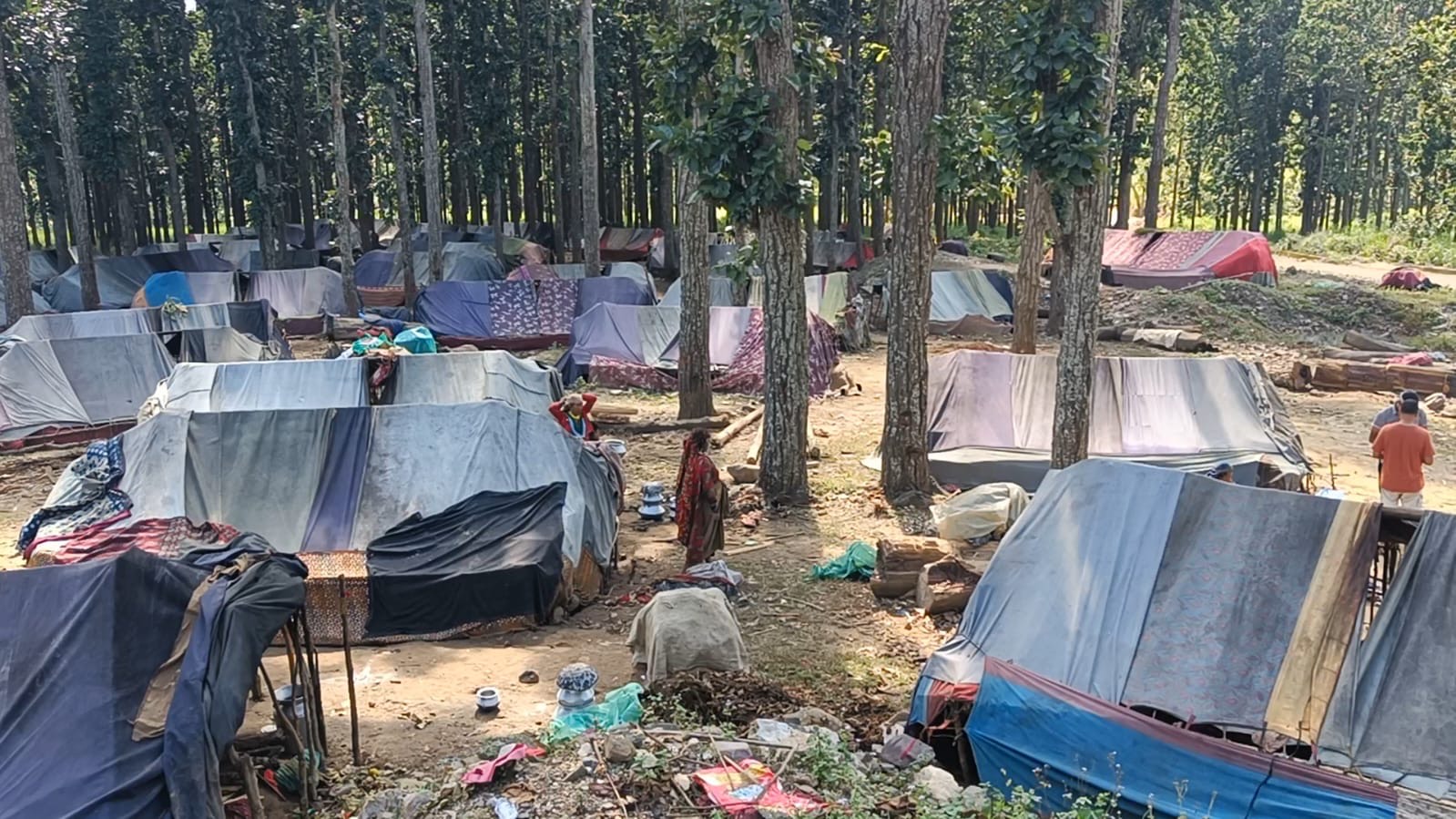
Over the past 17 years, the state has spent Rs 74.7 million on social security allowances for the Raute community alone. Under headings such as income generation, mainstreaming, and health, government and non-government institutions have spent at least Rs 150 million more. There is no comprehensive record of the near-daily, distribution-driven activities carried out in Raute settlements by various organizations and individuals.
And yet, instead of growing, the Raute population is shrinking.
Growing Outside Contact Is Deepening the Risks
According to Nagendra Upadhyaya, an expert member of the Raute Facilitation Committee, growing contact with other communities and the cash flow brought in through social security allowances have significantly altered the Raute way of life.
He says the shift began during the armed conflict of 2005–06, when gunfire and explosions in the forests pushed the Raute closer to market areas. As they moved nearer to towns, government and non-government organizations began entering the community more frequently.
The Raute, once described as kings of the forest, gradually became dependent on others. A community that once believed even touching money was sinful has now been turned into one that asks for it.
Multiple studies have also pointed to how recent changes in the Raute way of life are heightening concerns about both their health and long-term survival.
A study published in the international journal BMJ Open notes that changes in the Raute lifestyle are creating new health challenges.
According to the study, increasing contact with markets, surrounding communities, and government programs has transformed their way of life and exposed them to new diseases and health risks.
Researchers say rising alcohol use, processed food brought in from the market, and growing contact with outside society could trigger long-term health problems in the Raute community.
A separate study by Tribhuvan University found that maternal and child health risks are particularly high among the Raute. It notes that in communities historically isolated from outside society, even minor infections can become life-threatening.
Addiction, Malnutrition, and Infection
According to Dr. Nawaraj KC, a physician who has worked with the Raute community, cash allowances and excessive outside interference have deeply disrupted the Raute way of life.
“Giving cash directly into the hands of the Raute is a mistake,” he said. “When this allowance money is not used properly, it puts the entire community at risk.”
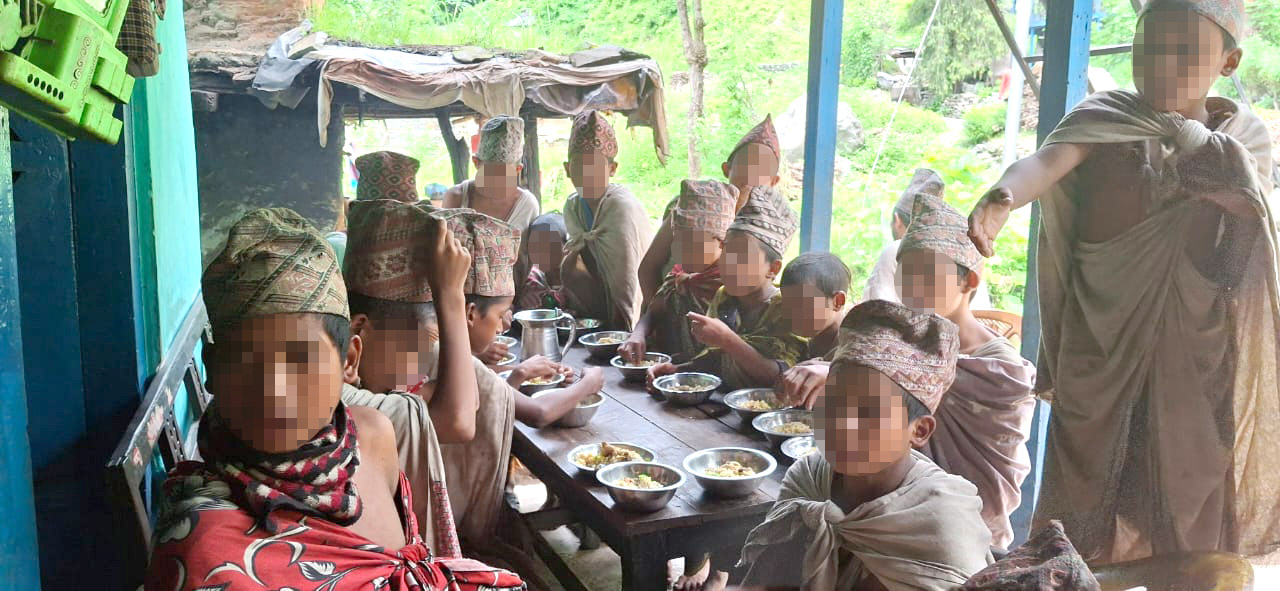
He says the leading cause of death in the Raute community today is an unhealthy lifestyle.
According to Anuja Pant, a health worker who has been working with the Raute community for the past two years, malnutrition is widespread among Raute children.
“Because parents consume alcohol heavily, many children are born malnourished,” she said. “On top of that, traditional foods like tubers, hunted meat, wild grains, and forest fruits have been displaced by instant noodles and biscuits. That has also pushed children into malnutrition.”
She says even pregnant women consume alcohol, leading in some cases to miscarriages, undernourished infants, and inadequate postnatal care.
Since 2018, she said, 27 Raute children between nine days and 10 years old have died.
Former Raute chief Bir Bahadur Shahi has a family of 11. Under the government’s endangered groups allowance scheme, which provides Rs 44,000 per person annually, his household receives Rs 528,000 a year. In addition, various NGOs and individuals distribute clothing, food, and cash assistance.
Yet most members of his family appear visibly unwell. According to health workers, alcohol addiction, affecting everyone from children to the elderly, combined with a lack of nutritious food, has left the family in poor health.
Bandabir Shahi, a 17-year-old Raute youth, also says the allowance has worsened the problem. “As soon as they receive the allowance, they buy alcohol,” he said. “When the Raute lived deep in the forest, people stayed busy with their own work. But the allowance has made them settle around market areas. The food from the market makes people sick.”
If the Raute are to survive, he said, they must be allowed to live deep inside large forests again.
“We should be following the path our ancestors taught us,” he said. “But the Raute are being lured in many directions. If this continues, this community will disappear within a decade.”
Irregularities in Allowance Distribution
Even as the government faces criticism for making the Raute dependent through cash allowances, documents suggest irregularities in the distribution of those same payments.
The government has arranged for the Raute, a nomadic community, to receive their allowance through Gurans Rural Municipality in Dailekh, wherever they happen to be living.
Records show that 68-year-old Kashiram Shahi, a member of the Raute community, died in Dullu, Dailekh, on July 9, 2018. Even so, government allowances continued to be issued in his name for seven years after his death.
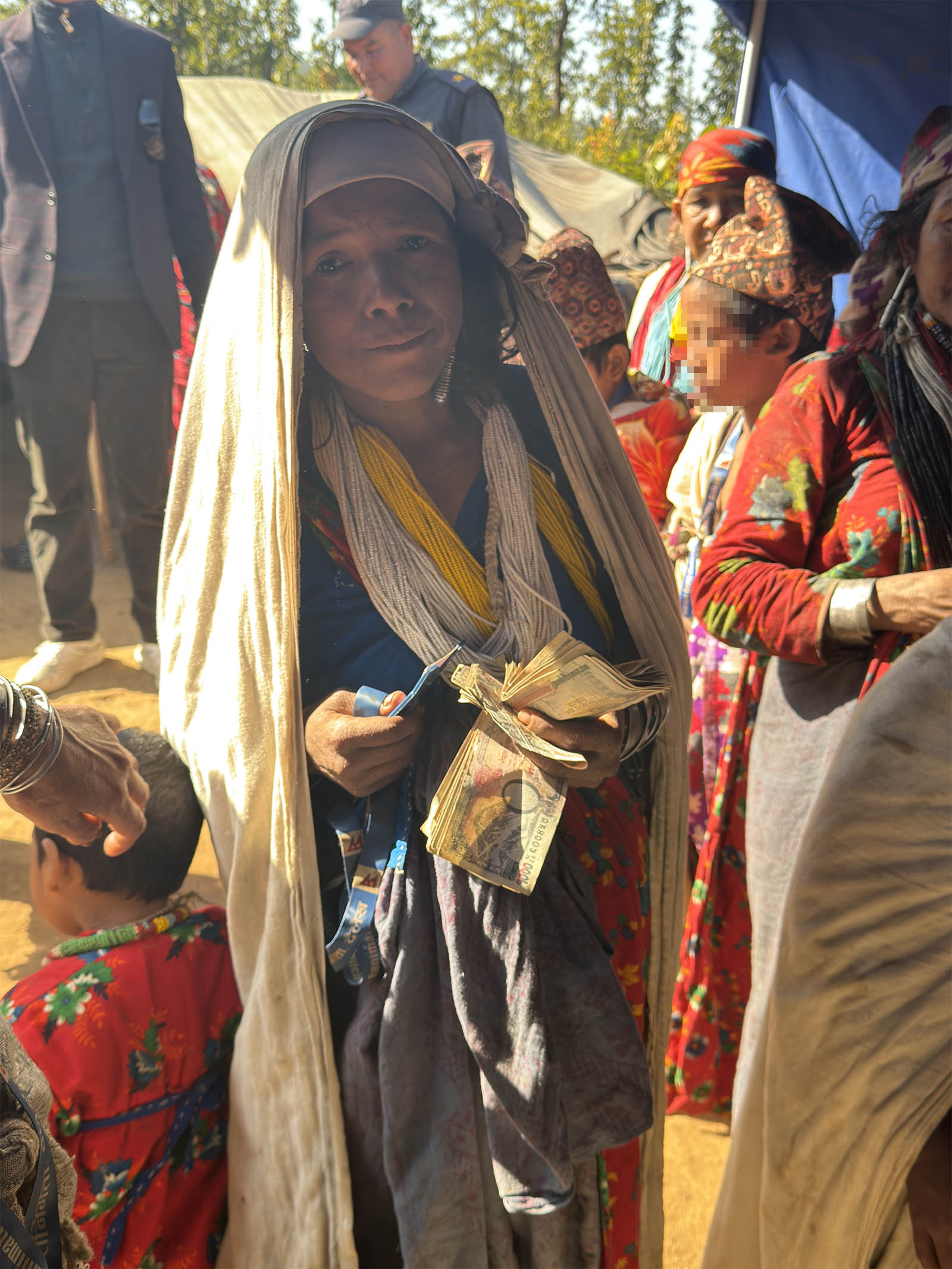
At the request of Gurans Rural Municipality, the Department of National ID and Civil Registration sent Rs 336,000 in allowance payments in Shahi’s name.
A similar pattern appears in the case of Topi Shahi, an infant who died just seven days after birth. Records show the rural municipality continued requesting allowance in the child’s name for six years. Topi Shahi died on September 25, 2018, yet municipal records show a total of Rs 288,000 was requested in the child’s name.
Documents indicate multiple irregularities in the allowances distributed through Gurans Rural Municipality: the names of deceased individuals remaining on beneficiary lists, members of the community being marked as dead in one year and then paid again the next, and in some cases the same person appearing under two different names.
For example, when the third installment of the allowance was distributed on January 15, 2022, the name Chaura Shahi, with ID number 2076122500869, was marked with a cross (×). Yet in the first installment of fiscal year 2024/25, allowance payments were again shown as distributed under that same name and ID number. Chaura is still living in the same community.
After receiving information that the allowance beneficiary lists included deceased people and names of people no longer in the community, CIJN requested records from the Gurans Rural Municipality.
The rural municipality provided documents on December 19, 2025. But when the details in those records did not match the actual composition of the Raute settlement, CIJN contacted the municipality again. On January 9, 2026, it provided a second set of records. That second set did not match the first set the municipality had given us. Nor did it match the facts on the ground.
When CIJN approached the rural municipality and attempted to verify the records against the original documents in its office, it appeared that allowances had continued to be distributed in the names of people who had already died.
Pith Shahi, born on August 21, 2016, is still living in the community. But in the first set of records provided to CIJN, he was shown as dead and listed as not having received the allowance payments in fiscal year 2021/22.
Yet in another set of records provided by the rural municipality, Shahi is shown as having received Rs 96,000 in allowance payments in 2024 and 2025. According to Lal Bahadur Khatri, a staff member at the Social Service Center (SOSEC) Nepal, which has long worked with the Raute community, Shahi is still living in the same settlement.
For the second installment of the social security allowance in fiscal year 2023/24, Gurans Rural Municipality sent the names of 151 people to the Department of National ID and Civil Registration. But according to SOSEC Nepal, the actual number of Raute, who were then living in Gurbhakot Municipality, Surkhet, was only 141. When CIJN visited the Raute settlement and spoke with community members, including Bandabir Shahi, they too confirmed that the community’s population at the time was 141.
A review of allowance records distributed through Gurans Rural Municipality also suggests that, in some cases, the same individual may have been listed under different names in order to inflate the total number of beneficiaries.
For instance, in the allowance distribution list for fiscal year 2023/24, the person listed as Okhar Shahi at serial number 2 and Govinda Shahi at serial number 22 appears to be the same individual. This was also confirmed by local resident Bandabir Shahi, who said Okhar had more recently begun using the name Govinda and that both names referred to the same person.
That same person, Govinda, died on September 15, 2025. After his death, allowance payments stopped under both the names Okhar and Govinda.
A review of the records provided by the rural municipality identified 10 such names that appeared to be fictitious, or belonged to people who were not, or were no longer, in the settlement.
Ram Bahadur Budha, the then chief administrative officer of Gurans Rural Municipality, said the ward office would take an advance, distribute the allowance, and then submit signed receipts, after which the payment would be cleared.
“I don’t know about names being added or removed,” he said. “The rural municipality provides funds according to what the ward requests. Responsibility for that lies with the ward.”
The inconsistencies extend even to the rural municipality’s own beneficiary totals. According to the first set of figures the rural municipality provided, the number of Raute listed as receiving allowances in fiscal year 2024/25 was 137 in the first installment, 138 in the second, 141 in the third, and 138 in the fourth. But in the second list provided, those numbers changed to 133 in the first installment, 134 in the second, 137 in the third, and 133 in the fourth.
“We Will Act”: Rural Municipality Chair
Top Bahadur BC, chair of Gurans Rural Municipality, says that after he was elected in 2022, he tried to review documents related to the distribution of allowances for Raute but could not find them in the office.
“I was suspicious from the beginning and wanted to examine the records, but the staff kept delaying,” he said. “To make sure there was no tampering in the [Raute] allowance distribution, I had a fingerprint device purchased and sent there, but the staff never used it. Right now, I am gathering and reviewing all the documents from the time the municipality began distributing allowances. If I find any irregularities, I am committed to taking action.”
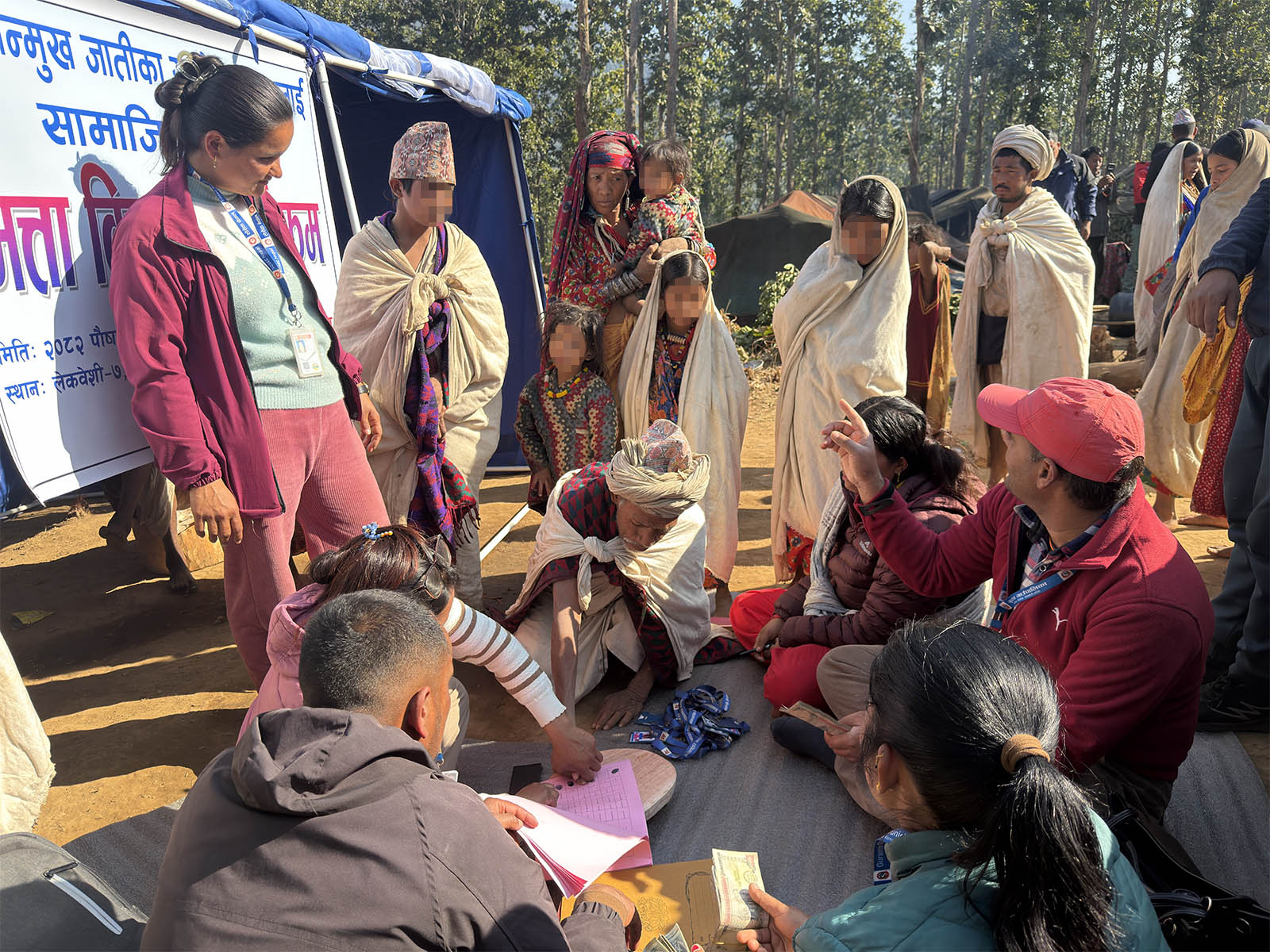
Dinayat Gharti, the municipality’s chief administrative officer, said the allowance distribution had been carried out based on information provided by staff from SOSEC, which has long worked with the Raute community. However, the figures provided by SOSEC and those maintained by Gurans Rural Municipality do not match.
“More than us, the Social Service Center staff are in constant contact with the Raute community. They stay there,” Gharti said. “If there has been some technical error, I will review the documents.”
A Deeper Challenge to Protection
In December 2018, Karnali Province’s Ministry of Social Development spent Rs 800,000 to distribute clothing to members of the Raute community. The coats distributed by the ministry were later sold by Raute recipients to local residents at lower prices.
Since 2019, the provincial Ministry has spent Rs 4.123 million on programs for the Raute community, including mainstreaming and income-generation initiatives.
But complaints alleging widespread irregularities in those programs, and that they have brought no meaningful benefit to the community, have prompted an investigation by the Commission for the Investigation of Abuse of Authority (CIAA).
Amit Paudel, an assistant professor at Johns Hopkins University who has spent the past two years closely studying the Raute community, says the state, NGOs, and society at large have pushed the community into a cycle of dependency.
“This community has been trapped in a swamp of dependency by the government, non-government organizations, and society itself,” he said. “If the Raute continue to be treated as objects of entertainment, this community will not survive much longer.”
He says that once the state itself began entering the settlement each month to hand over cash allowances, effectively encouraging the Raute to live off them, the community also began losing its traditional skills.
Experts say that any effort to protect and support small Indigenous communities like the Raute must carefully balance culture, way of life, and health risks. Researchers warn that when outside interventions alter a community’s way of life, the consequences can be unpredictable, especially in social and public health terms.
Development programs imposed without regard for the Raute’s traditional nomadic life, forest-based economy, and cultural norms are weakening both their social resilience and their cultural survival. The fact that even the allowances intended for this endangered community appear to have been misappropriated only deepens the crisis.
Published in Kantipur on 24 March 2026
More Investigative Stories
Who Does The Annapurna Belong To?
In fiscal year 2082/83 BS, the Annapurna Conservation Area Project (ACAP) received 508,000 visitors and collected more than NPR 1.77...
Politicized Budget Distribution in Madhesh is Contrary to the Spirit of Federalism
From small projects that local governments can implement themselves to the selection of projects based on political connections, the pattern...
Comment Here