Investigative Stories
A Rs 2.44 Billion Cooperative Scam: Directors Misappropriated Funds, Authorities Failed to Act
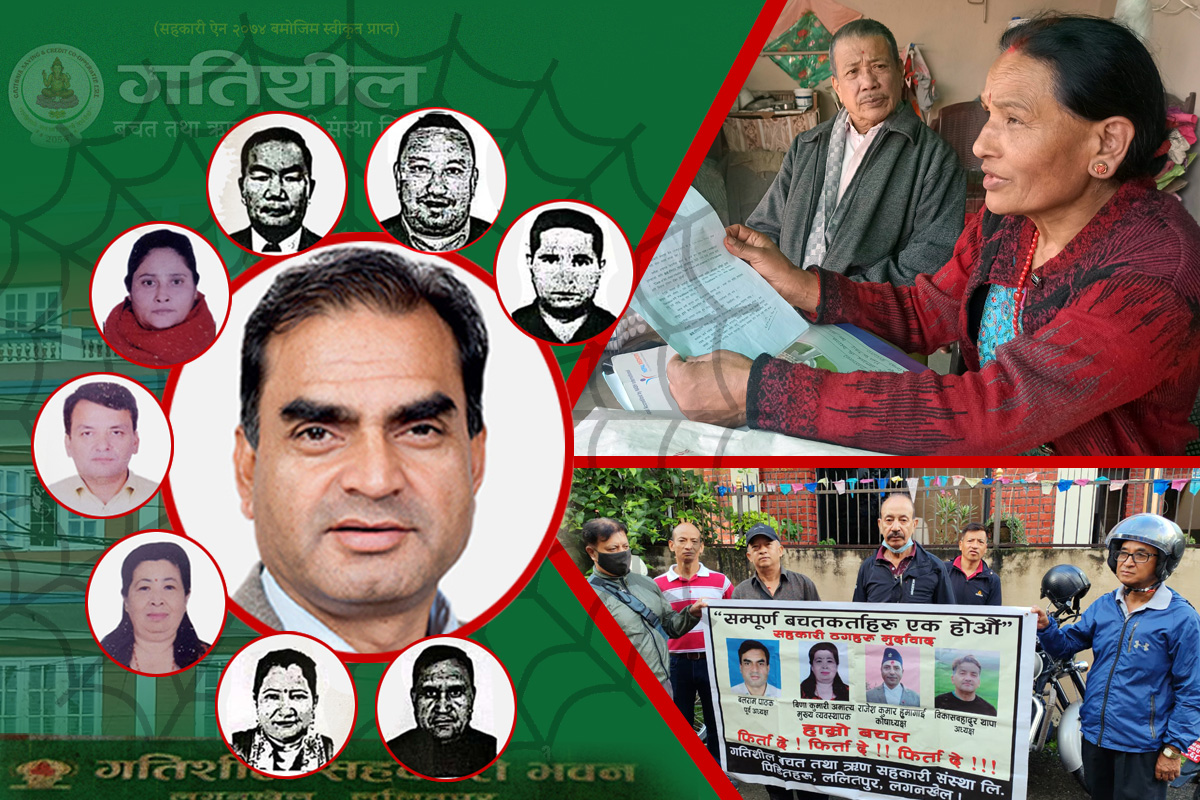
Well-connected directors of Gatisheel Cooperative, based in Lagankhel, Lalitpur, allegedly misappropriated more than Rs 2.44 billion, leaving depositors devastated. How did local and provincial authorities fail to stop a scam of this scale inside a cooperative that, by all appearances, had been functioning normally?

In Lalitpur’s Kumaripati area lies a small neighborhood called Iti Tole.
Seventy‑eight‑year‑old Gambhir Lal Shrestha and his wife, Sulochana, live in a modest house tucked inside one of its narrow lanes. Until a few years ago, this home and community gave them a deep sense of comfort and reassurance. Even in retirement, despite the absences and quiet voids that come with old age, life here felt whole. Their days and nights passed peacefully.
Now, all of that has come to an abrupt halt.
For Gambhir Lal and Sulochana, their own home and neighborhood have become suffocating. Their sense of security and self‑confidence has been stripped away, replaced by growing helplessness.
The reason lies in the story of a cooperative scam.
Many residents of Iti Tole and the surrounding area were members of Gatisheel Savings and Credit Cooperative Ltd., headquartered in Lagankhel. Gambhir Lal and Sulochana had both recently retired from government service at the rank of under‑secretary after three decades in public service. The cooperative was offering interest rates nearly double than those of banks, and neighbors encouraged them to deposit their savings there.
At the time, it seemed like sound advice.
Sulochana began saving with Gatisheel on July 24, 2012. “It was offering higher interest than banks,” she said. “I started saving in the cooperative thinking it would support us in old age.” Two years later, on June 16, 2014, Gambhir Lal opened his own account. The cooperative was then offering rates as high as 20 percent. Sulochana moved all the money she had earned over three decades of government service into the cooperative – her provident fund, gratuity, everything.
For years, everything appeared normal. Then Gambhir Lal fell seriously ill. He developed a heart condition and had a pacemaker implanted. He underwent two surgeries for kidney stones. Later, he needed another operation after his airway narrowed. In total, Gambhir Lal has undergone seven surgeries. The cost of treatment has been immense.
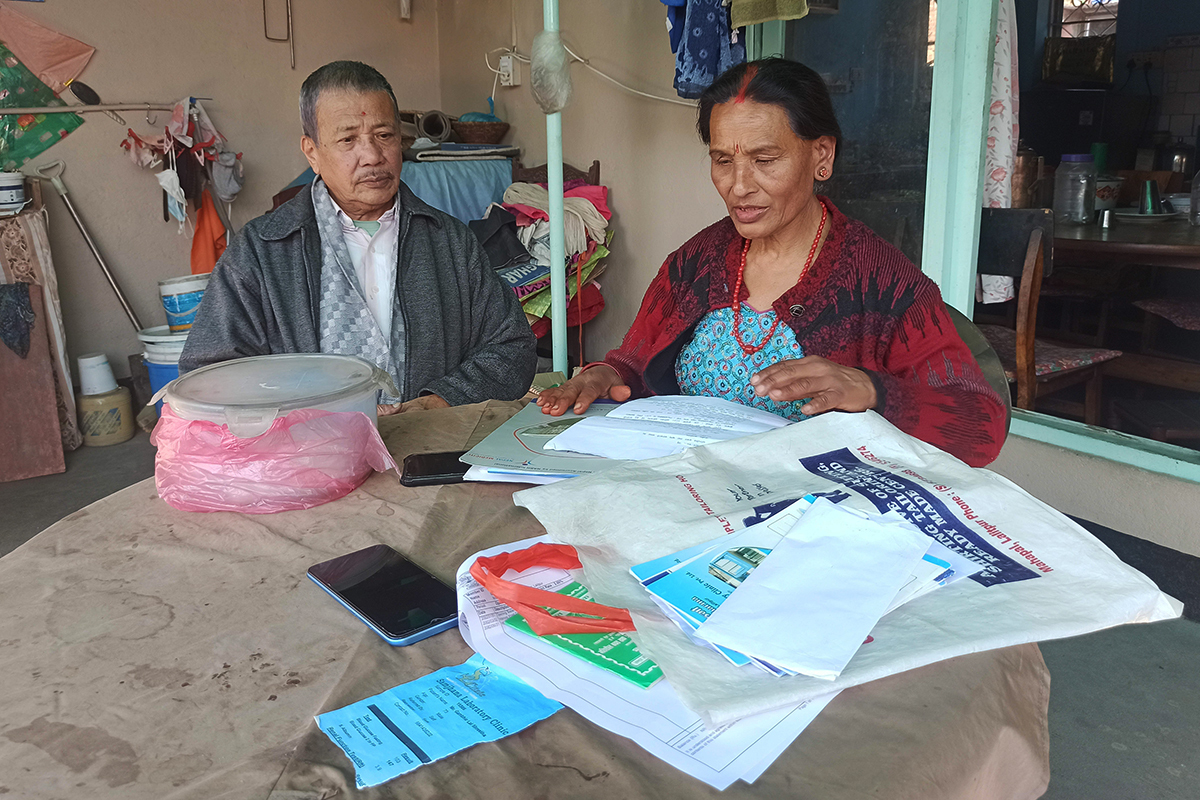
“We’ve had to borrow from relatives just to cover his medical expenses. Somehow, that’s how we’ve managed so far,” Sulochana said. “But the savings we put away over a lifetime were of no use when we needed them most.”
As Gambhir Lal’s health deteriorated, the couple went to the cooperative again and again to withdraw their savings. For the past three years, they have returned repeatedly, hospital papers in hand, worry and pain in their hearts. But all they have received are deferred promises: today, tomorrow, come back later. “I call them 10 or 11 times a day,” Sulochana said. “Now they’ve stopped answering the phone altogether.”
There is no exact accounting of how much has already been spent on Gambhir Lal’s treatment. The debt they have taken on, and the suffering that has come with it, is even harder to measure.
For follow‑up appointments, they rush to B&B Hospital in Gwarko or to Shahid Gangalal National Heart Centre in Bansbari. For regular therapy, they travel to New Baneshwor. And still, clinging to faint hope that their deposits might somehow be returned, they continue making trips to the cooperative.
In old age, with frail bodies, they run everywhere on their own. Their son and daughter both live in Australia.
They did consider legal action after the cooperative refused to return their money. “But we are in no position to get into lawsuits,” Sulochana said. “How are two elderly people like us supposed to endure all that government hassle? Should we be running to the hospital, arranging treatment, or fighting a court case?”
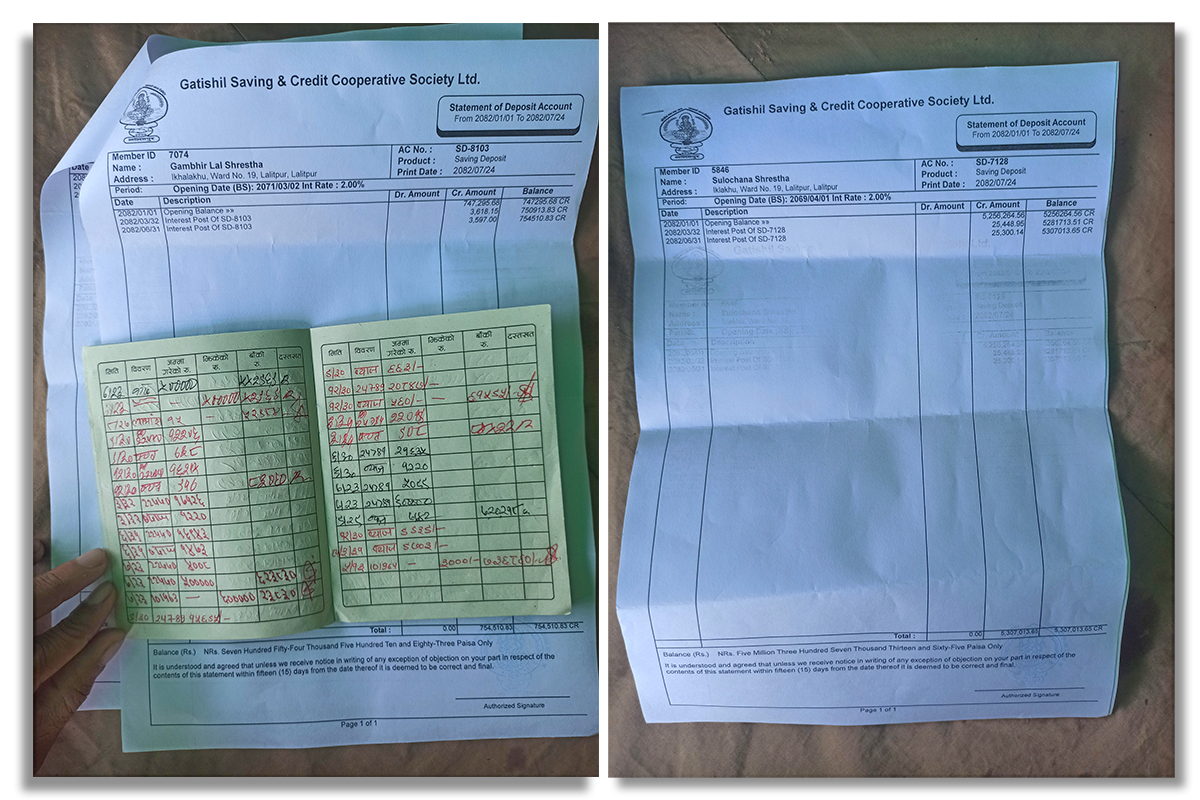
A statement from Gatisheel Cooperative shows that the Shrestha couple had more than Rs 6 million in savings there. On April 4, 2025, they formally submitted an application requesting the return of their deposits, attaching hospital documents. That same day, they also filed a petition with the Cooperative Coordination Division under the Ministry of Cooperatives and Poverty Alleviation of Bagmati Province.
Nothing came of it. “The money we earned over a lifetime is trapped in the cooperative, and meanwhile we’ve sunk into debt paying for treatment,” Sulochana said. “I can’t sleep at night. I panic thinking we’ll die buried in debt. We’ve been ruined.”
Directors with Powerful Connections Cheating Depositors
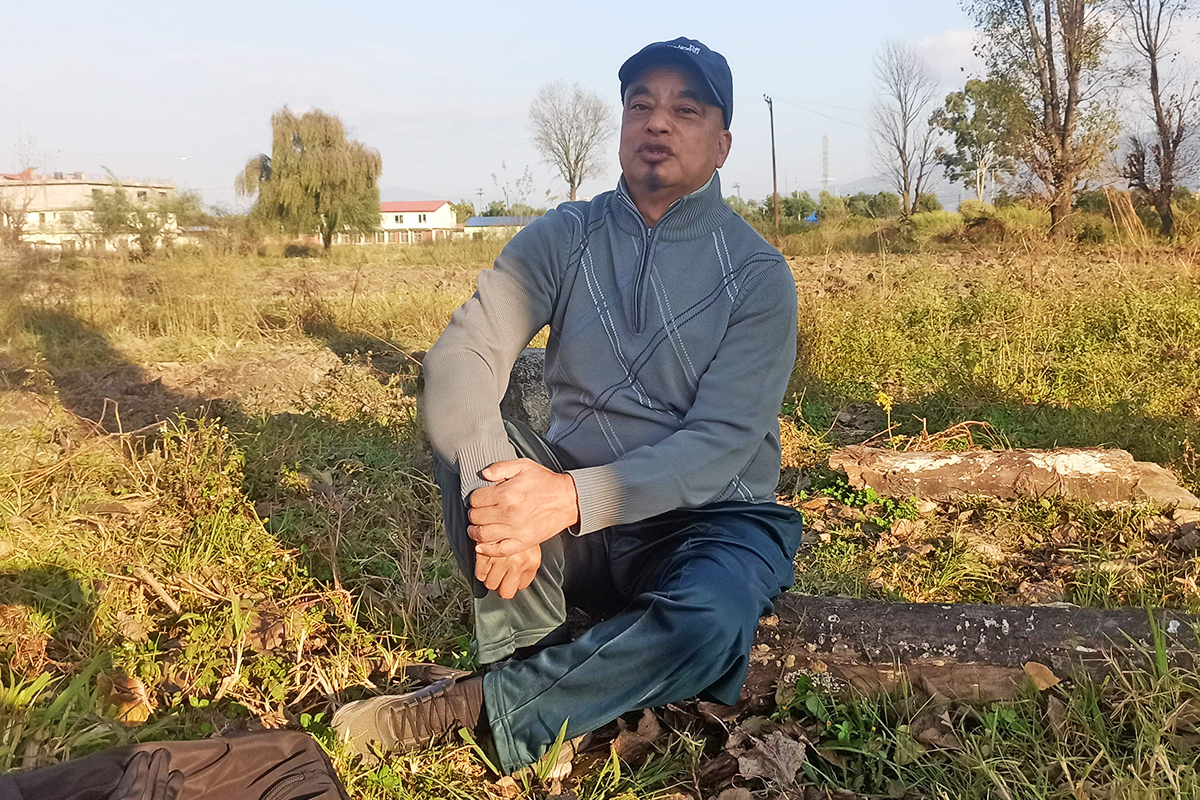
Sixty‑year‑old Nepal Man Dangol of Nakhipot, Lalitpur, had been saving with Gatisheel Cooperative since 2015. Records show he deposited more than Rs 17.9 million there.
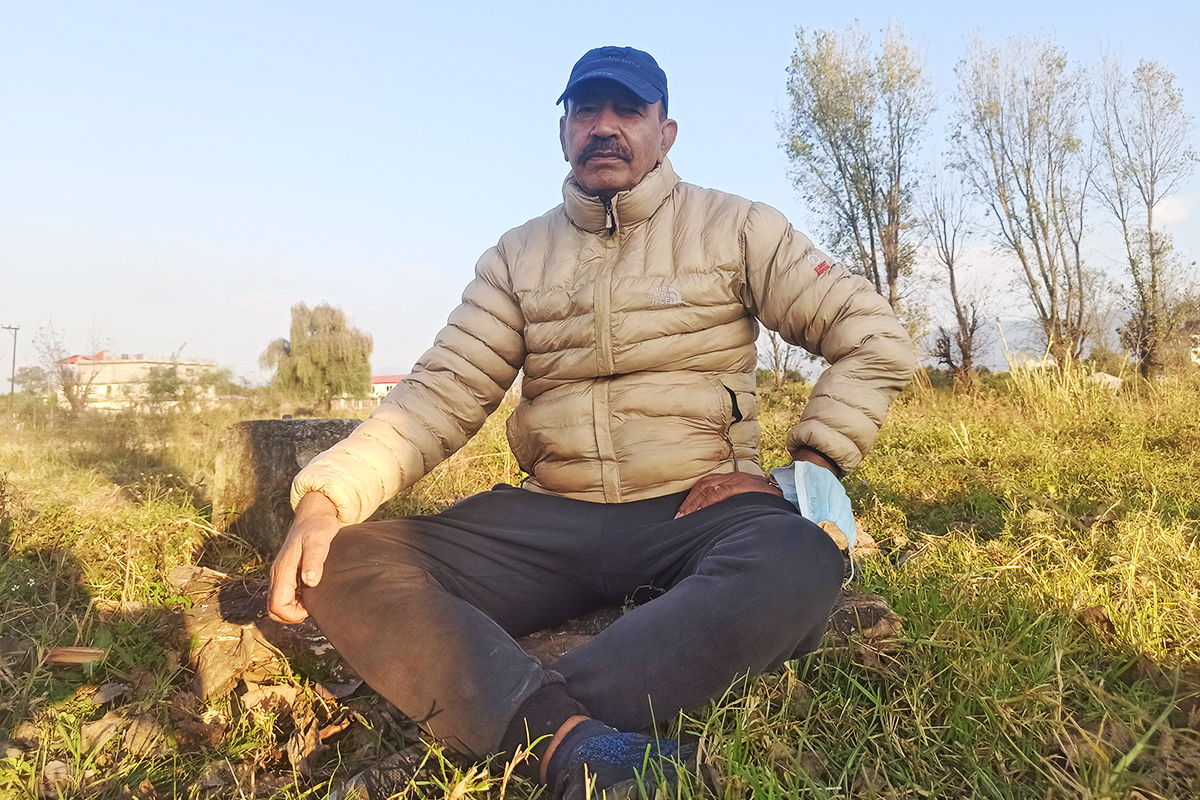
A retiree who spent three decades at Nepal Rastra Bank, Dangol placed all of his earnings in the cooperative, believing it would make life after retirement easier. Speaking recently at the open grounds of the Nepal Agricultural Research Council (NARC) in Khumaltar, Lalitpur, where he had come for personal work, he said: “What use is having millions on paper when my pockets are empty? The fraudsters swallowed it. We’ve already pleaded everywhere we can. The cooperative directors clearly have powerful connections. No one listens to people like us.”
He says he is somehow keeping his family afloat by borrowing money. But after losing the savings of a lifetime, he can no longer sleep at night. For the past three years, clinging to faint hope that his deposits might be returned, he has shuttled between the cooperative’s office, the homes of its directors, and government offices. He has received nothing but assurances.
Gatisheel Cooperative has left many people like the Shrestha couple and Dangol in distress. Digging into its operations, we found that at its third special general assembly on March 30, 2025, Dr. Balram Pathak was appointed chair of the board of directors. According to the roster submitted to the Ministry of Cooperatives and Poverty Alleviation, Bagmati Province, the cooperative’s vice‑chair is Gau Bahadur Pun, its secretary Abhishek Karki, its treasurer Rudra Prasad Burlakoti, and its board members Bikash Bahadur Thapa, Yagya Bahadur Budha Chhetri, and Apara Lamichhane.
Two years earlier, Bikash Bahadur Thapa had served as chair. At that time, Khim Nepal was vice‑chair, Saugat Prasad Dahal secretary, Rajesh Kumar Humagain treasurer, and Binay Amatya, Radha Devi Shrestha, and Kumar Khatri were board members.
Records show that from the cooperative’s establishment in 2000 until 2021 – a full 21 years – Dr. Pathak remained continuously in the chair’s position. On November 2, 2021, after Pathak was appointed chair of Rastriya Banijya Bank, Thapa was elevated to chair. His tenure did not last long. In 2024–25, Pathak returned to the post.
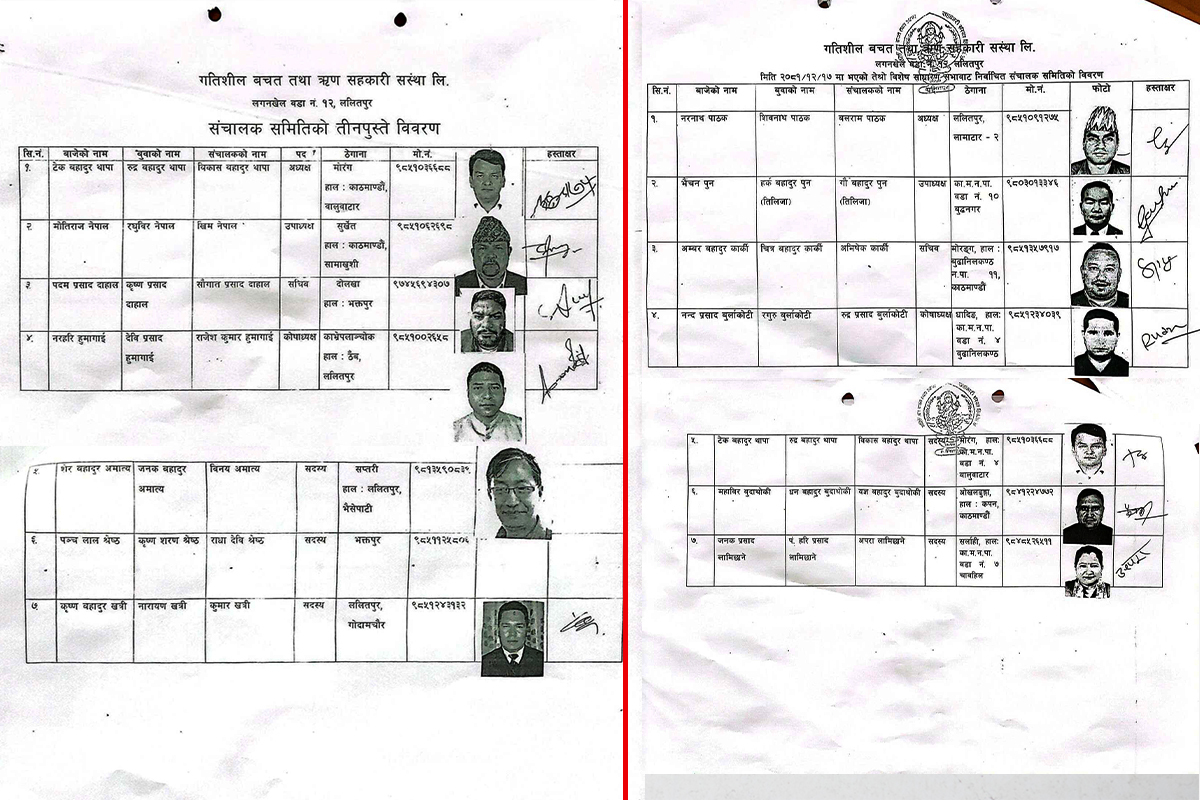
Pathak appears to have been the cooperative’s principal mover, central to how it became troubled. It was Pathak, Thapa, and other directors who ignored depositors pleading for the return of their savings, forcing them into a legal fight.
“This is the money we earned through our sweat,” Dangol said. “No matter how powerful or well‑connected they are, we should at least get our money back.”
After depositors filed complaints against Gatisheel’s directors at the Lalitpur District Administration Office (DAO) and the Ministry of Cooperatives and Poverty Alleviation in Bagmati Province, the Lalitpur DAO, on July 31, 2023, wrote to the provincial ministry stating that complaints against cooperatives did not fall within its jurisdiction.
According to ministry records, more than 50 depositors had already filed complaints demanding the return of their savings. On August 6, 2023, the ministry sent a letter to the cooperative with two directives: the directors were to appear within 15 days to respond to the complaints, and they were to meet the victims and resolve the matter within the same period.
The directive gave victims hope their deposits might finally be returned. But even the government proved powerless in front of well‑connected directors. After sending a single letter, the ministry fell silent.
So far, 219 depositors of Gatisheel Cooperative have filed complaints with the ministry. There is no sign the ministry has done anything beyond that one letter. Instead, the cooperative’s directors appear to have devised new ways to mislead depositors.
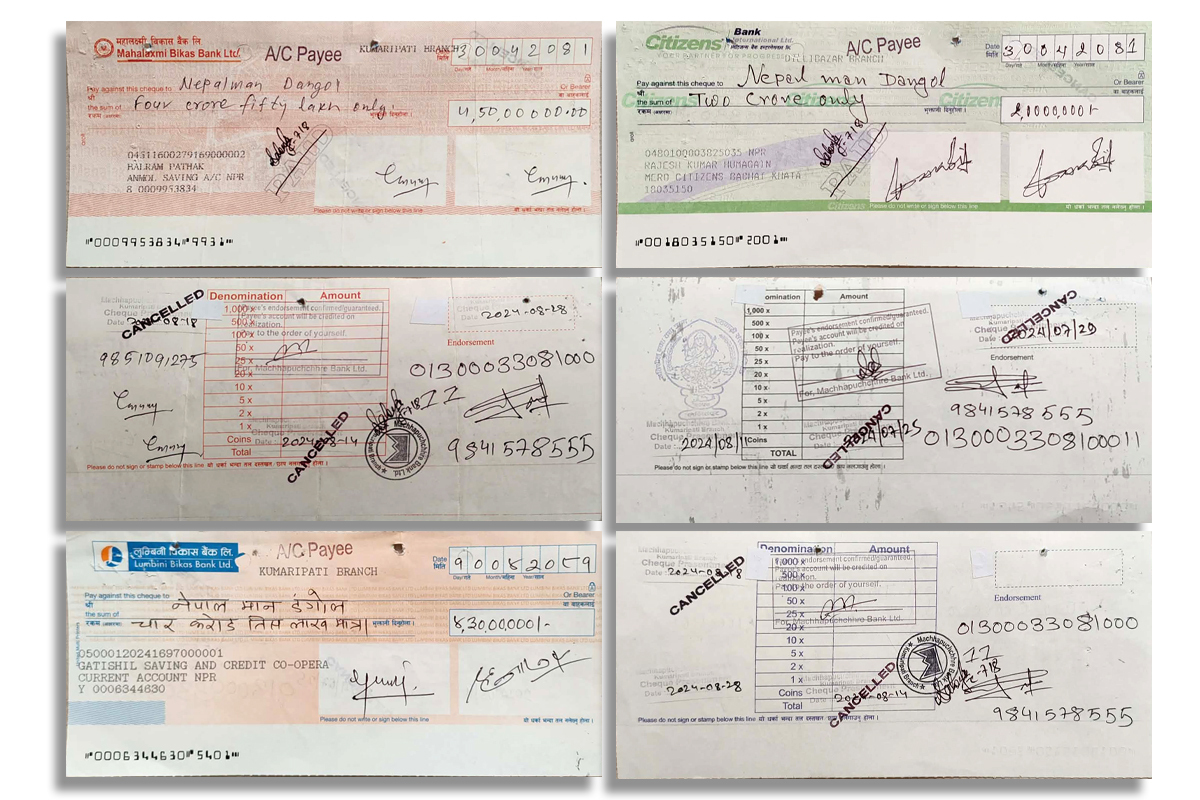
For instance, on May 13, 2024, treasurer Rajesh Kumar Humagain handed Dangol a cheque from Citizens Bank for Rs 25.6 million. Under an agreement, Dangol was supposed to distribute the proceeds among other depositors as well.But the cheque was not cleared for three months. Once it became clear the directors had issued it only to string them along, Dangol, along with depositors including Hira Bahadur Khadka, confronted the directors. “We met them many times and asked why they were deceiving us like this, but they never gave us a clear answer,” Khadka said.
Hira Bahadur himself has Rs 6.2 million trapped in Gatisheel Cooperative. Along with Dangol, Masali Khadka, Roshan Shakya, Moti Man Pati, Sarita Shrestha and others, he has repeatedly appealed to the cooperative’s chair and other directors, but to no avail.
After the Citizens Bank cheque bounced, Dangol was handed another on July 25, 2024 –
this time for Rs 43 million from Lumbini Development Bank Ltd. That cheque also did not clear. On August 28, 2024, Lumbini Development Bank informed him that Gatisheel’s account held no funds.
Sometime later, chair Pathak issued yet another cheque, this one for Rs 45 million from Mahalaxmi Development Bank. That account, too, had no funds. The cheque was not honored.
As this pattern continued, the cooperative’s directors shifted to “handling” the depositors instead. On May 26, 2025, board member Kumar Khatri filed a writ petition at Patan High Court against Nepal Man Dangol, Tej Bahadur Kunwar, and Meena Shahi. After repeated cheques failed to clear, the Credit Information Bureau, at depositors’ request, had blacklisted Gatisheel and its directors and frozen their accounts. Khatri then filed the writ, claiming his bank account had been “illegally blacklisted.”
On August 27, 2025, a joint bench of Chief Judge Lal Bahadur Kunwar and Judge Arjun Prasad Koirala of Patan High Court dismissed Khatri’s petition. Recognizing that he had been a board member when the cheques were issued, the court dismissed the case on the basis of the depositors’ written response, facts provided by Nepal Rastra Bank, and the official reply of the Credit Information Bureau
Multiple Ways of Misappropriating Depositor Money
Dr. Balram Pathak has remained chair of Gatisheel Cooperative almost continuously since its founding in 2000, with only about two years away. He stepped down briefly after being appointed chair of Rastriya Banijya Bank, a state‑owned institution. That appointment came when Janardan Sharma, then a leader of the CPN (Maoist Centre), was serving as finance minister.
What qualifications did Sharma see in Pathak that led him to entrust him with the leadership of the bank? We tried to contact Sharma to ask. He did not respond. Shree Kumar Kathayat, who served as his personal secretary at the time, and his current secretary Tilak Pariyar, were also unavailable for comment.
According to employees, once Pathak became chair of Rastriya Banijya Bank, misappropriation of deposits and other problems at the cooperative worsened. “Even after becoming chair of Rastriya Banijya Bank, he was still running the cooperative indirectly,” one employee said. “Whatever he said, Bikash Bahadur Thapa would do. Once he could stay out of sight, avoid formal responsibility, and still control things through Thapa, the cooperative began heading toward ruin.”
Until 2021, the cooperative regularly disclosed details of shareholders holding more than a 1 percent stake. Its 2021 annual report shows Pathak held a 5.22 percent share. But in the 2022 report, his name suddenly disappeared. Employees say suspicions grew from that point on.
Soon after, reports surfaced that depositors’ money had been misappropriated. As savings began to seem unsafe, depositors started withdrawing funds in large numbers, deepening the crisis. In a written response filed in High Court proceedings, director Kumar Khatri acknowledged that “loan recovery had not been effective” and that there was “pressure to return deposits.”
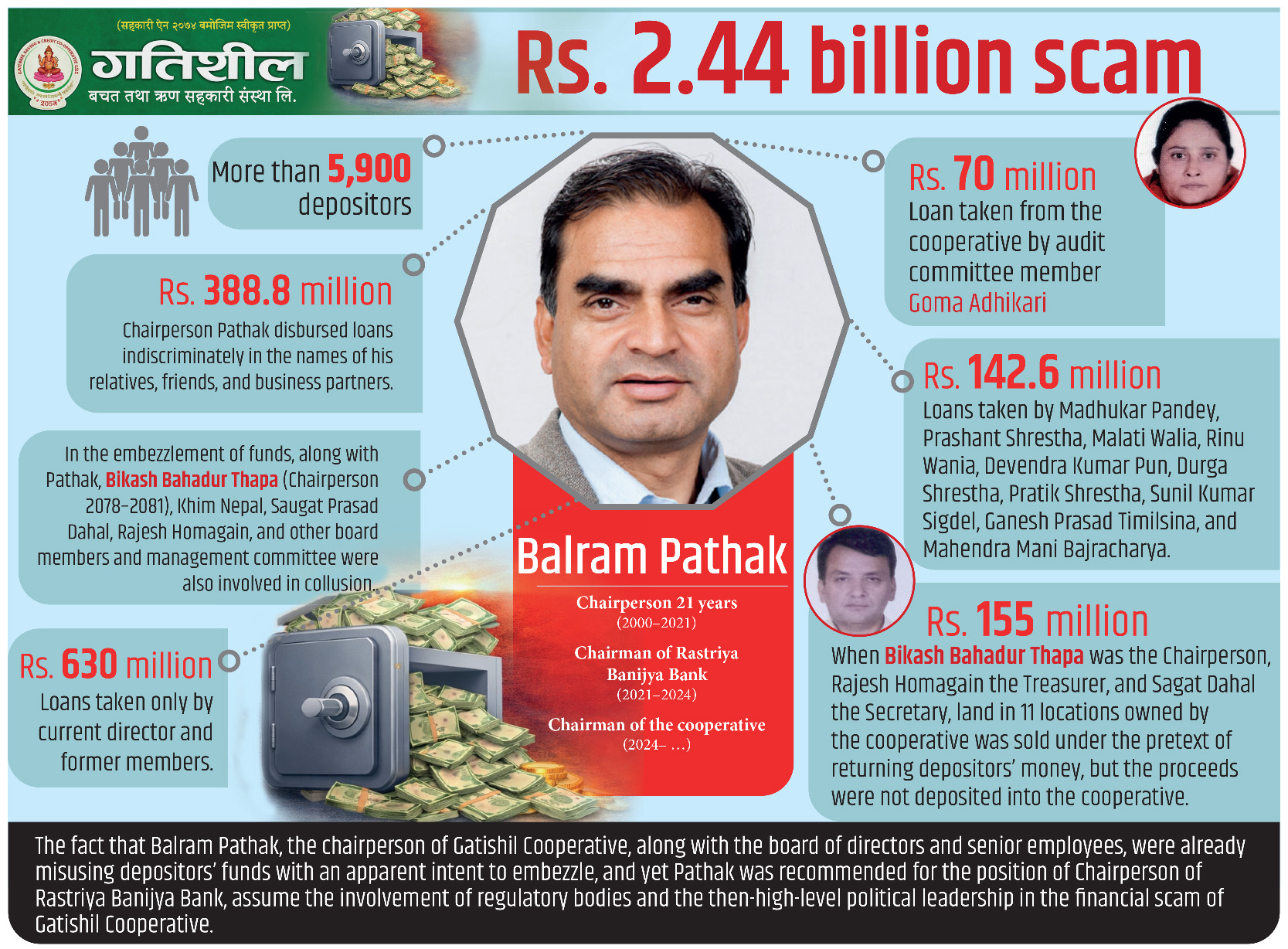
Documents and records obtained by CIJN suggest that Rs 2.44 billion belonging to more than 5,900 depositors was misappropriated by Gatisheel’s directors. A large portion of that money appears to have been issued as loans by Pathak and other directors to their own business partners and close associates.
One such borrower is Madhav Pathak, who took out loans totaling Rs 26.9 million. Loan records show he secured the loan against land and property in Lamatar, Lalitpur, but did not pay a single installment for ten years. Yet there is no sign the cooperative took action against him.
The reason: Madhav is the brother of chair Dr. Balram Pathak. A review of documents and timelines suggests that Pathak easily arranged loans worth millions in his brother’s name. When Madhav first took the loan, the land pledged as collateral was frozen after he failed to make payments. But later, it was released – reportedly at Pathak’s own initiative. Asked about this, Pathak told us: “A lot of land had been pledged as collateral. Some of it was released, some of it is still frozen.”
Pathak did not stop with his brother. He also appears to have used depositors’ money to benefit his business partners. A large share of that exposure involves the Madhukar Pandey group.
Pathak and Pandey are business partners in Dupcheshwar Gosaikunda Darshan Pvt. Ltd., a company involved in cable car, travel agency, and hotel businesses. Documents from the Office of the Company Registrar also show they are partners in ABC Power Company Pvt. Ltd.
Records indicate that around 2013–14, large loans were issued in the names of Pandey and members of his group, including Prashant Shrestha, Malati Baniya, Rinu Baniya, Devendra Kumar Pun, Durga Shrestha, Pratik Shrestha, Sunil Kumar Sigdel, Ganesh Prasad Timilsina, and Mahendra Mani Bajracharya, among others. More than Rs 14.9 million was issued in Pandey’s name alone. Altogether, the group still owes Gatisheel more than Rs 142.7 million.
The cooperative’s records show that this group has not paid a single installment in the past ten years. Possibly because they are the chair’s business partners, the cooperative appears to have made no meaningful effort to recover the loans or initiate action against them.
Pathak also arranged a loan of Rs 25.8 million for another partner, Prashant Shrestha. Shrestha appears not to have been required to make installment payments. Cooperative employees and board members say Pathak gave him that privilege. Pathak and Shrestha are also partners in Rara Plastic Industries Pvt. Ltd.
Pathak is also involved in the restaurant business, and he appears to have arranged cooperative loans for partners in that venture as well. For example, he facilitated loans totaling Rs 118.8 million for his partner Roshan Karki.
In the cooperative’s records, the borrower is listed as the “Roshan Karki Group.” The records show Rs 133 million was issued in the names of Karki and Denisha Upreti. The group has not paid any installments on that loan to date.
According to records from the Department of Industry and the Office of the Company Registrar, Pathak and Karki are business partners in Bagincha Restro and Bar in Lalitpur. That business relationship appears to have helped the “Roshan Karki Group” secure the privilege of defaulting on loans worth millions.
Multiple Ways of Misappropriating Depositor Money
Our review of records involving more than 500 individuals who received loans from Gatisheel Cooperative shows a cluster of major borrowers at the top. They include Madhukar Pandey, Dilli Bahadur Subedi, Madhav Pathak, Pushkar Prasad Pathak, Shyam Kumar Baniya, Sangita Humagain, Lalu Chaudhary, Dhrub Shrestha, Januka Acharya, Sunnakpur Maharjan, and Gopi Krishna Timilsina, among others. Other prominent borrowers include Manoj Ghorsaine, Tara Devi Ghimire, Anjana Pradhan, Laija Kumari Gahatraj, Dipak Ghimire, Krishna Hari Khadka, Om Prakash Mahat, Shree Ram Paudel, Khadga Bahadur Regmi, Rukmani Regmi, Roshan Karki, Upendra Paudel, Mukunda Timilsina, Sita Thapa, Rasmila Timilsena, and Dipendra Shumsher Kunwar.
Many of them are relatives, family members, or business partners of Chair Pathak or other board members. In their names alone, the cooperative appears to have issued loans totaling more than Rs 388.8 million.
We asked Chair Pathak whether it was acceptable to use ordinary people’s savings to benefit relatives, friends, and business partners. He acknowledged that loans worth millions had indeed been issued to relatives, friends, and partners, but denied this amounted to misuse.
“These were loan investments. The problem arose because installments did not come in. It’s not misuse,” Pathak said. “It’s not as if we didn’t follow up with borrowers. These days we’re even following up by phone.”
He declined to comment on his business partners.
The cooperative’s own records show that among the more than 500 borrowers, 26 appear on the top list of loan recipients whose loans were approved based on their ties to directors Pathak, Rajesh Humagain, Saurabh Dahal, and chief manager Bina Amatya. One employee put it bluntly: “They collected deposits by promising savers 20 percent interest, then issued loans to their own people at 14 to 16 percent. If that isn’t misappropriation, what is?”
The internal report reveals another layer of the scheme: assets pledged as collateral by those borrowers were later released through the influence of directors Pathak, Humagain, Dahal, and manager Amatya. In conversations with CIJ, the directors themselves acknowledged as much.
After the 26 borrowers failed to pay either installments or principal, the cooperative assessed their collateral and found the total value of pledged assets was just Rs 264.1 million. Not only was the collateral worth far less than the loans issued, but even that collateral was later released instead of being kept frozen – reportedly under pressure from the cooperative’s own directors.
There was another move. After Bikash Bahadur Thapa became chair, Rajesh Humagain became treasurer and Saurabh Dahal became secretary. Around that time, a plot of land in Imadol, Lalitpur, owned by the cooperative and valued at Rs 10 million, was sold. Other cooperative‑owned properties were also sold: land in Saukhel, Kathmandu for Rs 5 million; land in Nashiksthan for Rs 5 million; land in Dukuchhap for Rs 4 million; land in Lele for Rs 4 million; land in Harisiddhi for Rs 6 million; land in Bistachhap for Rs 8 million; land in Lamatar for Rs 6 million; and land in Jaishithok for Rs 1 million. Cooperative documents also show that land in Lagankhel valued at Rs 50 million and land in Dhapakhel valued at Rs 55 million were sold during the same period.
According to the cooperative’s internal report, land in 11 locations worth a total of Rs 155 million was sold in the cooperative’s name on the claim that the proceeds would be used to repay depositors. But that money was never deposited into the cooperative. Employees say the assets were sold through non‑banking channels in collusion among then‑chair Thapa, treasurer Humagain, and directors Dahal and Pathak.
“The money from the land sales has still not been deposited into the account. They have not told us what they did with it either,” one employee said.
Vice‑chair Gau Bahadur Pun offered this defense: “In some cases, even my signature was misused. But I had no role in any of it.”
The Scam the Parliamentary Committee ‘Did not See’
As one case after another of depositors’ money being misused by cooperatives came to light, the House of Representatives formed a Parliamentary Special Investigation Committee in 2024. Led by then‑UML parliamentarian Surya Thapa, the committee prepared the Special Investigation Report 2024 on the Misuse of Savings in Cooperative Institutions. The report noted that many cooperative operators misused funds by distributing loans to relatives, investing in unproductive sectors, and engaging in similar practices.
Yet the report made no mention of the Rs 2.44 billion embezzled at Gatisheel Cooperative.
Thapa, the former coordinator of the committee, says the panel studied only the complaints formally brought before it. “At that time, I had heard that the problem at Gatisheel Cooperative was similar to that of other cooperatives. Beyond that, I do not remember much,” he said.
For the past four years, victim depositors have been running from office to office at the Ministry of Cooperatives and Poverty Alleviation in Bagmati Province, which holds authority to regulate cooperatives in the province. This raises serious questions: Why did the matter never reach the parliamentary committee? Why did the ministry fail to act on victims’ complaints and bring the cooperative under legal scrutiny?
It was only on November 17, 2024, that the ministry formally concluded – through a ministerial‑level decision – that depositors’ money had not been returned, that large‑scale misappropriation had taken place, that cooperative operators had repeatedly failed to respond even after being called for discussions, and that funds had been personally misused by operators. In the decision obtained by CIJ, the ministry states that even after being given a deadline to return depositors’ money, the cooperative failed to submit any commitment, plan, or written response. Instead, the operators became unreachable.
The ministry concluded that those involved in the embezzlement included the cooperative’s current operators, former office‑bearers, members of the audit and supervisory committee, employees holding key positions under the loan subcommittee, and the manager.
Along with this decision, the ministry appears to have sent a letter on November 30, 2024, to Police Headquarters and the Central Investigation Bureau (CIB) of Nepal Police, requesting investigation and legal action. In that letter, the ministry specifically named 10 individuals allegedly involved in the misappropriation and recommended action against them. These included chairperson Balram Pathak, vice‑chair Gau Bahadur Pun, treasurer Rudra Prasad Burlakoti, secretary Abhishek Karki, members Bikash Bahadur Thapa, Apara Lamichhane, and Yagya Bahadur Budhathoki, as well as audit and supervisory committee members Goma Adhikari, Som Nath Shiwakoti, and Srijana Sinjali Magar.
The ministry’s letter states that the cooperative’s current operators and former office‑bearers alone had embezzled more than Rs 630 million. An internal report of the cooperative itself shows that audit committee member Goma Adhikari had taken Rs 69.966 million from the cooperative. This loan, according to the report, had been facilitated by chairperson Pathak. The ministry also corresponded with police requesting that the assets and passports of those involved be frozen as part of the investigation.
But the CIB does not appear to have investigated the matter. CIB spokesperson and Senior Superintendent of Police (SSP) Shiv Kumar Shrestha said: “It appears that at the time, a letter had arrived stating that the chairperson and secretary were absconding, but no formal complaint was registered here. Since no complaint was formally registered, it appears no investigation was initiated from our side.”
Had Local Government Overseen Cooperatives …
Gatisheel Cooperative, which is accused of having siphoned off nearly Rs 2.5 billion of depositor money and left them shattered, is located within Lalitpur Metropolitan City. Yet its registration and operation fall under the jurisdiction of the Bagmati Province Government. Even as operators themselves sank the cooperative and ruined depositors, the provincial government did not appear to treat the matter with the seriousness it warranted.
Nepal’s Constitution recognizes cooperatives as one of the three pillars of the economy and envisions local governments as strong, responsible actors in their operation and management. Of the cooperatives operating across Nepal, approximately 80 percent fall directly under the jurisdiction of local governments, making their role decisive in regulation.
Local governments have the legal authority to register cooperatives and to fine or penalize those that violate the law, including compelling them to return depositors’ money. They also have the power to dissolve or merge inactive cooperatives, those not conducting business, or those operating unlawfully.
So why did the local level – in this case, Lalitpur Metropolitan City – either do nothing or fail to act in the case of Gatisheel Cooperative? The Local Government Operation Act, 2017 provides that rural municipalities and municipalities are responsible for the registration, licensing, cancellation, and dissolution of cooperative institutions operating within their jurisdictions. However, a local government only has authority to regulate a cooperative that conducts business within a single local unit. If a cooperative operates across more than one local government, responsibility shifts to the provincial government. Cooperatives operating nationwide fall under federal jurisdiction.
According to cooperative expert Kashi Raj Dahal, former chairperson of the Cooperative Management Committee, Section 150 of the Cooperative Act, 2017 assigns local governments responsibility to regulate, monitor, and supervise cooperatives registered at the local level and conducting annual transactions up to Rs 250 million. If a cooperative’s annual transaction exceeds Rs 250 million but remains up to Rs 500 million, responsibility lies with the provincial government. Cooperatives operating across two or more local units or provinces and conducting transactions of more than Rs 510 million fall under federal regulation.
According to the latest amendment to the Cooperative Act, cooperatives are now classified into federal, provincial, and local categories based on criteria set by the National Cooperative Regulatory Authority. While problems may be fewer among rural cooperatives, in urban cooperatives depositors’ money faces significant risk. Gatisheel is one such urban cooperative.
Dahal says local governments must take strict measures to curb the tendency of cooperative operators to misuse depositors’ funds. He argues that local bodies have a duty to ensure internal governance by making audit and supervisory committees accountable. They must also break the pattern of political protection enjoyed by fraudulent operators, punish wrongdoers, and adopt policies that reward cooperatives that function properly.
“If local governments exercise their constitutional authority, strictly enforce the law, and strengthen regulatory mechanisms, the problems in the cooperative sector can be addressed,” he said. “The primary responsibility for overseeing the operation, management, and monitoring of cooperatives at the local level lies with local governments themselves. Every municipality should activate its cooperative branches and increase close monitoring to prevent irregularities before they happen.”
Published in Ukaalo on 26 March 2026
More Investigative Stories

Who Does The Annapurna Belong To?
In fiscal year 2082/83 BS, the Annapurna Conservation Area Project (ACAP) received 508,000 visitors and collected more than NPR 1.77...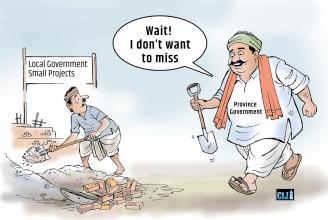
Politicized Budget Distribution in Madhesh is Contrary to the Spirit of Federalism
From small projects that local governments can implement themselves to the selection of projects based on political connections, the pattern...
Comment Here