Investigative Stories
Who Does Annapurna Belong To?
In fiscal year 2082/83 BS, the Annapurna Conservation Area Project (ACAP) received 508,000 visitors and collected more than NPR 1.77 billion in revenue. But this record income has brought another serious question to the surface: who has the authority to manage Nepal's largest and highest-earning conservation area – and who does the money generated here belong to?

In fiscal year 2082/83 BS, the Annapurna Conservation Area Project (ACAP) received the largest number of tourists and collected highest amount of revenue. ACAP collected more than 1.77 billion. The revenue is now being claimed by four institutions heightening the debate on- who does conservation areas belong to? Even after the federalism with three governments, revenue collected by ACAP has been used by the institutions under the federal government.
ACAP was established four decades ago, in 2043 BS, on the principle of “community-based conservation.” Nearly a decade after Nepal adopted federalism, it continues to operate under arrangements determined by the federal government through the National Trust for Nature Conservation (NTNC). Disputes over jurisdiction, access to and use of natural resources, and the distribution of revenue among local governments, Conservation Area Management Committees (CAMCs) and ACAP have intensified.
The question of who controls ACAP, and the revenue it generates, is not merely a local issue for Manang. Nepal’s federal Constitution ensured an important provision that benefits derived from natural resources would be shared equitably among the three levels of government and affected communities. In practice, however, ACAP has become one of the country's most complicated national examples of how natural resources remain under the control of the federal bureaucracy.
Who among the federal government, provincial government, local governments or local communities should control this conservation area will also speak to a broader question at the heart of federal governance: who has the primary jurisdiction over the country's natural resources? Environmental law expert Padam Bahadur Shrestha considers these ongoing disputes between the three levels of government to be a foundational issue. “The problem has arisen because there is no common understanding among the federal, provincial and local governments about jurisdiction and management,” he says.
The Revenue Trail
Covering around 7,600 square kilometers across five mountain and hill districts of Kaski, Lamjung, Myagdi, Manang and Mustang, ACAP is Nepal's largest protected area. Its main source of income is entrance fees charged to foreign visitors, with citizens of SAARC countries paying NPR 1,000 per person and visitors from other countries paying NPR 3,000. Other major sources of revenue include restricted-area fees for Upper Mustang and Nar-Phu, mountaineering permits, royalties from hydropower projects operating within the ACAP area, and local fees collected from forest products, gravel, sand and medicinal herbs.
According to the data, 77,000 tourists visited the area in fiscal year 2057/58 BS. Twenty-five years later, the number has risen to more than 500,000. According to ACAP Manang chief Dhak Bahadur Bhujel, most of the 508,000 visitors this year were Indian tourists. Along with this influx, ACAP collected a total of NPR 1.7779 billion in revenue in 2082/83 BS from entrance fees, medicinal herbs, timber, hydropower royalties and restricted-area fees. But this income does not go into the local governments' consolidated funds. The largest share is directly managed by ACAP itself.
According to ACAP chief Rabin Kaderia, the Government of Nepal does not provide ACAP with a separate budget. Its 115 employees and 25 offices are operated entirely through internally generated revenue. Meanwhile, VAT, hydropower royalties and restricted-area entrance fees for Mustang and Nar-Phu go directly to various federal government agencies, including the Department of Immigration, Ministry of Tourism and Ministry of Energy, as well as to the federal consolidated fund. Some revenue collected from locally sourced stone, gravel and medicinal herbs goes into the accounts of 57 conservation area management committees (CAMCs).
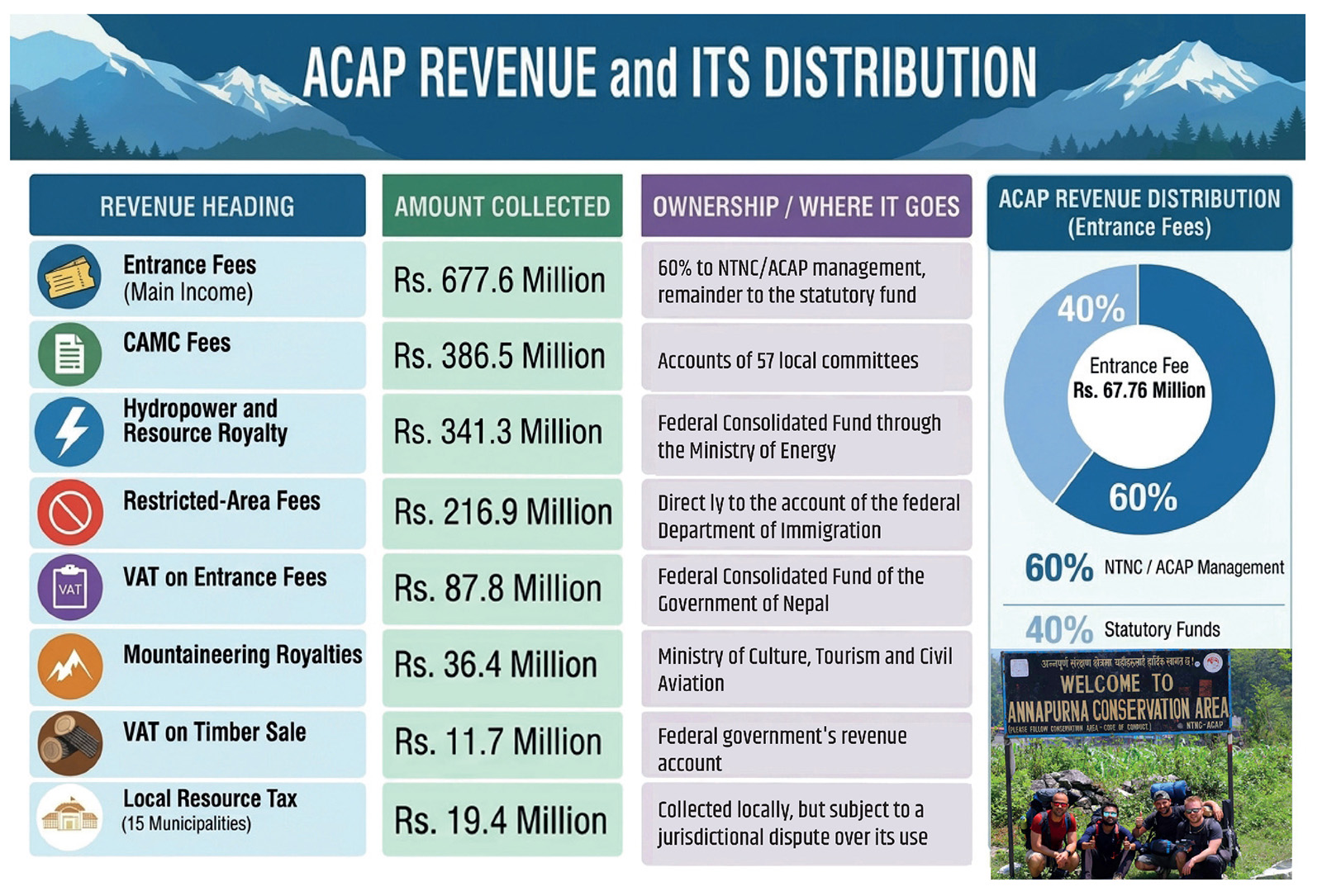
The central issue in ACAP is not its income, but who owns and controls the area. Entrance fees, for example, are one of its major sources of income, and 60 percent of that revenue goes directly to the NTNC. This federal agency also controls the management of the entire conservation area, regulates access and approves the use of its resources. In other words, both a large share of the revenue and the authority to manage the area remain with the federal level. By contrast, the elected local governments in whose territory the conservation area lies have neither management authority nor access to the main revenue. This appears to be at the root of the growing local discontent.
Dhan Bahadur Gurung, chair of Nason Rural Municipality, says the practice of requiring approval even to use natural resources within one's own territory, while keeping the resulting revenue out of the local consolidated fund, goes against the spirit of federalism.
“A fair share of the revenue generated from tourism and natural resources should go directly to the rural municipality,” he says. “The Constitution gives local governments exclusive authority to collect revenue from stone, gravel, sand, medicinal herbs and local taxes. But in the 15 rural municipalities across Manang and the Annapurna region, the authority of local governments has been curtailed.”
Four Sides with Four Competing Claims
Four different stakeholders, each with a different view of who should control Annapurna, are now facing off.
First are the local governments. They are demanding constitutional authority over the management of ACAP and a share of its revenue. Min Bahadur Gurung, coordinator of the conservation area-affected local governments and chair of Machhapuchchhre Rural Municipality, says the Conservation Area Regulations 2053 and Directives 2056 must be amended immediately, with conservation area management committees restructured at the rural municipality level and a fixed percentage of tourism entrance fees transferred directly to the affected local governments. Fifteen rural municipalities in Kaski, Manang, Mustang, Lamjung and Myagdi fall within the Annapurna Conservation Area. Representing them, he says, “We are not opposed to conservation. But the constitutional rights of local governments cannot be taken away by relying on committees formed decades ago on the basis of the former village development committees and wards under regulations and directives that are now more than three decades old.”
Schedule 8 of the Constitution gives local governments exclusive authority over stone, gravel, sand, tourism and local taxes. But under the Conservation Area Regulations 2053, the collection and use of these resources remain confined to the old institutional mechanisms, namely the CAMCs and ACAP. As a result, the 15 rural municipalities have not been able to directly benefit from the natural resources and tourism within their territories.
Fifteen Local Governments within ACAP and the Districts with Disputed Jurisdiction
| District | Local government | Major tourism and natural resources from which local governments have lost revenue |
| Kaski | Machhapuchchhre, Annapurna | Annapurna Base Camp, Mardi Himal trekking entrance fees, hotels and local forest products |
| Manang | Manang Ngisyang, Nason, Chame, Narpa Bhumi | Thorong La Pass, Tilicho Lake, restricted-area fees from Narpa Bhumi, mountaineering royalties, Yarsagumba |
| Mustang | Gharpajhong, Thasang, Baragung Muktichhetra, Lo-Ghekar Damodar Kunda, Lomanthang | Muktinath pilgrimage, expensive restricted-area permit for Upper Mustang (US$500 per tourist), riverbed stone and sand |
| Myagdi | Annapurna | Poon Hill, Tatopani, Ghodepani trekking fees, riverbed and forest products |
| Lamjung | Marsyangdi, Kwholasothar, Besisahar (partly) | Gateway to the Annapurna Circuit, local royalties from hydropower projects, trekking fees |
Gateway to the Annapurna Circuit, local royalties from hydropower projects, trekking fees Another group claiming ownership of the conservation area is the community-level conservation area management committees (CAMCs). There are 57 such committees formed at the ward and village levels under Nepal’s older governance system. They want to preserve the model they say has made ACAP known around the world. “Our CAMCs have been conserving forests, the environment and natural resources for decades,” says Yad Ghale, chair of a CAMC. “Revenue collected from stone, sand, timber and medicinal herbs remains directly in the CAMC's local account and is spent through village assemblies on roads, drinking water, schools, sanitation and compensation for wildlife damage.”
Another party at the center of the dispute, and the institution that currently controls ACAP and its management, is the National Trust for Nature Conservation (NTNC). This federal agency maintains that it is caught in a legal bind. According to Kaderia, the Regulations drafted in 2053 BS are in the process of being amended, with provisions for creating structures at the rural municipality level and coordinating revenue with local governments. He says transferring responsibility to local governments remains difficult until the federal government delegates management authority. He considers political instability the main reason the process has stalled. “Because of political instability, the government has not made a concrete decision on its management, and as a result, NTNC continues to manage it,” he says.
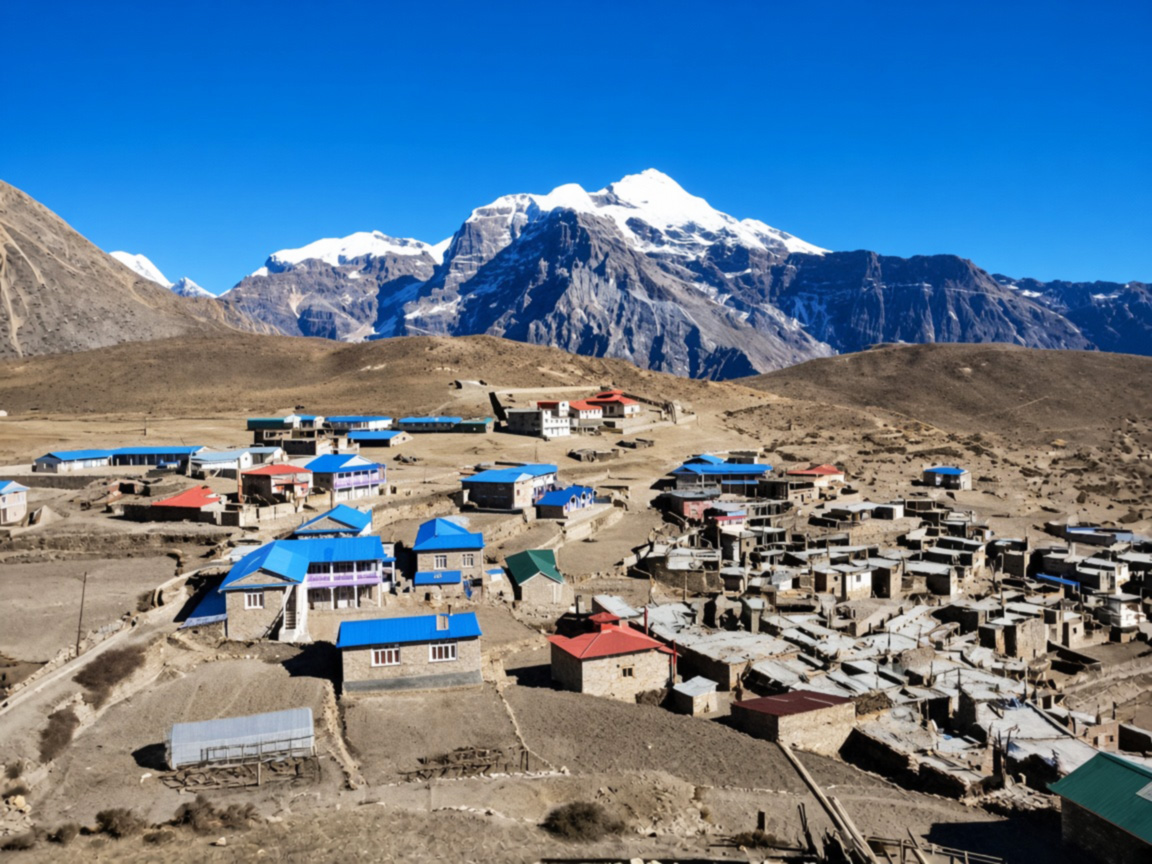
Local residents say they have experienced obstacles in using local resources while ACAP remains under the federal government. Local resident Devendra Gurung says, “Local communities have faced problems using resources because ACAP is under the federal government.” He says even activities that should be carried out by local governments still require them to look to the federal government for approval.
The provincial government is also demanding that management of ACAP be brought under its authority. Purneshwar Subedi, spokesperson for the Ministry of Forests and Environment of Gandaki Province, says the Annapurna Conservation Area should be brought under provincial management. “The provincial Forest Act contains a provision for the province to manage conservation areas,” he says. According to him, after decisions were made through meetings of the Provincial Development Problem Resolution Committee and the Office of the Chief Minister, the provincial government has already recommended its demand to the National Development Problem Resolution Committee at the federal level.
A committee chaired by the Chief Minister has also been formed to study the transfer of ACAP's management authority. According to Subedi, however, it will be difficult to transfer management directly to the province until the federal legal framework is clarified.
Collision of New and Old Laws
At the heart of the ACAP dispute is the contradiction between the constitutional provisions and the laws that prevent them from being implemented. Schedule 8 of the Constitution gives local governments exclusive authority to collect stone, gravel, sand, medicinal herbs and local taxes. Article 59(4) and (5) provides for the equitable distribution of benefits derived from natural resources among the three levels of government, and for such benefits to be distributed in the form of goods, services and royalties, as provided by law, to project-affected areas and local communities. In practice, however, the implementation of these constitutional provisions in the Annapurna region remains constrained by the three-decade-old Conservation Area Regulations 2053 and Directives 2056. Dhan Bahadur Gurung, chair of Nason Rural Municipality, says the regulations and directives should be amended immediately to open the way for local governments to use natural resources within their jurisdictions.
Min Bahadur Gurung, coordinator of the conservation area-affected local governments and chair of Machhapuchchhre Rural Municipality, says the old regulations should be scrapped. “Even after the Constitution was promulgated, committees formed on the basis of the former VDCs and wards remain active. The federal government is using these committees to take away the constitutional rights of local governments,” he says.

Environmental law expert Shrestha says the law has failed to fully incorporate the modern concept of ACAP and local participation. He says the outdated laws and regulations need to be revised immediately. “The law must be amended to define ACAP's authority, responsibilities and limits on revenue collection,” he says. “There must also be a system for equitable revenue sharing among all three levels of government.”
Conservation’s Uncertain Future
The struggle over authority and revenue also raises concerns that conservation itself could ultimately suffer. ACAP has been working to reduce human-wildlife conflict involving snow leopards in the Himalayan region. For this purpose, it has built six fenced “safe enclosures” in Nar-Phu and Lomanthang. It has also distributed NPR 11 million to farmers as compensation for damage caused by wildlife to people and crops. To control attacks by stray dogs, it has sterilized 354 dogs. ACAP chief Kaderia says prolonged institutional uncertainty could put such conservation-oriented activities at risk.
Although ACAP says the regulations are in the process of being amended, it remains uncertain when the process will be completed. Meanwhile, the fundamental question remains: who should have greater responsibility for safeguarding the future of Annapurna, where billions of rupees in revenue are generated? Should management remain within the federal structure through NTNC, or should it be transferred to the provincial government, local governments, or the organized efforts of local communities through CAMCs, which have made important contributions to conservation over the years? A project that began with the slogan of community-based conservation may enter another decade without full ownership being transferred to either local communities or local governments. The uncertainty remains unresolved.
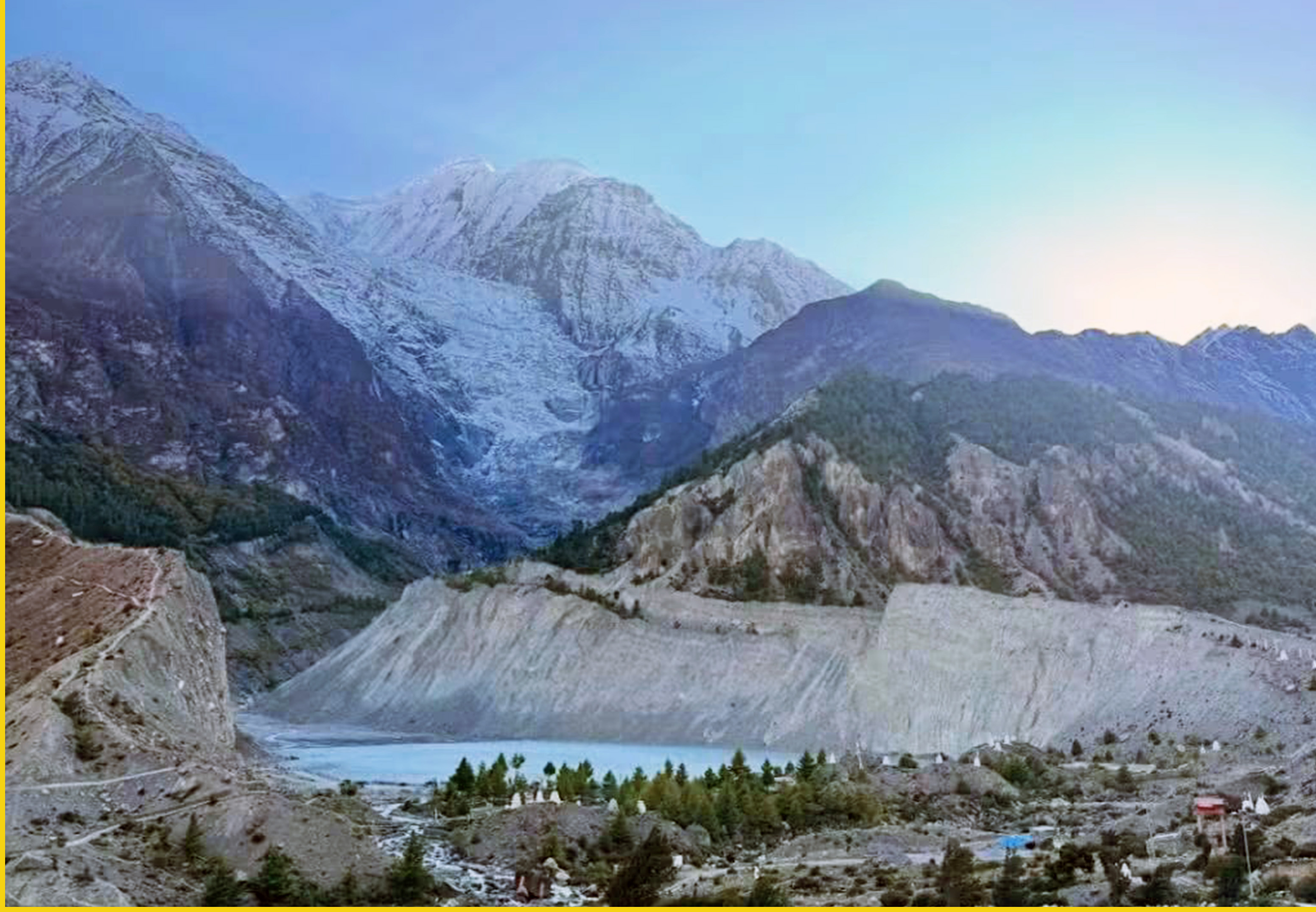
Photo Caption: Gangapurna Lake in Ngisyang Rural Municipality-6, Manang. Located within the Annapurna Conservation Area, the lake was formed by glaciers from Mount Gangapurna. As its water level declines due to climate change, parts of the lake are gradually turning into exposed riverbed.
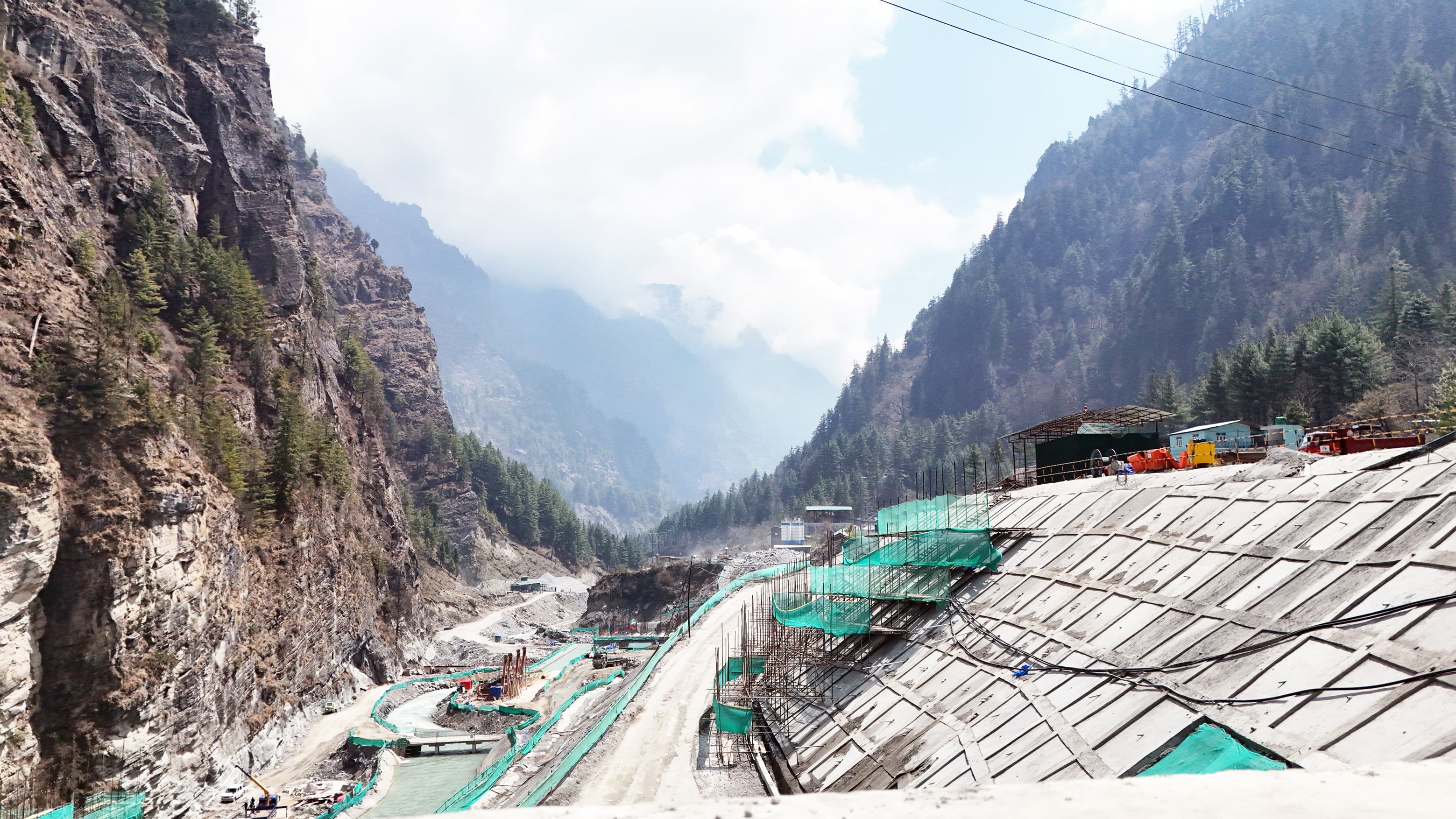
Construction of the dam for the 135-megawatt Manang-Marsyandi Hydropwer Project. Revenue collected goes directly to Ministry of Energy, Water Resources and Irrigation through ACAP. Three hydropower projects are currently under construction in Manang alone.
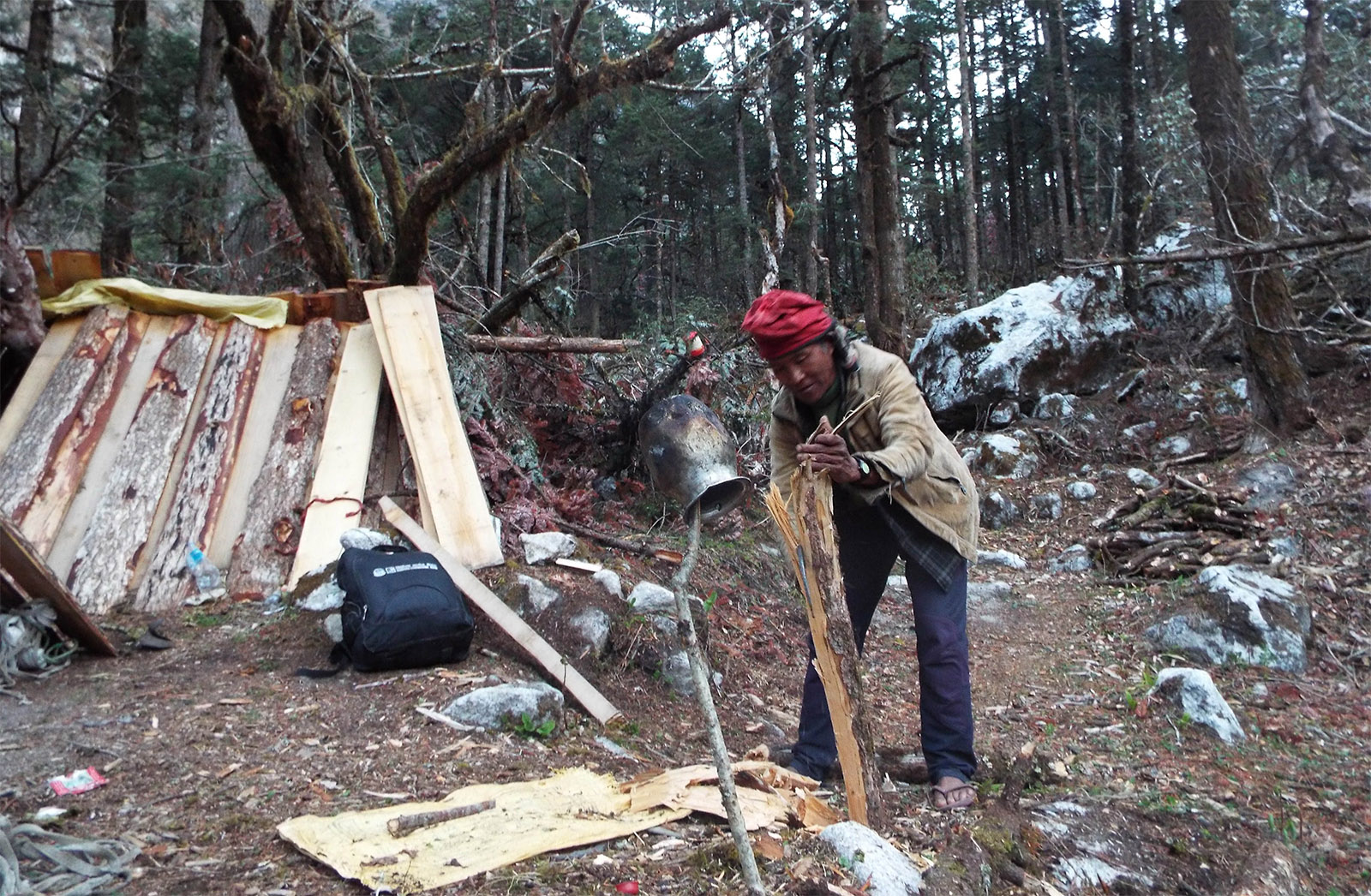
Trees felled in the forest of Manang’s Chame Rural Municipality-5. The revenue collected from forest produce are directly collected by ACAP, not by the local governments.
Tourists entering Nar Phu valley in Manang pay double the fee charged in other areas. Revenue collected here also goes to the Annapurna Conservation Trust.
Tourists cross the Thorang-La pass at an altitude of 5,416 meters. ACAP collects highest amount of revenue through tourism from the Annapurna trail which goes through the pass at Ngisyang Rural Municipality-8, Manang.
More Investigative Stories
Politicized Budget Distribution in Madhesh is Contrary to the Spirit of Federalism
From small projects that local governments can implement themselves to the selection of projects based on political connections, the pattern...
One Water Crisis, Three Governments, Three Directions
Despite the expenditure of millions of rupees on water, lake and watershed conservation in Kailali, groundwater levels are falling, lakes...
Comment Here