Investigative Stories
One Water Crisis, Three Governments, Three Directions
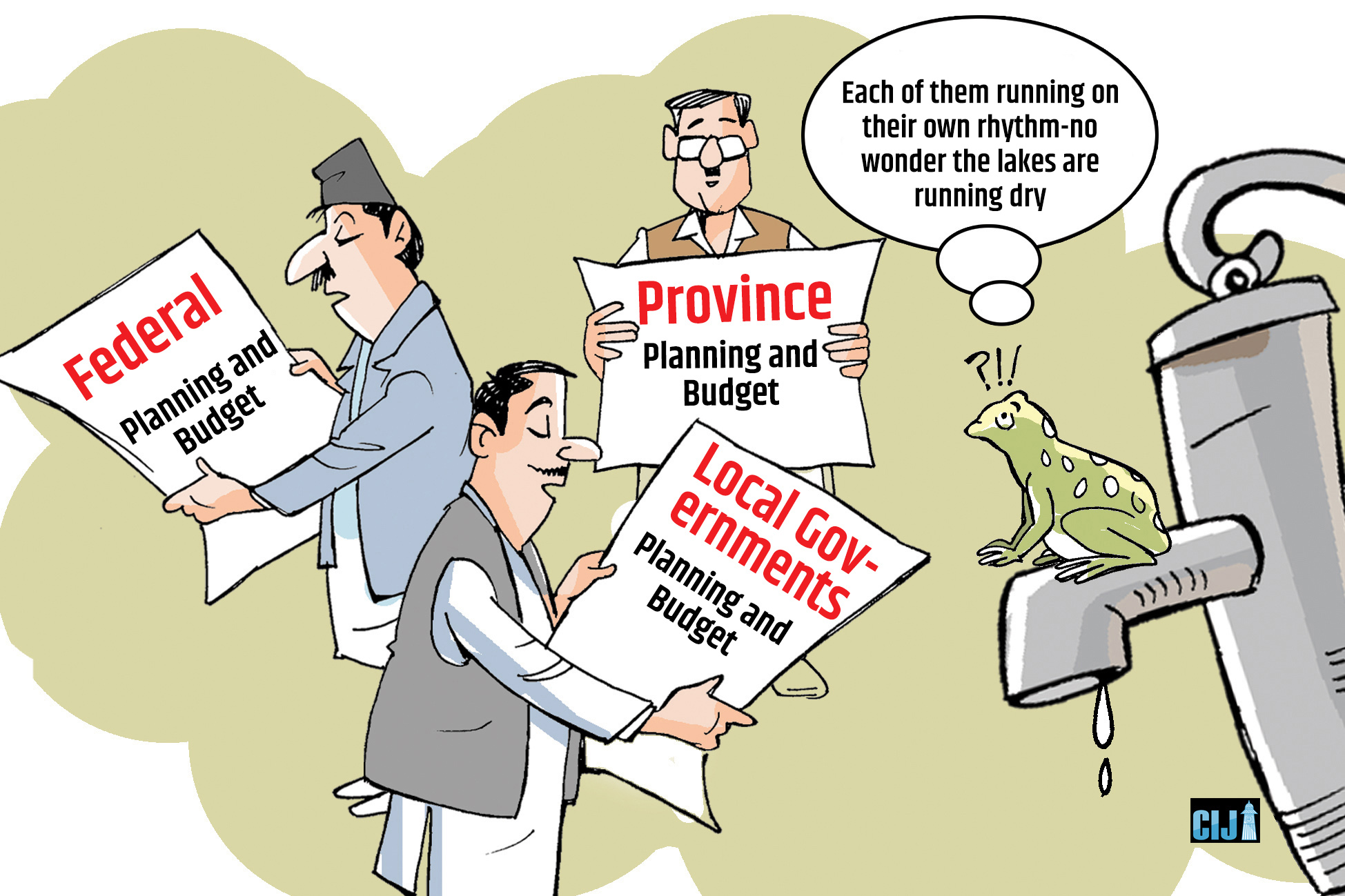
Despite the expenditure of millions of rupees on water, lake and watershed conservation in Kailali, groundwater levels are falling, lakes are shrinking and taps are running dry. Yet while the crisis affects the same interconnected watersheds, the federal, provincial and local governments continue to work through separate plans and budgets.
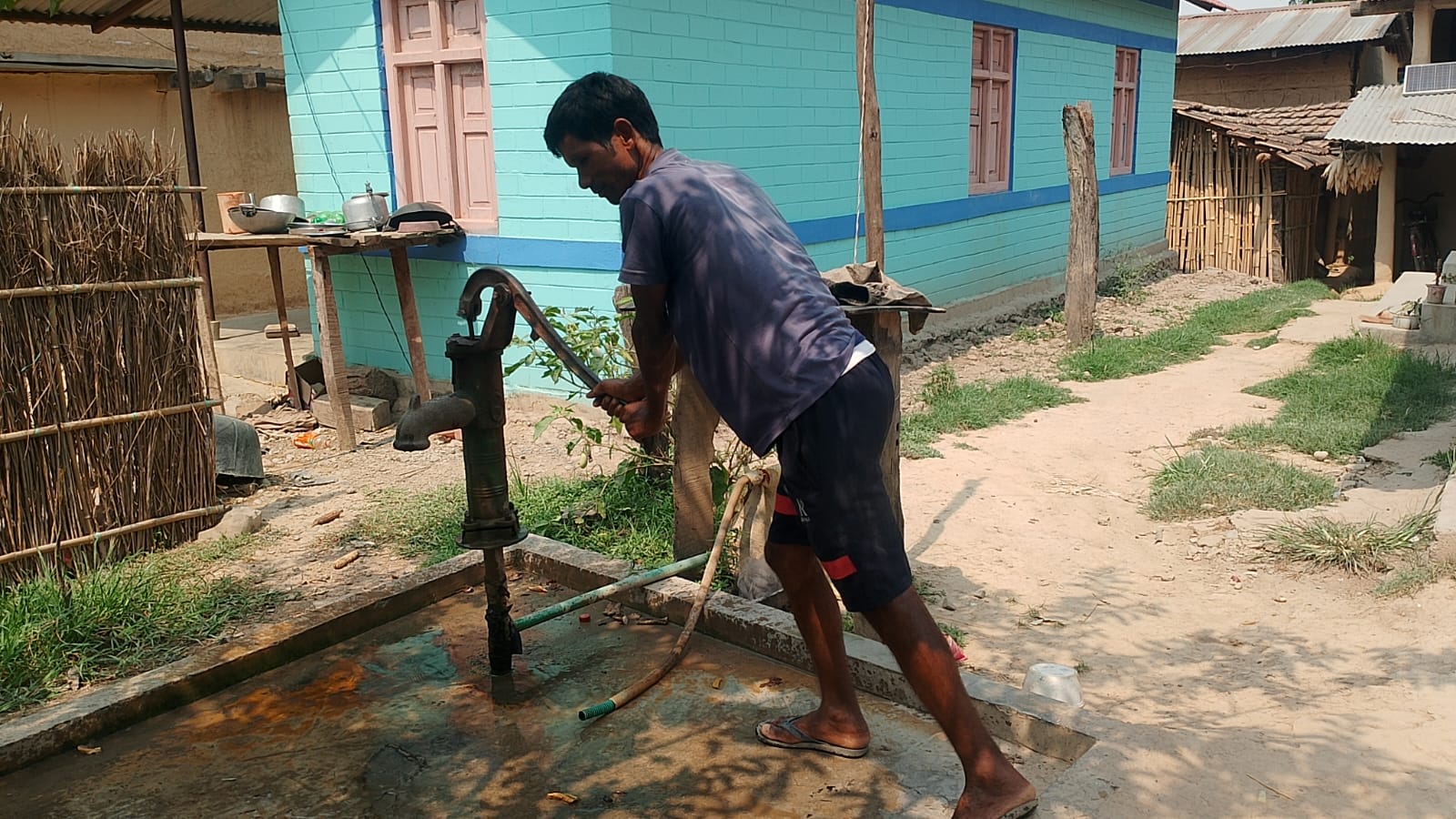
Forty-seven-year-old Teju Ram Chaudhary of Bipattapur in Kailari Rural Municipality-7 installed a hand pump five years ago, at his own expense, by driving a 105-foot pipe into the ground. At the time, the pump provided enough water for his family's needs. It has now been dry for two months.
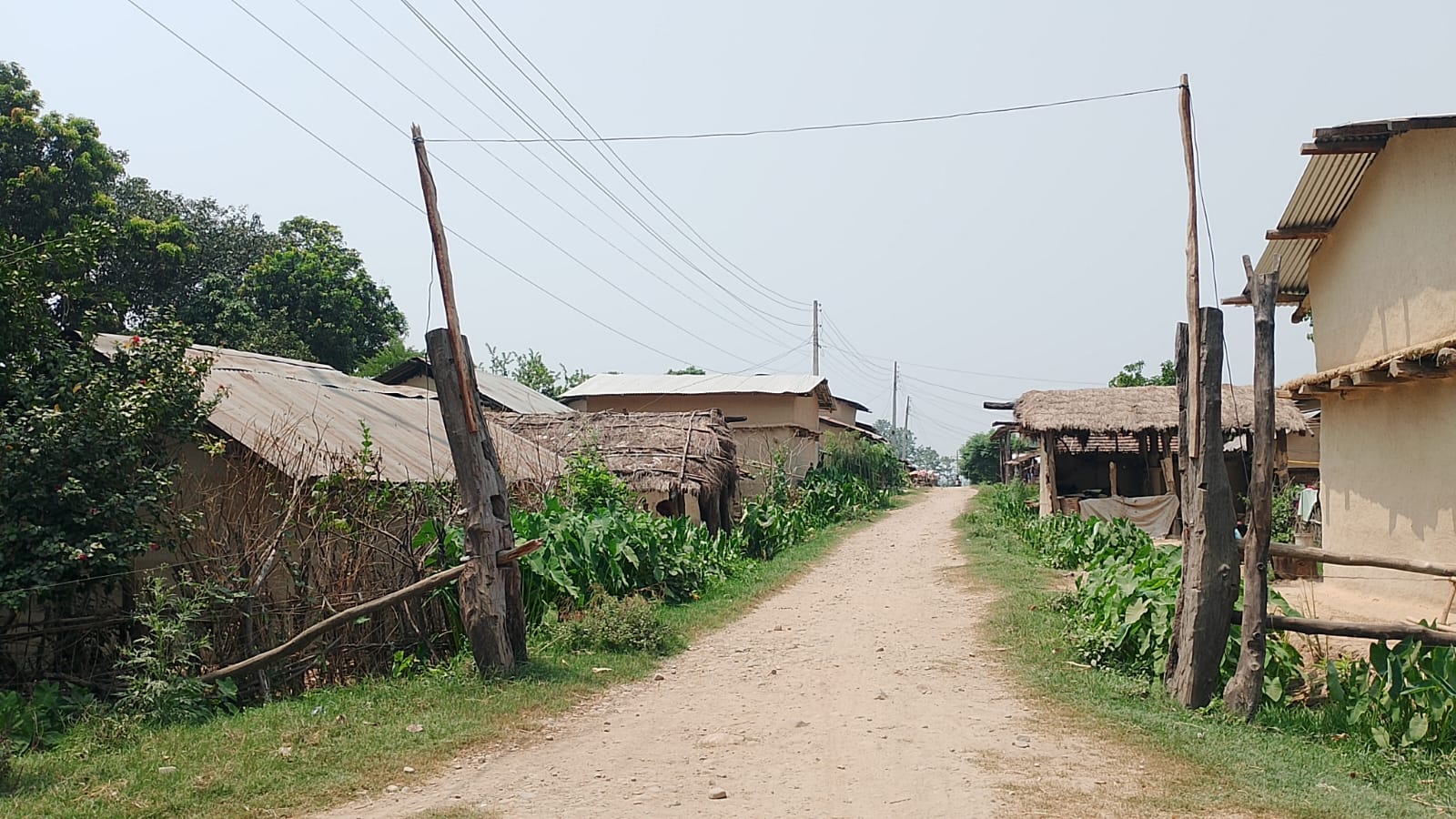
Like Teju Ram's, most of the hand pumps serving Bipattapur's 63 households have stopped producing water. Residents have begun relying on a government tap in a neighbor's yard for drinking water. According to ward chair Dipendra Bam, local residents are being forced to drink water contaminated with arsenic.
“Before, the hand pumps never dried up. Now they have started drying up. We are amazed at what is happening,” Teju Ram said in Tharu language.
His neighbor Masi Ram Chaudhary had also never seen the hand pump in his yard run dry in his lifetime. A sight he once considered almost unimaginable has become a reality at his own home.
Dipendra Bam, ward chair of Kailari-7, says the same problem has emerged in nearby Milanpur. According to him, as Lamkital and Narayanpuruwa lakes upstream from the settlements have been drying up, water levels in the community's hand pumps have also begun to fall.
The ward office has built a tank to provide clean drinking water, but distribution has yet to begin because pipes and other necessary materials are still lacking. According to Ward Chair Bam, residents of Bipattapur and Milanpur are being forced to drink arsenic-contaminated water.
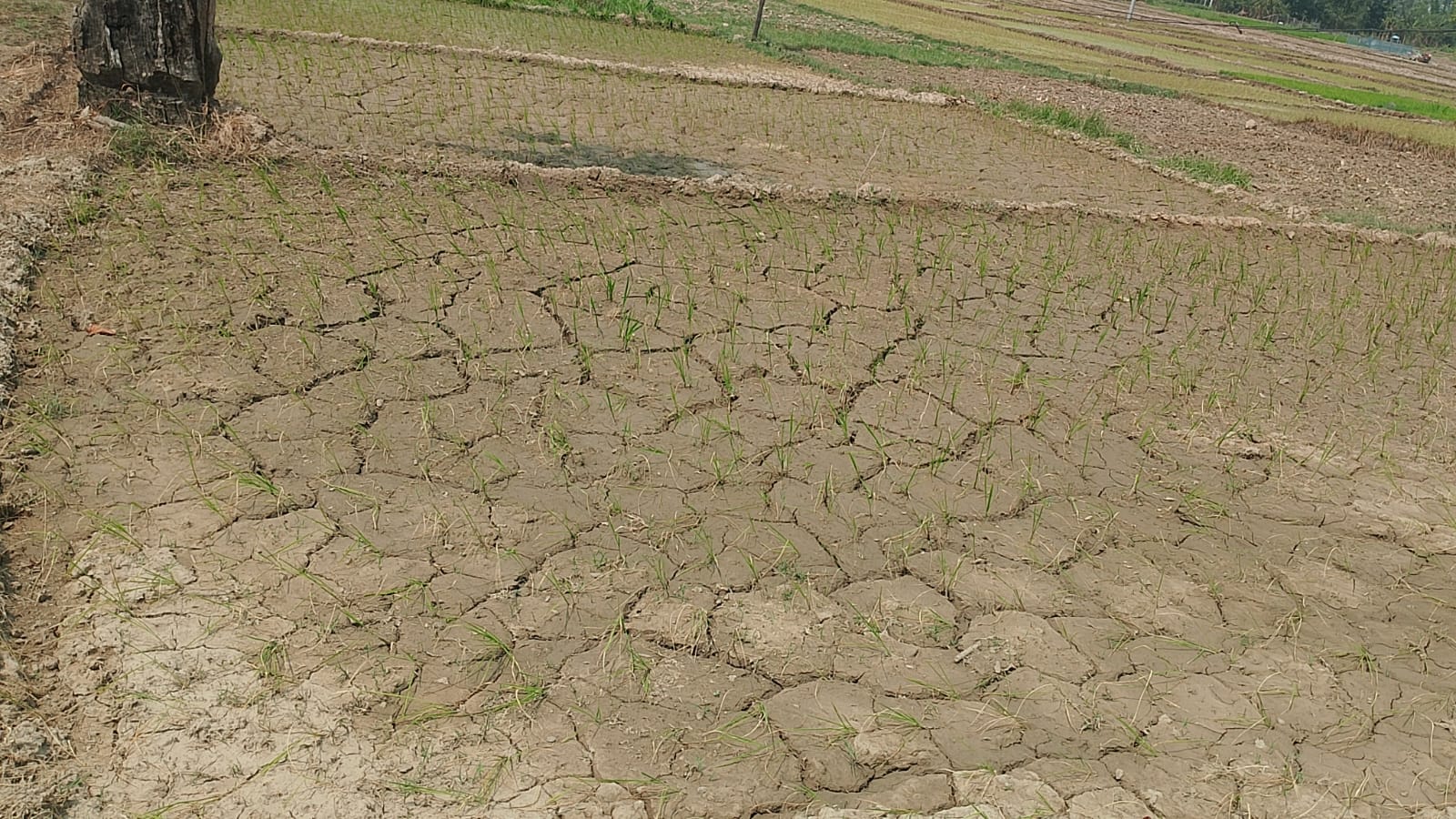
Across rural and urban areas of Kailali and Kanchanpur, hand pumps, taps, springs and well water sources are increasingly drying up during spring and summer. As hand pumps and borewells run dry, farmers are increasingly unable to transplant their crops on time.
Sixty-six-year-old Ram Kumar Rana Tharu of Ghuiyaghat in Dhangadhi-10 has been installing hand pumps for 35 years. He says water used to be found at depths of just 50 to 60 feet. Now, wells often have to be drilled at least 250 feet deep.
“Even then, there is no guarantee that water will always come. And even when it does, the wells dry up by April or May,” he says. “This has been happening for more than 10 years.”
A report published in the Journal of the Nepal Hydrological Association in 2025 also found that groundwater levels are declining in Kailali and Kanchanpur. According to the report, groundwater that was available at depths of 30 to 50 feet 15 years ago is now being found 80 to 125 feet below the surface.
Millions of rupees have been spent in Kailali on water, lake and watershed conservation. Yet hand pumps continue to dry up, lakes are shrinking and farmers are having to drill increasingly deep borewells in search of water for transplantation. The problem is not simply a matter of insufficient funding. It also raises questions about how effectively the federal, provincial and local governments coordinate their plans and priorities when managing the same watershed.
As the Crisis Grows, So Does the Budget
As the water crisis has intensified, government investment has also increased. Various government agencies have spent approximately NPR 192.476 million on lake conservation, recharge pond construction and watershed management in Kailali. These programs have been implemented by agencies including the President Chure-Terai Madhesh Conservation Development Committee, the Soil and Watershed Management Office, the Tourism Unit and Dhangadhi Sub-Metropolitan City.
Through its Tourism Unit alone, the Sudurpashchim Provincial Government spent funds on lake conservation in various locations during fiscal year 2024/25. The provincial government says it is implementing programs for recharge ponds, check dams, landslide and gully control, protection of drinking water sources and conservation of river areas.
Dhangadhi Sub-Metropolitan City has also launched programs to conserve and restore lakes. According to Ashok Awasthi, an officer at the Environment, Sanitation and Drinking Water Section, the sub-metropolitan city has identified 83 lakes within its jurisdiction and has already restored 13 of them.
But why, despite all these programs and expenditures, has the water crisis not eased?
One Watershed, Different Plans
The Dhangadhi Sub-Metropolitan City has been developing Jakhor Lake in Ward 7 as a tourist destination since 2019, following a master plan. The project has included a dam around the lake, walking trails, paving blocks, railings, solar lights and other infrastructure.
According to the sub-metropolitan city's Divisional Engineer Dwijraj Bhatt, work worth nearly NPR 50 million was contracted in the first phase alone. He says around NPR 240 million would be required to fully implement the master plan. But questions have been raised over whether structures built in the name of conservation are actually helping to conserve the lake.
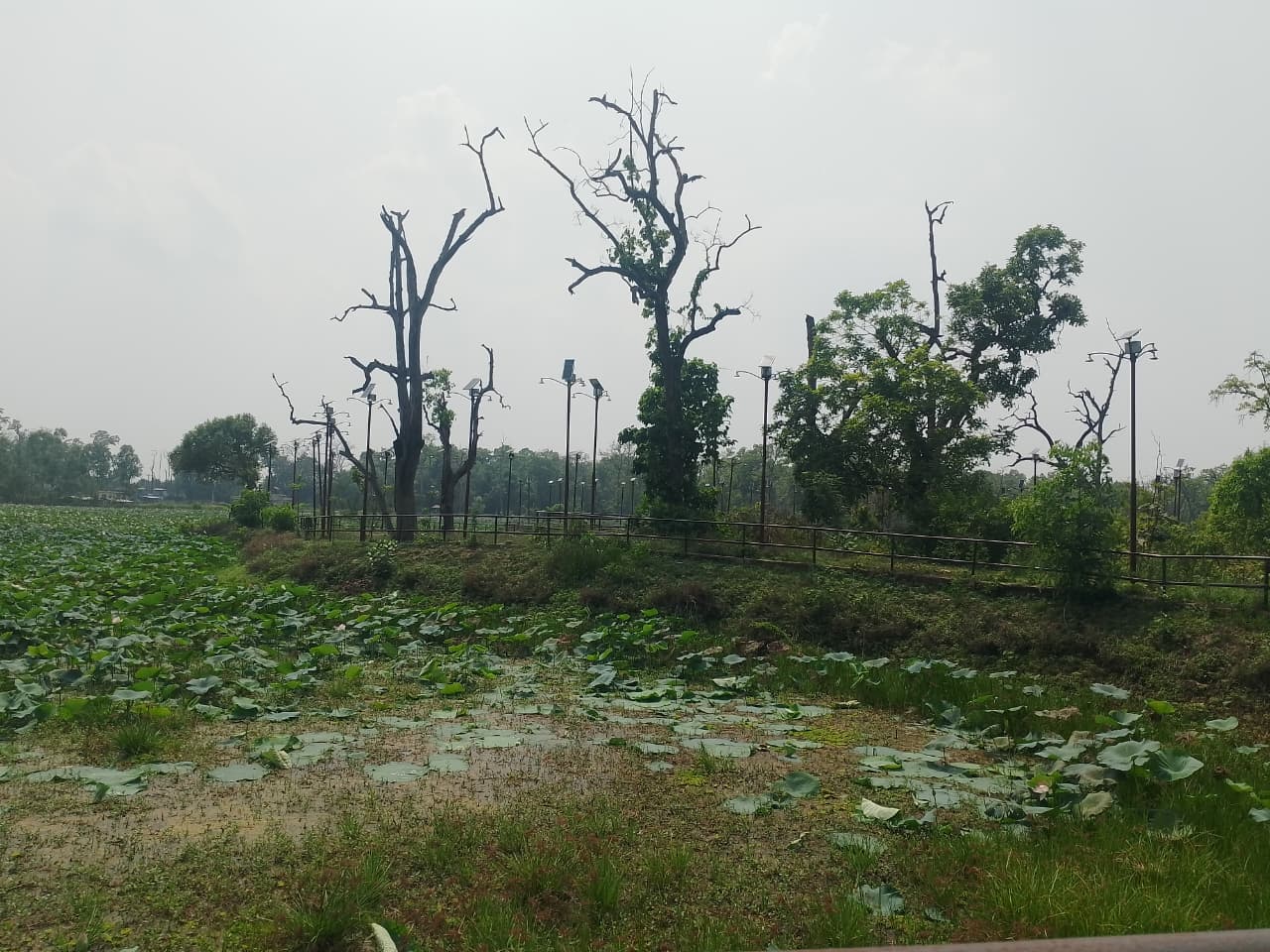
Experts in forestry and environmental management say that dams and concrete structures in and around the lake obstruct the natural inflow and outflow of water can disrupt the lake's natural water cycle. Lighting the area around the lake at night have also affected aquatic life, birds and other wildlife and disrupt the local ecosystem.
Engineer Bhatt of the sub-metropolitan city acknowledges that no separate study was conducted on biodiversity and other ecological systems before infrastructure was built at Jakhor Lake.
This raises a fundamental question: how carefully were the environmental impacts of spending on lake conservation assessed?
The situation at Netuwa Lake is no different. The lake, which covers approximately five bighas and seven katthas in Dhangadhi-3, has lost around two bighas and four katthas to encroachment, according to local residents. The sub-metropolitan city has spent NPR 54.076 million in the first phase of a project to develop the lake as a water park.
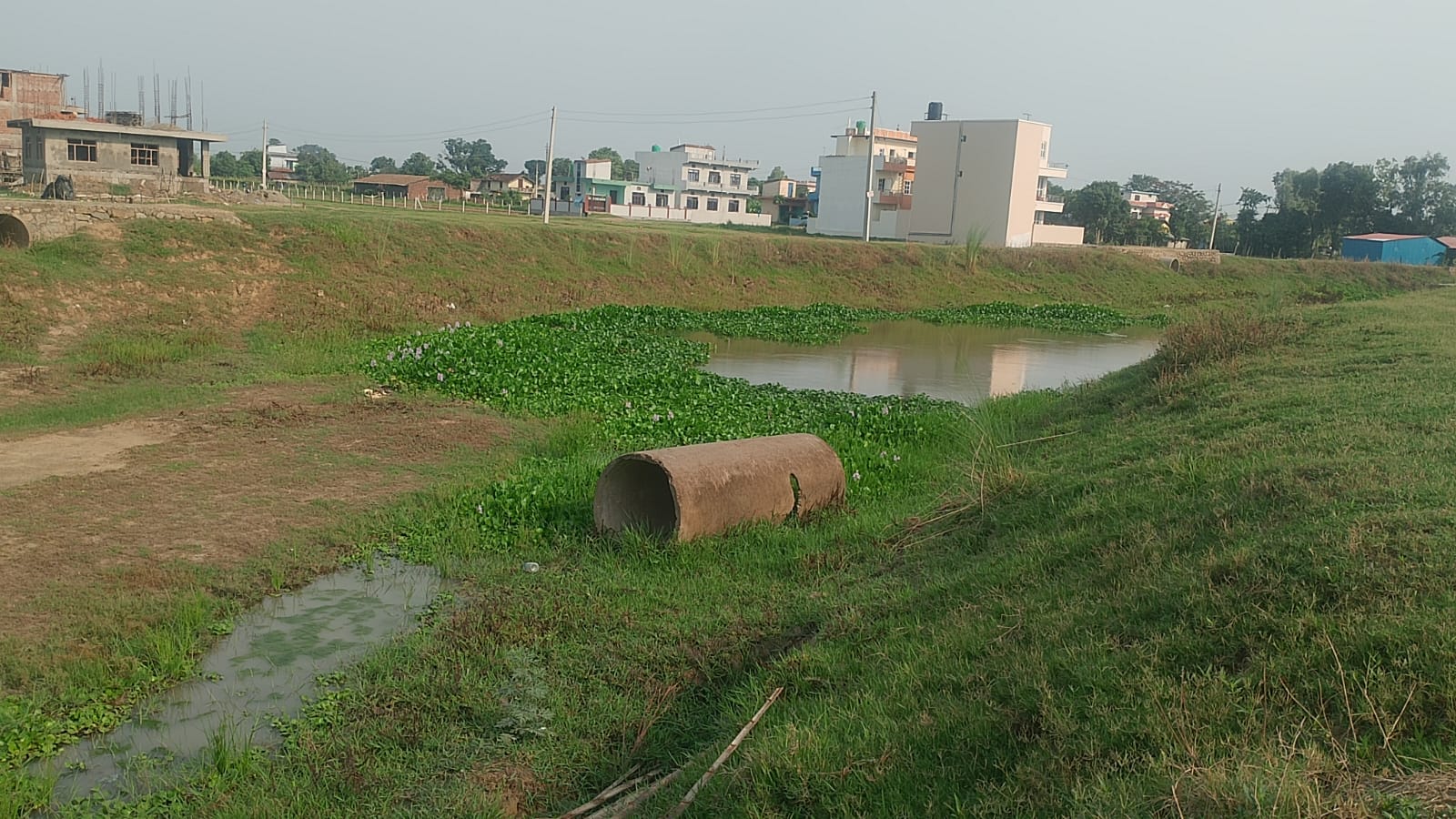
Similarly, the Tourism Department of the Ministry of Culture, Tourism and Civil Aviation in Kathmandu has spent NPR 51.215 million to construct a walking trail around Behedababa Lake in Dhangadhi-16 as part of a project to develop and improve tourism infrastructure. But the condition of the lake is deteriorating, says local resident Bhiku Ram Chaudhary. "Concrete tiles have been laid around the lake in the name of a walking trail," he said. "But unless invasive water hyacinth and other vegetation and debris are cleared from the lake, it is bound to face further deterioration."
Tilke Lake in Dhangadhi has shrunk from four bighas to around one bigha. In Bhajani-7, Puraina Lake has been drained and cultivated for years, effectively erasing its natural character. Public funds are being spent to conserve some lakes while others are being encroached upon, and still others are being covered with concrete structures in the name of conservation.
Unclear Jurisdictions on Water Under Federalism
Kailali's water crisis raises a broader question about how the three tiers of government manage and coordinate around natural resources under Nepal's federal system.
The water sources are in the Chure hills, the recharge zone lies in the Bhabar belt, and settlements and farmland are concentrated in the Terai. Yet all these areas are part of the same watershed system.
Deforestation in the Chure, extraction of riverbed materials or disruption of natural water flows has consequences downstream in the Terai plains. Yet responsibility for conservation, development and resource management is divided among the federal, provincial and local governments. Watersheds do not recognize administrative boundaries, but their management is divided along those very boundaries.
According to Ashok Awasthi, an official at Dhangadhi Sub-Metropolitan City, groundwater recharge is inherently regional in scale, meaning Dhangadhi cannot address the problem on its own. Because the upper areas, including the Chure and Godawari, are ecologically connected to local governments farther south, he says the federal and provincial governments need to develop coordinated policies.
He describes groundwater as a "reserve bank" and warns that continuously adding concrete surfaces above ground while extracting groundwater below it is a long-term risk.
The provincial government acknowledges the same problem. Bharat Shrestha, head of the Science, Environment and Climate Change Division at the Ministry of Industry, Tourism, Forest and Environment, says that increasing roads, physical infrastructure, grazing and other human activities in the Chure are reducing vegetation cover and weakening the infiltration of rainwater into the ground. The consequences are felt downstream.
Suraj Maharjan, head of the President Chure-Terai Madhesh Conservation Development Committee, Programme Implementation Unit Lamki also says that the water crisis cannot be resolved through the efforts of any single institution. He argued for integrated plans to be implemented through coordination among drinking water, irrigation, roads, forests and local government agencies.
Budget Exists, But An Integrated Plan Does Not
According to Hem Bam, chair of the Ghoda Ghodi Area Conservation and Public Awareness Forum Nepal, more than NPR 60 million has already been spent on lake conservation. But there is no single coordinating mechanism among the agencies involved.
"The municipality works in its own way. The province does the same. The federal government goes its own way," he said. "Local representatives also allocate budgets and implement projects according to their own priorities."
There are 12 community forests in the Ghoda Ghodi Lake area, Bam says, and they too are carrying out activities independently.
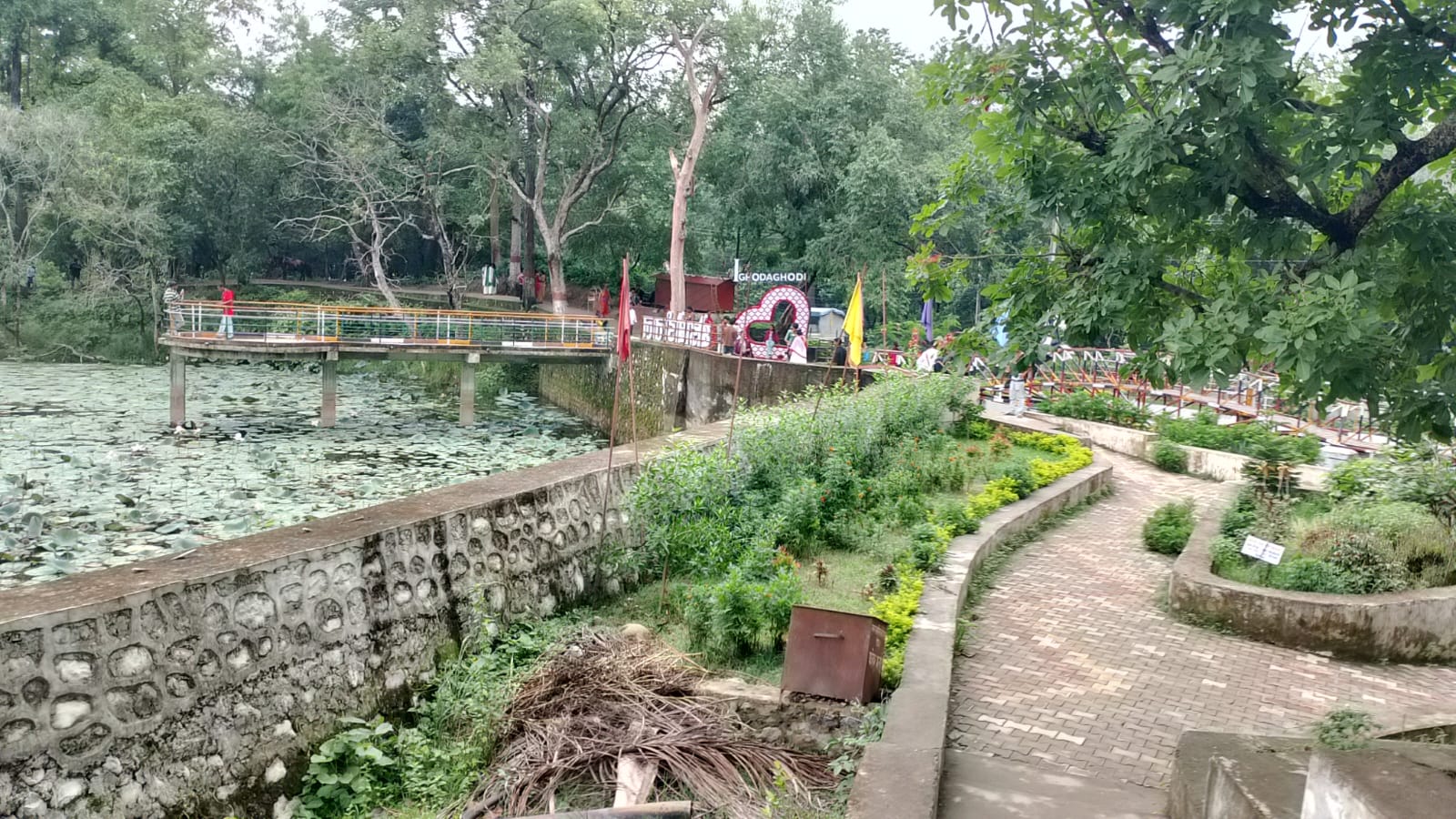
Provincial government officials acknowledge the same problem. According to Bharat Shrestha, head of the province's Science, Environment and Climate Change Division, different agencies have spent separate budgets on Ghoda Ghodi, Jakhor and Behedababa lakes.
He says coordination needs to be strengthened to prevent duplication and establish a one-door approach to implementation. The situation illustrates a broader challenge of managing natural resources under federalism. Authority has been divided, but the mechanisms for sharing responsibility for watersheds remain weak.
Protecting Lakes or Decorating Them?
The infrastructure development at Jakhor, Netuwa and Behedababa lakes raises another concern. In the name of developing the lakes as tourist destinations, walking trails, paving blocks, tiles, railings, lighting and other concrete structures are being added. Experts, however, argue that lake conservation must give equal priority to maintaining the water cycle, biodiversity and ecological functions alongside tourism.
According to Dhangadhi Sub-Metropolitan City's Engineer Bhatt, lake conservation, groundwater recharge, flood control and tourism development have been linked at the policy level. But environmentalist Chakra Bam says it is inappropriate to tie lake conservation too closely to excessive concrete infrastructure and commercial activity.
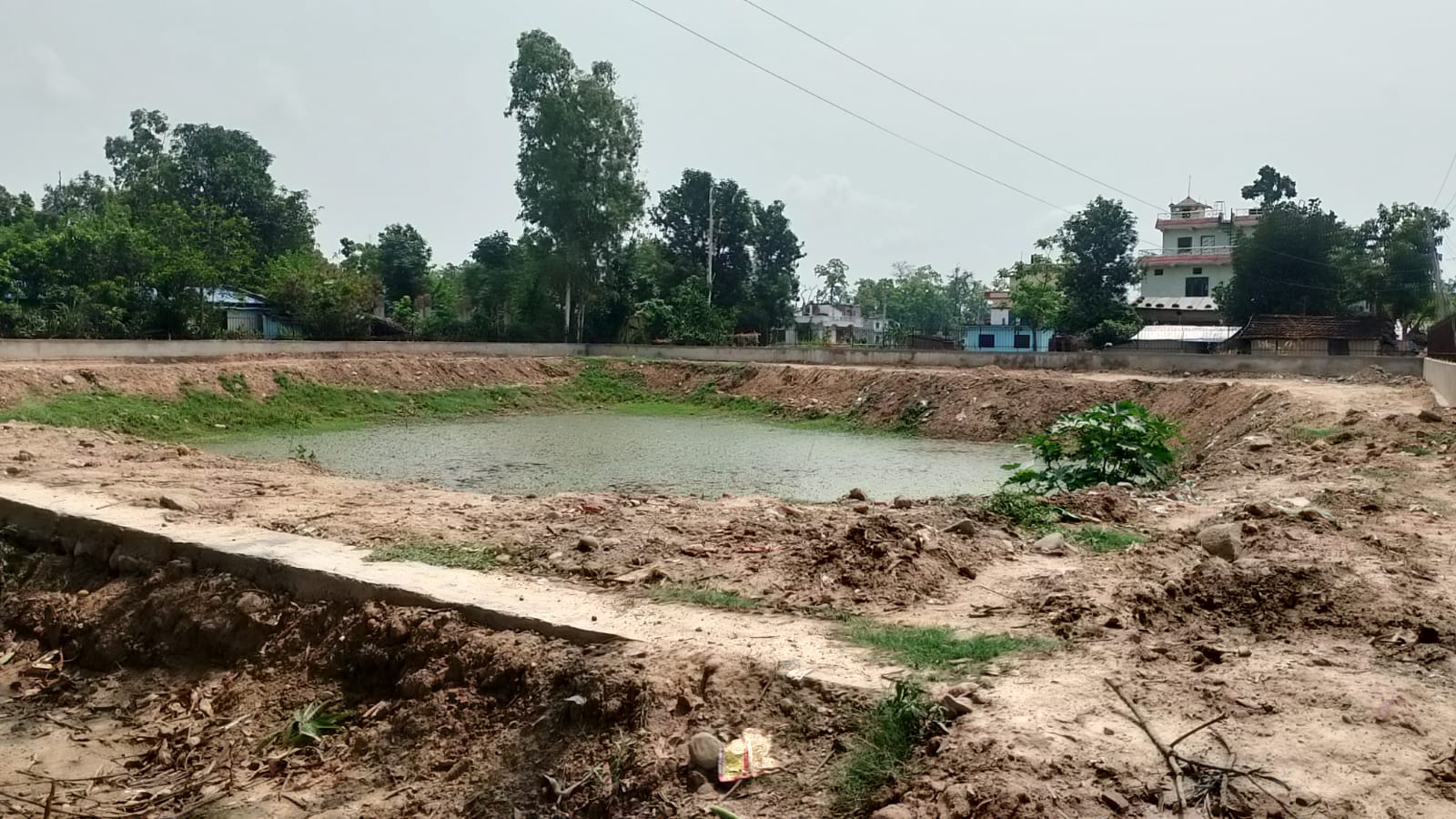
"Natural lakes should be conserved in as natural a state as possible," he says. According to him, paved roads, concrete structures and urban expansion prevent rainwater from being absorbed into the ground. At the same time, groundwater extraction is increasing, deepening the imbalance between recharge and extraction.
Climate Change Is Not the Only Problem
Government officials and experts acknowledge the role of climate change in the water crisis. But by their own account, the problem goes beyond climate change alone.
Rainfall patterns have changed. Rain that once fell steadily over longer periods is increasingly arriving in short, intense bursts. Such rainfall is more likely to run off the surface than be absorbed into the ground. At the same time, Chure encroachment, deforestation, extraction of riverbed materials, urbanization, the spread of concrete surfaces, lake encroachment and excessive groundwater extraction have compounded the problem.
According to climate expert Dr. Dharmaraj Upreti, encroachment in the Chure, uncontrolled extraction of riverbed materials, rapid urbanization and the expansion of concrete structures are causing rainwater to run off rather than seep into the ground. This has weakened the natural process of groundwater recharge.
Environmentalist Chakra Bam also says the current crisis is not simply a matter of "less rainfall." The natural pathways through which water reaches the ground are being blocked, while groundwater extraction continues to increase.
Farmers Are Paying the Price
Farmers are bearing the most direct consequences of the groundwater crisis. Teju Ram Chaudhary of Kailari-7 said his paddy crop dried up after the deep borewell supplying water to his field also ran dry. "At first, a little water was still coming, and we planted the paddy relying on that," he said. "Then the water dried up completely. The paddy we had planted dried up too."
Bhavana Khadka, a farmer from Jamunabhadi in Godawari-8, said the lack of water in wells and borewells had destroyed both paddy seedlings and vegetable crops. The crisis in lakes, watersheds and groundwater has thus reached the farmers' fields.
With water supplies dwindling, local governments have also been forced to arrange emergency alternatives. Dhangadhi Sub-Metropolitan City distributed water by tanker to affected settlements in the Phulbari area. Kailari Rural Municipality distributed electric water pumps to help residents draw water.
After wells ran dry in various parts of Dhangadhi, the sub-metropolitan city supplied water in Wards 6, 7, 12, 14 and 19 in June. Because the city did not have a dedicated drinking-water tanker, water was also supplied for daily use using an old fire engine, a road-washing vehicle and tanks normally used for watering plants, according to Information Officer Surendra Karki.
A government that should be protecting groundwater for the long term is now also scrambling to provide tanker water and other emergency alternatives in the short term.
Where Is the Way Forward?
Ashok Awasthi, an official at Dhangadhi Sub-Metropolitan City, says priority should be given to rainwater harvesting, recharge pits, tree planting and environmentally friendly infrastructure. He says the city has begun advancing a policy requiring recharge pits and at least two trees as part of the approval process for new houses. It also plans to develop green corridors along riverbanks.
According to Awasthi, groundwater recharge is not something that produces immediate results. Positive impacts downstream will only become visible if forests are protected, concrete development is controlled and natural resources are managed sustainably in the Chure, Godawari and other upstream areas.
The provincial government has also emphasized the need to construct large conservation ponds and reservoir structures in the Chure and upper hill areas. According to Shrestha, an official at the provincial Ministry of Industry, Tourism, Forest and Environment, changing rainfall patterns make it necessary to build structures capable of storing water underground. He says groundwater recharge should be increased by conserving wetlands, old ponds, newly constructed conservation ponds and watersheds in the Chure.
The President Chure programme also says it is implementing conservation measures including check dams, embankments and ponds. But Suraj Maharjan, head of its Programme Implementation Unit, says limited budgets, staff and resources have prevented the programme from working at the scale required across all areas.
According to Maharjan, the environmental damage accumulated over the years cannot be reversed immediately. If conservation efforts are sustained, positive results could become visible within the next 10 to 15 years.
This means that the budgets currently being spent should not be evaluated simply on whether construction has been completed. They should also be assessed on what difference the spending has made to watersheds, groundwater and local communities.
One Water, One Plan
The water crisis unfolding in Kailali is not simply a story of drying wells, shrinking lakes or farmers struggling to irrigate their fields. It also raises a central question about how natural resources are managed under Nepal's federal system.
What happens in the Chure is directly connected to water availability in the Terai plains. The condition of lakes is connected to groundwater. Groundwater is connected to agriculture and drinking water. All of these need to be understood as parts of a single watershed system.
A local government may build recharge pits and conserve lakes within its jurisdiction. The province may build ponds and undertake watershed conservation in the Chure. The federal government may develop policies and mobilize resources for the Chure and major watersheds. But unless the work of all three tiers is connected to the same map, the same priorities and the same outcomes, there is no guarantee that the water crisis will ease even as budgets increase.
The situation in Kailali offers precisely this warning.
On the one hand, tens of millions of rupees are being spent on conservation. On the other, a well drilled 105 feet into the ground has gone dry. In some places, concrete structures are being added in the name of lake conservation, while elsewhere an old lake has been turned into farmland. There are conservation plans in the Chure, even as water sources are drying up downstream in the Terai.
The question, therefore, is no longer simply "How much money has been spent?" It is whether the three tiers of government have developed a shared understanding of the same water system. Water does not recognize the boundaries between the federal, provincial and local governments. Rain that falls in the Chure flows into the Tarai. Water stored in lakes seeps into the ground. Groundwater then supplies farmers' fields and settlements.
If government plans cannot be connected in the same way that water itself is connected, the drying wells and shrinking lakes of Kailali could prove to be an early warning of a much deeper water crisis.
More Investigative Stories

One River, Two Governments
The Local Government Operation Act gives local governments the authority to collect revenue from riverbed materials such as stone, gravel...
Is Municipal Police a Public Service Mechanism or an Instrument of Power?
Conceived by the Constitution as a force to support local service delivery and law enforcement, municipal police have in many...
Comment Here