Investigative Stories
Nepal’s local governments have spent Rs1.5 billion in DPRs. Has it all gone to waste?
Many detailed project reports (DPRs) are neither on record nor have the proposed projects taken off. CIJ Nepal investigates what lies behind the DPR-preparation frenzy.

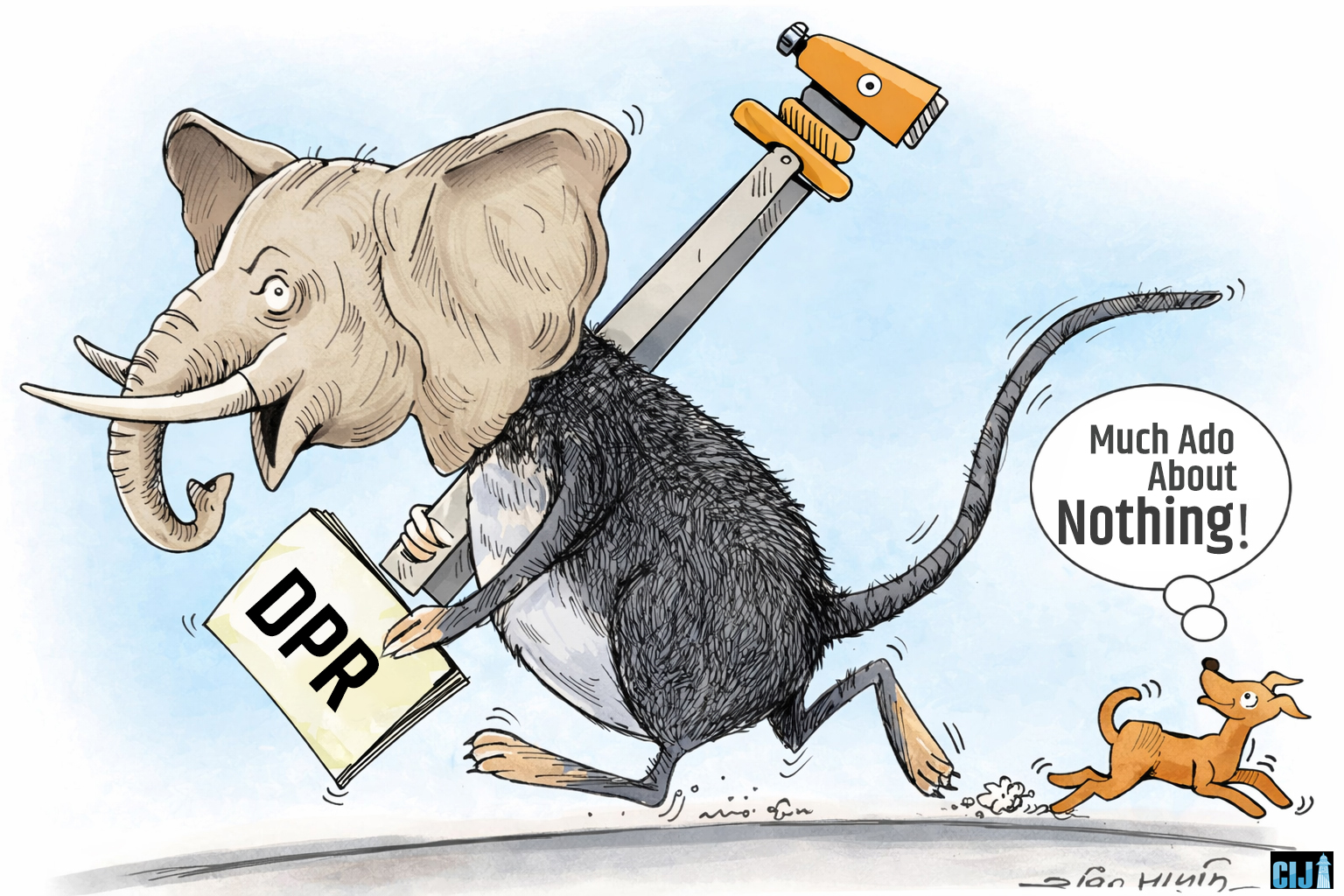
After he assumed office, Ain Bahadur Chand, chairperson of Simta Rural Municipality in Surkhet, sought the detailed project reports (DPRs) that the local government had prepared over the years. He wanted to review past projects and plan the upcoming ones.
Before Chand was elected in 2079BS, Simta had prepared nine DPRs at the total cost of over Rs4.56 million. But Chand couldn’t find any such report. “People are still coming to us demanding payment for working on those reports,” Chand says. “But on what basis do we pay them?”
Chand added that only two DPRs have been prepared during his tenure so far.
The Jhapa Rural Municipality in Jhapa spent a total of Rs4 million and 758 thousands to prepare five DPRs in the fiscal year 2079/80BS. The local government has spent Rs9.9 million to prepare DPRs in the past three years alone. But the Office of the Auditor General has said that the rural municipality doesn’t have a record of those DPRs.
The report of the auditor general has stated that it couldn’t find a record of feasibility studies and study reports that the rural municipality had conducted in the past year. “Though the rural municipality has two reports as seen in the government’s Public Assets Management System (PAMS), it has no other record,” the report states.
Likewise, Jhapa’s Damak Municipality had prepared 199 DPRs until the previous year. But the cost and implementation status of 197 of them are yet to be revealed. The office of auditor general has pointed out that those reports are not registered in PAMS.
Mayor Ram Kumar Thapa, however, insists that the DPRs prepared during his tenure are recorded and have also gone into implementation. “I don’t know what happened before I assumed office,” Thapa says.
No record and no implementation
Ilam’s Chulachuli Rural Municipality has spent Rs37 million 549 thousands to prepare 49 DPRs as of last year. Records of only nine of them, prepared at the cost of Rs8 million 364 thousands, are available at the rural municipality office. The auditor general’s office has said that the rural municipality doesn’t have the record of 40 DPRs.
After it couldn’t find the record of the DPRs from the local governments, the auditor general’s office had sought it from the federal ministries of Physical Infrastructure, Energy, Water Resources and Drinking Water, and also from the provincial ministries concerned. This was because local governments submit DPRs to provincial and federal ministries to demand a budget.
“But we have been told that records at the ministries show the DPRs have not been submitted at all,” says Sri Kumar Rai, spokesperson at the auditor general’s office. “This proves that even the ministries concerned do not have the record of reports prepared by local governments.”
Bara’s Jeetpursimara Sub-metropolitan City is at the forefront of local governments without record of the DPRs. This local government has prepared 12 DPRs at the cost of Rs13 million 265 thousand but it has no record of 6 of those reports.
The Financial Procedures and Fiscal Responsibility Act 2077BS mandates that records of cost for a service should be updated within seven days of receiving the report related to the service procured.
The auditor general’s report states that Jeetpursimara hasn’t sought the certificates of professional experience while appointing consultants to prepare DPRs. It also points out that the municipality has prepared DPRs without identifying priority projects.
The sub-metropolis’s Mayor Rajan Poudel, however, says that DPRs were prepared because they are essential to move forward projects. He adds that the reports would be implemented soon. “Some have been prepared during my tenure, while others are from the previous administration,” Poudel says. “But all of them were prepared following due process. As for those not on record, I am not aware of them either.”
Solukhumbu’s Mahakulung Rural Municipality has prepared nine DPRs in the past two years. Even before the six DPRs prepared at the cost of Rs4 million 934 thousand went into implementation, the rural municipality spent Rs3 million 729 thousands more to prepare three more DPRs. None of the nine projects have moved forward yet. “The projects are in limbo due to a lack of budget,” says rural municipality chair Surya Bahadur Kulung.
Kulung added that they had to prepare the DPRs because of the mandatory provision of having to submit reports to demand a budget. “We need a budget from the provincial and federal levels to construct bridges, roads and buildings,” Kulung said. “And they seek DPRs from us before they disburse the budget. If we don’t get the budget, the DPRs get shelved.”
Likewise, Banke’s Janaki Rural Municipality has prepared 13 DPRs in the past three years. Of them, four projects are being implemented. Nine DPRs, however, have been shelved.
Over Rs1.5 billion spent in three years
The auditor general’s latest report has revealed the amount that local governments around the country have spent to prepare DPRs: In three years, 418 local governments have spent Rs1 billion 485.3 million to prepare 1,825 DPRs. The report also points out that 432 of those DPRs have not been implemented so far. This is the data the auditor general’s office collected from the local governments. In the past year alone, 241 local governments spent Rs665.2 million to prepare DPRs.
Rai, the spokesperson of the auditor general’s office, said that ironically, more DPRs are being prepared. “Our report points out irregularities related to DPRs every year,” Rai said. “But the trend persists.”
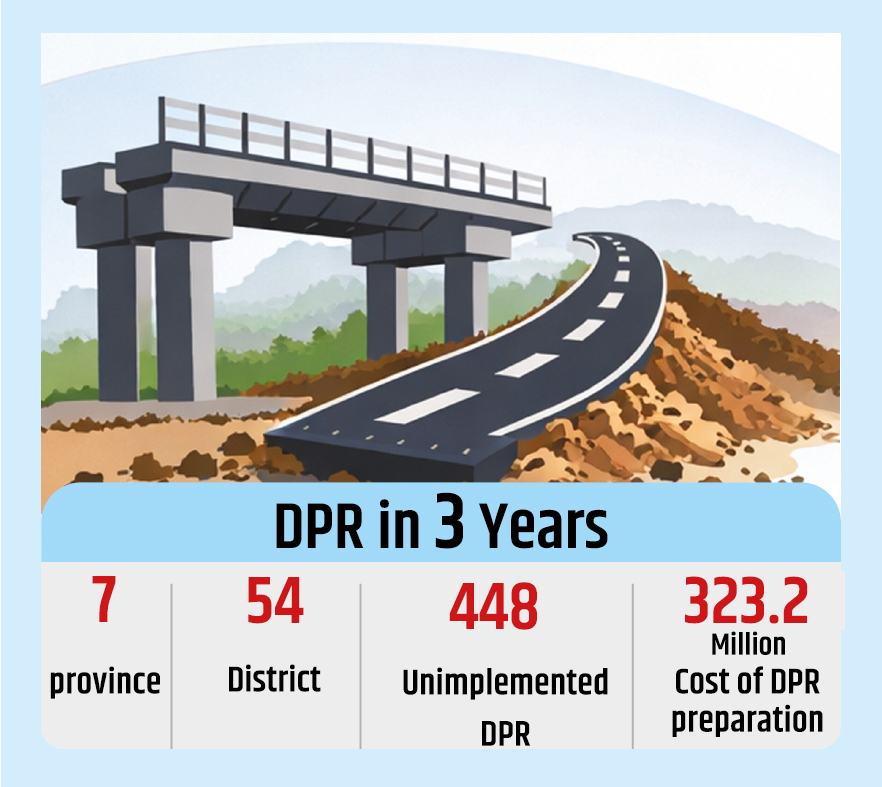
The auditor general’s office further points out that 135 local governments have prepared 448 study reports at the cost of Rs323.1 million but they haven’t been implemented.
Meanwhile, a majority of local governments haven’t registered the DPRs at the PAMS. And no authority has held the local governments accountable for them.
Meanwhile, it’s not certain whether the DPRs prepared by consultants involved experts. Without a record, that, too, is hard to find: whether experts visisted the proposed project sites to prepare the DPRs or not.
Koshi has the highest number of DPRs; Gandaki has lowest implementation
In the past three years, local governments from Koshi Province have prepared the most numbers of DPRs—175. Only 101 or 57.71 percent of them have moved into the implementation phase.
Koshi is also the province that has invested the highest amount in DPRs—a total of Rs130 million. But none of the DPRs prepared by 13 of the province’s 29 local governments have been implemented.
Solukhumbu’s Mahakulung Rural Municipality has prepared the most number of DPRs but hasn’t implemented any of them. The rural municipality has prepared nine DPRs at the cost of Rs8.66 million.
Dhankuta’s Shahidbhoomi Rural Municipality has prepared 8 DPRs and shelved all of them.
Meanwhile, Gandaki has the lowest rate of DPR implementation. Of the 74 DPRs prepared by Gandaki’s 12 local governments in three years, 62 haven’t been implemented.
Myagdi’s Raghuganga Rural Municipality has prepared 28 DPRs in total. Of them, only seven have gone into implementation so far. In the fiscal year 2079/80BS, the rural municipality spent Rs12.1 million to prepare 22 DPRs. Before any one of them went into implementation, the rural municipality nevertheless prepared four DPRs last fiscal year at the cost of Rs3 million 161 thousand.
In Sudurpaschim, local governments have prepared 70 DPRs over the past three years at the cost of Rs48 million 728 thousand out of which 58 or 82 percent haven’t been implemented yet.
We have studied DPRs prepared by Sudurpaschim’s 22 local governments in the past three years. Of them, Darchula’s Shailyashikar Municipality, Kailali’s Dhangadhi Sub-metropolis, and Bajhang’s Masta Rural Municipality have prepared six DPRs each but none of them has been implemented.
Madhesh comes third in the list of provinces not implementing the DPRs. As many as 111 DPRs have been prepared in the province in the past three years. Of them, only 23, or 20.72 percent, have been implemented yet. In three years, local governments in the province have spent Rs90 million to prepare the DPRs.
In Madhesh, out of 28 local governments we studied, as many as 18 have shelved all DPRs they have prepared. Mahottari’s Manrashisawa Municipality, Siraha’s Sakhuwanankarakatii Rural Municipality, Bara’s Jeetpursimara Sub-metropolitan City, Parsa’s Pokhariya Municipality, Bara’s Kolhawi Municipality, and Sarlahi’s Parsa Rural Municipality are among the local governments that have prepared the most number of DPRs and have not implemented any of them. Parsa Rural Municipality alone has spent Rs14 million 386 thousand in the past two years to prepare 16 DPRs.
The trend persists in Karnali Province as well. Seventy-five percent of the DPRs prepared by the province’s local governments have not been implemented—only 18 of the 73 DPRs have moved into the implementation phase.
Jumla’s Sinja Rural Municipality hasn’t moved forward a single project out of the 11 DPRs it has prepared. Surkhet’s Panchapuri Municipality has spent Rs11 million to prepare 10 DPRs.
In Bagmati, of the 68 DPRs prepared by the local governments in the past three years, 35 or 51 percent have been implemented. In Lumbini, 49 of the 97 DPRs have yet to be implemented.
What explains the irresponsibility of this scale?
Laxmi Pandey, chairperson of the National Association of Rural Municipalities in Nepal (NARMIN), says that the trend has spread like a plague. “DPR is a blueprint of a project,” she said. “But the local governments have prepared DPRs for projects that are not even necessary, spent haphazardly, and even copied from earlier ones.”
The report of the auditor general also points out that local governments have prepared DPRs for projects that have no chance of moving forward. The report also says that local governments are preparing DPRs just to provide work to certain individuals and organisations.
“Our report has pointed out the faulty process of selecting consultants, excessive expenses on DPRs, and failure to secure budget and introduce programmes to implement the DPRs,” Rai, the spokesperson at auditor general’s office, said.
Devendra Karki, former secretary at the physical infrastructure and transport ministry, alleges that local government officials have handed over cash to their near and dear ones in the name of preparing DPRs. “The responsibility to prepare DPRs is often provided to organisations close to the officials,” he said.
Bhim Dhungana, chair of the Municipal Association of Nepal, says that the phenomenon could be avoided if the reports are prepared only after securing budgets for the proposed projects.
Meanwhile, former secretary Karki says that feasibility studies, which incur less cost, would be enough to demand budget from provinces and the federal level.
Minister of Finance Rameshore Khanal says that efforts are being made to stop the trend of preparing DPRs with the help of outside consultants without prioritizing the use of existing human resource available within the offices of subnational governments
A Cabinet meeting on 21 September, 2025 instructed concerned authorities to spend on consultancy and studies only if work is not possible with the existing human resource at the public offices. The expense should be made only after it is authorised by the account officer concerned, the government instructed. “Through this decision, we aimed to control unnecessary expenses on DPRs and other consultancy work,” Khanal said.
The Commission for the Investigation of Abuse of Authority on 16 October, 2022 issued a 31-point instruction to various ministries, departments and offices regarding the issue.
The 10th point of the instruction states that authorities should prove the worth of expenditure made on consultancy service while preparing DPRs; implement DPRs without delay; and in case it is not possible to implement them, at least keep record of them by authorising them through officials concerned.
But the local governments haven’t paid heed to these instructions.
More Investigative Stories

One River, Two Governments
The Local Government Operation Act gives local governments the authority to collect revenue from riverbed materials such as stone, gravel...
Is Municipal Police a Public Service Mechanism or an Instrument of Power?
Conceived by the Constitution as a force to support local service delivery and law enforcement, municipal police have in many...
Comment Here